Best Walk-In Closet Wallpaper Ideas for a Designer Look
-
- 77

Introduction
If you are looking for walk-in closet wallpaper ideas that deliver a designer look without a full renovation, you have come to the right place. Adding wallpaper to a closet is a low-commitment, high-impact move that can transform a purely functional space into one that feels intentional and luxurious. Most closets are small, enclosed rooms where pattern and color have an outsized effect, and a single roll of wallpaper can define the entire space. This guide covers the best closet wallpaper ideas, from patterns and materials to installation and maintenance. The goal is to help you make a confident choice that fits your home and your lifestyle, whether you own or rent.
Why Wallpaper Works in a Walk-In Closet
Walk-in closets are unique spaces. They are not high-traffic living areas like kitchens or hallways, but they are used daily, which makes them ideal for wallpaper. The walls are often uninterrupted by windows, meaning the pattern can really shine. Because the room is small, even a bold wallpaper feels contained and deliberate rather than overwhelming. In a large living room, a busy pattern can feel chaotic, but in a closet, it feels like a curated experience.
. If you’re interested in related upgrades, see our guide to Walk-In Closet Lighting Ideas: Ambiance and.
Wallpaper also adds a layer of texture and warmth that paint alone cannot achieve. A grasscloth wall or a subtle geometric print makes the space feel complete, turning a closet from a storage afterthought into a dressing room. The tradeoff is that wallpaper is more delicate than paint in high-traffic zones, but since closets see less wear from hands and moisture, durability is a minor concern. With the right material, you can have a designer look that holds up for years.
Best Wallpaper Patterns for Walk-In Closets
The pattern you choose sets the tone for the entire closet. Here are some of the most effective options, along with the conditions where they work best.
Geometric patterns are a safe bet for modern or minimalist closets. Clean lines and repeating shapes add structure without being distracting. They work well in closets with good overhead lighting because the pattern stays crisp. In a small closet, small-to-medium scale geometric prints create depth without visually shrinking the space. For those drawn to this look, browsing geometric wallpaper options online can reveal many patterns suitable for small spaces.
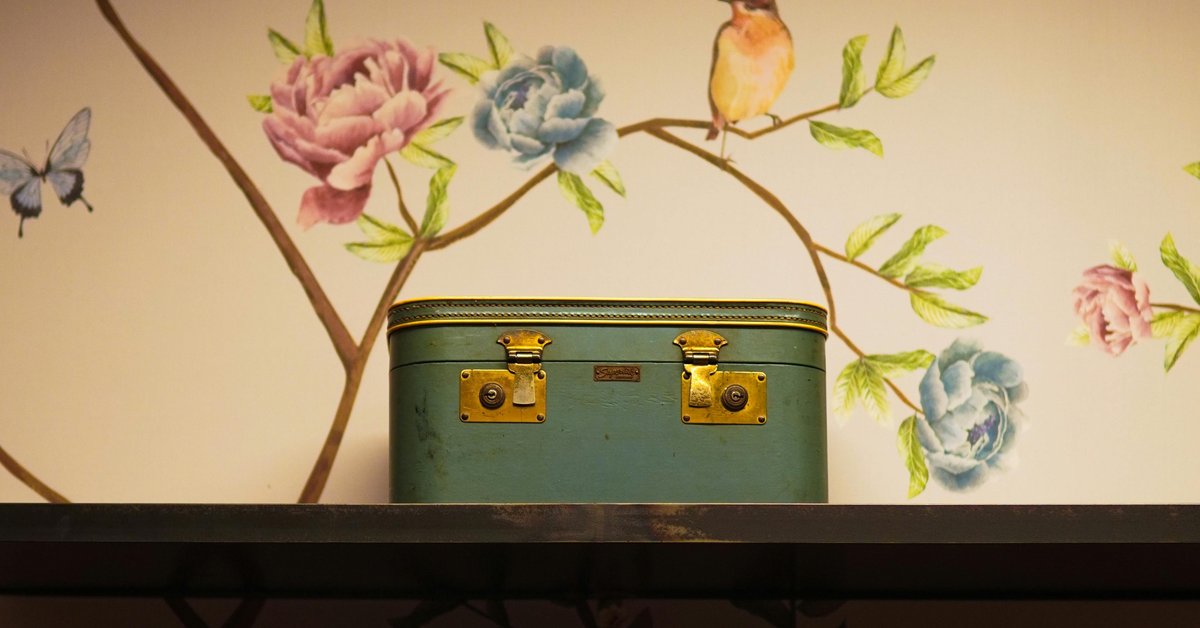
Floral patterns bring a softer, more romantic feel. They work especially well in closets with warm or natural light. A large floral can make a statement on one accent wall, while a small-scale floral covers all four walls without feeling busy. Florals pair nicely with white shelving and brass or gold hardware.
Textured wallpapers like grasscloth are excellent for adding warmth and tactile interest. They do not rely on pattern to make an impact. Instead, the natural fibers create depth. Grasscloth is ideal for closets with neutral color schemes where you want the space to feel calm and grounded, and it also hides minor wall imperfections better than glossy prints.
Stripes are a classic choice for closets. Vertical stripes draw the eye upward and make a low ceiling feel taller. Horizontal stripes can widen a narrow closet. Stripes are forgiving and work in both traditional and contemporary settings while coordinating easily with most shelving materials.
Mural-style wallpapers are bold but effective when used on a single wall, creating a focal point behind a vanity or seating area. Murals work best in larger walk-in closets where you can stand back and appreciate the full image. Keep the other walls simple to avoid visual overload.
When considering closet wallpaper ideas, pattern scale matters. A large pattern in a very small closet can feel suffocating, while a tiny pattern in a large closet can get lost. Match the scale to the room size and existing storage furniture.
Wallpaper Materials: What Works Best in a Closet
The material of your wallpaper is just as important as the pattern, as different materials suit different needs and skill levels.
Vinyl wallpaper is the most durable option for closets. It is washable, resistant to moisture, and stands up to occasional bumps from hangers or shoes. If your closet is well-ventilated but not climate-controlled, vinyl is a smart choice. It is also easier to install because it is less likely to tear during handling. The downside is that vinyl can feel less breathable and may not have the same elegant texture as natural materials.
Non-woven wallpaper is a strong middle ground. Made from a blend of natural and synthetic fibers, it is breathable, which helps prevent mold in closets that are not perfectly dry. It is also strippable, meaning you can pull it off in full sheets when it is time to change the look. This material works well for both DIY installation and long-term use.
Peel-and-stick wallpaper has become a favorite for renters and first-timers. It does not require paste or water. You simply peel the backing and apply it to the wall. It is removable without damaging the paint underneath, making it perfect for apartments or anyone who likes to change their decor often. The tradeoff is that peel-and-stick costs more per roll than traditional paper, and it may not stick as well on textured walls. But for a walk-in closet, it is a low-risk way to experiment with bold patterns. Many of the best closet wallpaper ideas for renters rely on peel-and-stick materials. Those looking for removable options can browse peel and stick wallpaper to see the variety of styles available today.
Traditional paper wallpaper is the most delicate option. It looks beautiful but is prone to tearing and stains, so it is best for low-traffic closets where you are not constantly brushing against the walls. If you choose traditional paper, consider a protective top coat or limit it to a single accent wall.
For most homeowners, non-woven or high-quality vinyl offers the best balance of durability and aesthetics. For renters, peel-and-stick is the clear winner.
Common Mistakes When Choosing Closet Wallpaper
When browsing closet wallpaper ideas, it is easy to get drawn into patterns that look great on a sample swatch but fail in real life. Here are mistakes to avoid.
Choosing a pattern that is too bold for the space. A large-scale mural or a high-contrast geometric print can overwhelm a small closet. The pattern becomes the only thing you see, and the closet feels smaller than it is. The fix is simple: sample the wallpaper on a full panel or large sheet, not just a tiny square, and hold it up next to your shelving and lighting.
Ignoring the effect of lighting. Wallpaper colors change dramatically depending on the light source. A warm incandescent bulb can make a cool-toned wallpaper look muddy, while a cool LED can wash out a warm pattern. Always test your sample under the same lighting you plan to use in your closet. If you are unsure, choose a wallpaper with neutral undertones that adapt better to different lighting conditions.
Not prepping the walls properly. Wallpaper will show every bump, crack, and texture in your walls. In closets, where the walls may have been neglected, this is a common problem. Take the time to clean, patch, and smooth the walls before you install. It makes the difference between a professional finish and a sloppy one.
Forgetting about furniture overlap. A closet has built-in shelving, rods, and drawers that cover parts of the wall. That beautiful wallpaper pattern may be mostly hidden behind your shirts. Consider which walls are most visible and which will be covered. It is often smarter to invest in a bold pattern for one accent wall and keep the rest neutral.
These mistakes are easy to avoid with a little planning, and taking the time upfront saves frustration later.
Peel-and-Stick vs. Traditional Wallpaper: Which Is Right for You?
This decision often comes down to your living situation and your confidence in DIY work. Both options have clear tradeoffs.
Peel-and-stick wallpaper is ideal if you rent your home or if you change your decor frequently. Installation is straightforward: clean the wall, peel the backing, and stick it in place. You do not need paste, water, or special tools. Removal is just as easy, as the adhesive is designed to release cleanly from painted walls. The drawback is that peel-and-stick costs more per square foot, and it may not adhere as strongly to textured or porous walls. It is also less durable than traditional wallpaper in high-contact areas, but a walk-in closet is generally low-risk.
Traditional wallpaper requires more effort to install. You need paste, a smoothing tool, a utility knife, and patience. The results are longer-lasting and usually look more seamless because the paper can be handled and adjusted during installation. Traditional wallpaper offers a wider range of patterns and materials, including grasscloth and fabric-backed options. Removal is more labor-intensive, but for long-term homeowners, the durability and appearance often make it worthwhile.
. If you’re interested in related upgrades, see our guide to Walk-In Closet Island Ideas: Luxury and Storage.
Here is : if you are a renter or trying out your first set of closet wallpaper ideas, start with peel-and-stick. If you own your home and want a permanent upgrade that will last for years, invest in traditional wallpaper and either install it yourself or hire a professional.
How to Coordinate Wallpaper with Closet Finishes
Your wallpaper does not exist in a vacuum. It needs to work with your shelving, rods, lighting, and flooring. Here is how to make those decisions easier.
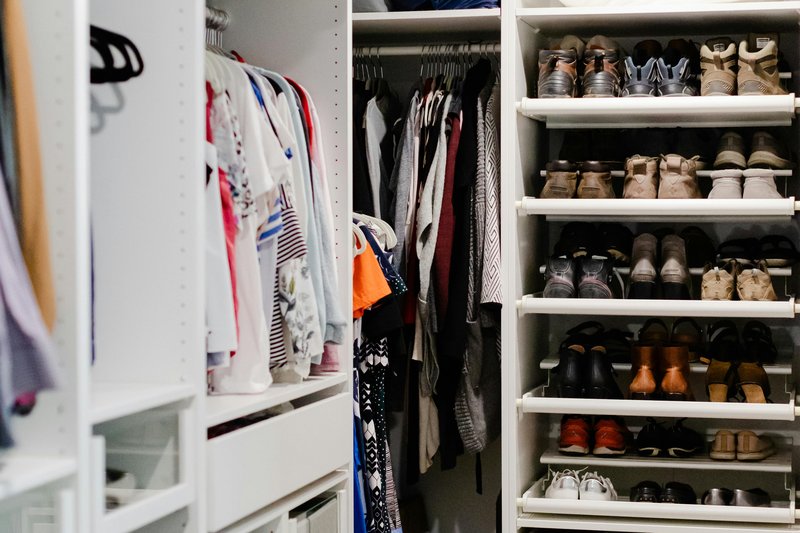
If your shelving is white, you have the most flexibility. White shelves act as a neutral backdrop, so almost any wallpaper pattern will look intentional. Bold colors and large patterns stand out beautifully, while subtle textures and muted tones create a calm, spa-like atmosphere. Choose based on the mood you want.
Wood shelving, whether natural or stained, adds warmth. Pair it with wallpaper that has earth tones, like greens, browns, or soft blues. Grasscloth or textured paper complements natural wood finishes well. Avoid high-gloss wallpapers with shiny metallic accents unless your wood is painted white, as the mix can feel disjointed.
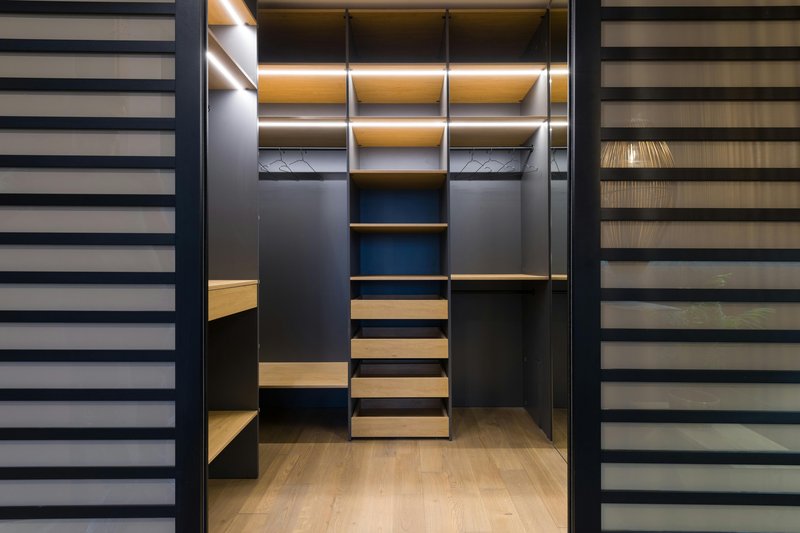
Metal shelving and rods, especially in chrome or black, lean modern. Geometric patterns, stripes, or abstract prints match this aesthetic. A black metal rod paired with a white-and-black geometric wallpaper creates a clean, tailored look. Brass rods call for warmer wallpaper tones, like blush, taupe, or deep navy.
Flooring also matters. Dark flooring grounds a room, so light wallpaper keeps it feeling open. Light flooring benefits from wallpaper with a bit of contrast to keep the space from feeling washed out. If you have carpet, choose a wallpaper that complements the carpet color without matching it exactly. A slight tonal difference adds depth.
Think about the wall behind your shelving. If you install wallpaper only on visible wall sections, make sure the material and pattern transition cleanly at the edge of the shelving. A mismatch in material or color will look unfinished.
Installation Tips for a Professional Finish
Installing wallpaper in a walk-in closet is a manageable weekend project for most homeowners. A clean process produces clean results. Start by measuring your walls carefully. Add ten percent to your total square footage to account for pattern matching and mistakes, as that extra roll can save you if a panel goes wrong.
Before you apply anything, prep the walls. Clean them with a damp cloth to remove dust. Fill any holes or cracks with spackle and sand them smooth. If your walls are glossy, lightly sand them to help the wallpaper adhere. For peel-and-stick, a smooth, clean surface is essential.
When you are ready to install, start in the most visible corner. In a walk-in closet, that is usually the wall you face when you open the door. Work away from the entrance so any seams fall in less visible spots. Use a level to ensure your first strip is perfectly vertical. Even a small tilt will be obvious once you reach the opposite wall.
Traditional wallpaper requires a smooth application of paste. Use a paint roller to apply paste evenly to the wall, not the paper. Smooth the paper from the center outward to push out air bubbles. A smoothing tool helps you get a flat finish. Trim the excess at the ceiling and baseboard with a sharp utility knife. A fresh blade matters—dull blades tear the paper.
For peel-and-stick, peel the backing back about six inches, align the top of the panel with your level line, and stick that section to the wall. Slowly peel the rest of the backing while smoothing the paper downward. If you get a bubble, lift the paper gently and reapply. Work slowly, as rushing leads to wrinkles.
A basic wallpaper installation tool kit, which includes a smoothing tool, utility knife, and seam roller, is worth buying. It makes a real difference in the final look.
Maintenance and Longevity: Keeping Your Wallpaper Fresh
Walk-in closets are low-traffic, which means your wallpaper can stay beautiful for years with minimal maintenance. The exact care depends on the material.
Vinyl and non-woven wallpapers are the easiest to clean. A damp cloth wiped gently over the surface removes dust and small marks. For heavier cleaning, a mild soap solution works. Avoid scrubbing aggressively, as the pattern should hold up well if you use gentle pressure.
Grasscloth and natural fiber wallpapers require more care. Do not use water on them. Instead, dust them regularly with a soft brush attachment on your vacuum or a microfiber cloth. These materials are porous and can stain easily, so avoid placing shelves or hooks directly on the wallpaper if possible.
Peel-and-stick wallpaper may need occasional attention at the edges. The adhesive can lose grip over time, especially in corners or near heat sources. If you see edges lifting, press them down firmly with a seam roller. If the adhesive is too worn, a small dab of wallpaper adhesive on the back of the edge works as a fix.
Because closets have less light exposure, fading is rarely a problem. The main concern is physical damage from rearranging shelves or moving boxes. Be careful when pulling out heavy items, as a scrape is harder to fix than a smudge.
If you ever want to change the wallpaper, peel-and-stick comes off easily. Traditional wallpaper requires a scoring tool and a steamer, so plan for that labor when making your initial choice. For most people, the longevity of a walk-in closet wallpaper makes the investment worth it.
Real-World Examples: What These Ideas Look Like in Action
Here is how these closet wallpaper ideas play out in real homes.
Small guest closet with textured neutral wallpaper. A homeowner had a narrow walk-in closet about four feet wide with a low ceiling. They chose a light beige grasscloth wallpaper with a subtle weave. The texture added visual interest without overwhelming the space. White shelving and a single pendant light kept the look clean. The closet felt larger after the wallpaper went up because the neutral tone blended with the walls. It cost about one hundred dollars for the materials and took an afternoon to install.
Large master closet with bold geometric pattern. Another homeowner had a spacious master closet with good natural light from a small window. They wanted a dramatic look, so they installed a navy-and-white geometric print on the wall behind the main hanging section. The opposite walls stayed white, and the contrast highlighted the pattern without making the room feel busy. Gold drawer pulls and a small chandelier tied the look together. The project took two weekends because they had to match the pattern carefully, but the result was photo-ready.
Rental closet with peel-and-stick floral. A renter wanted to personalize their bedroom closet without risking the security deposit. They chose a peel-and-stick floral wallpaper in a small-scale print. The closet was about six feet wide with standard white melamine shelving. They applied the wallpaper to all four walls in one evening. Eight months later, they removed it in under an hour with no damage to the paint. The total cost was under one hundred fifty dollars, and it made the closet feel like a private dressing room.
These cases show that good planning and the right material choices matter more than the budget. You can achieve a designer look at almost any price point.
. For more ideas, check out Modern Parisian Chic Walk-In Closet Inspiration:.
Final Thoughts: Choosing the Best Closet Wallpaper for Your Space
Start with what fits your lifestyle. Consider pattern scale, material, and installation method based on your needs. If you are unsure, begin with a small accent wall or try peel-and-stick as a low-risk test. The best closet wallpaper ideas are the ones that match your space, your skill level, and your timeline. There is no wrong choice as long as you plan ahead and prep properly. Your dream closet is closer than you think. A single roll of wallpaper can take you there. Start designing your dream setup today.
Looking for closet wallpaper ideas? This guide covers top patterns, materials, and installation tips to give your walk-in a designer look.
Looking for closet wallpaper ideas? This guide covers top patterns, materials, and installation tips to give your walk-in a designer look.