His and Hers Walk-In Closet: Sharing Space Seamlessly
-
- 188

His and Hers Walk-In Closet: Sharing Space Seamlessly
Sharing a closet sounds good on paper. In practice, it can mean digging through your partner’s shoes to find your own. A his and hers walk-in closet isn’t just about doubling the space. It’s about smart design that respects two different ways of getting dressed each morning. We’ll cover layouts, storage solutions, common problems, and where your money is best spent. Whether you are building from scratch or fixing a frustrating setup, the goal is a closet that works for both of you. Travelers who need a compact solution for organizing accessories on the go may find a travel jewelry organizer case useful for keeping small items separate.
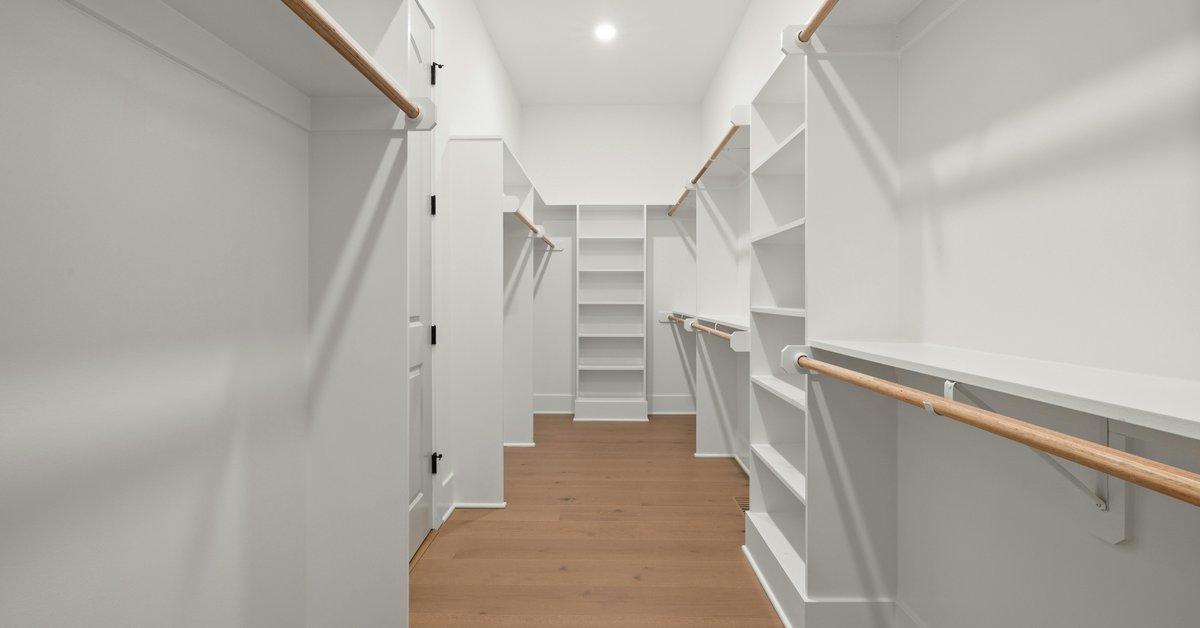
Why a Dedicated His and Hers Closet Makes Sense (and When It Doesn’t)
A shared closet with separate zones solves some specific problems. The biggest one is the morning rush. When you both have dedicated hanging space and drawers, you aren’t sorting through each other’s stuff to find a belt. It cuts down on the “where’s my…” conversations. Different organization styles also stop being a point of tension. If one person folds socks and the other rolls them, separate drawers mean nobody has to redo the other person’s system. It’s personal space within a shared room, which matters when you see the same space every day.
. If you’re interested in related upgrades, see our guide to How to Design a Hollywood Regency Walk-In Closet:.
But a his and hers setup isn’t right for every couple. If your walk-in is under 40 square feet, splitting it in half might leave both sides too narrow to use comfortably. In that case, a single well-organized system with flexible storage might work better. Another scenario where separate zones fail is when one person owns significantly more clothes. Forcing a 50/50 split when one wardrobe is three times the size leads to frustration and wasted space. And if your budget is tight, buying two complete storage systems costs more than one good general system. A shared zone only makes sense when you have the room and the budget to do it right.
Step 1: Assessing Your Combined Storage Needs
Before you look at layouts or buy any bins, take stock of what you both actually own. This step is tedious, but skipping it is the most common mistake I see in shared closets. Grab a notebook and go through everything you both keep in the dressing area.
Start with hanging items. Count long hanging pieces like dresses and trench coats. Count short hanging items like shirts and jackets. Then measure how much linear feet each category needs. A typical person needs about four feet of short hanging space and two feet of long hanging space, but that varies quite a bit. If you wear a lot of suits, plan for more. For those with many suits, consider a adjustable closet rod double hanging system to maximize vertical space.
Next, folded items. T-shirts, sweaters, jeans, workout gear. Measure how much drawer or shelf space they take now. Add about 20% because you will buy more over time. Shoes are easy to underestimate. Count every pair you both own, then add space for five more per person. It sounds like a lot, but you will use it.
Finally, accessories and specialty items. Belts, ties, hats, bags, scarves. And out-of-season stuff like heavy coats or boots. A good starting rule is a 40% to 60% split of the total space, with the larger share going to the person with a bigger wardrobe. But let the numbers guide you, not a guess. Write down totals for hanging, folding, and shoe storage before moving to layouts.
Step 2: Choosing the Right Layout for Two
Once you know your storage needs, you can pick a layout that fits your space. Not all walk-ins are the same shape, and the layout determines how much usable storage you actually get.
Side-by-side zones are the most common. Each person gets one side of the closet, with their own hanging rods, shelves, and drawers. This works best in a rectangular room where both sides have equal depth. You need at least six feet of wall length per side to make this functional. Aisle width between the two sides should be a minimum of 36 inches, but 42 is more comfortable. At 36 inches, two people passing each other is tight.
Separate runs work when the closet is L-shaped or has two distinct wall sections. Each person takes one run, and they don’t directly face each other. This can feel more private and reduces congestion. It is also forgiving if one person needs deeper hanging rods for coats and the other uses shallower shelves for folded items.
Island with two sides is for larger closets, typically over 100 square feet. A central island gives each person drawers or shelves on their side, with hanging space around the walls. The island can also serve as a shared surface for folding or staging outfits. Just be careful not to make the island so wide that it blocks access to the wall storage. An island that is 30 inches wide by 60 inches long is a good starting point.
Split design with a peninsula is a compromise for awkwardly shaped rooms. A peninsula of storage extends from one wall, dividing the space into two areas. One partner gets the area to the left, the other the area to the right. It is less common but can maximize usable footage in a tricky layout. My advice is to measure twice and test with cardboard boxes before committing to a layout. Moving a rod later is a real hassle.
Zoning: His Zone, Her Zone, and Shared Spaces
Once the layout is set, you need to assign the actual storage. what matters is not to assume equal amounts of everything. One partner might need more hanging space for button-downs, while the other needs deeper shelves for sweaters. Trying to make every shelf the same height for both people wastes space on one side or the other.
Designate hanging rods by height. If one person is much taller, their rods can be higher, allowing a double hang for shirts and pants underneath. The shorter person’s rods can be lower, with single hang only. Adjustable rods are your friend here, because needs change over time. Same with shelves. A 12-inch deep shelf works for folded jeans, but not for bulky sweaters. Give each person the shelf depth that matches their most common folded items.
Shared zones are for items neither of you uses daily. Put off-season bins, luggage, bulky gear, and extra bedding on the highest shelves above both zones. This keeps the prime real estate for frequently worn clothes. It also prevents arguments about who gets the lower shelves. Shared zones should be neutral ground where neither partner’s items dominate.
Avoid the temptation to make all shoe storage the same. If one person wears mostly flats and loafers, open slanted shelves work fine. If the other wears boots or heels, they need taller cubbies or adjustable shelves. A shared shoe rack with fixed heights will frustrate one of you. Better to give each person their own shoe storage section that matches their footwear. Beginners may appreciate a shoe shelf organizer adjustable to accommodate different heel heights.
Must-Have Storage Solutions for Dual Wardrobes
Good storage products make a shared closet actually usable. Here are the ones that solve real problems in a his and hers setup.
- Double hanging rods (adjustable height). A single high rod wastes vertical space. Two adjustable rods let one partner have shorter rods for shirts and pants, while the other uses one long rod for dresses or coats. Look for rods that can be moved without tools, so you can adjust as wardrobes change.
- Pull-out trouser racks. These keep dress pants organized and wrinkle-free. They also free up hanging rod space for other items. In a shared closet, each person can have their own pull-out rack if they both wear dress pants frequently.
- Belt and tie racks. Small accessories get lost in drawers. A mounted rack keeps them visible and accessible. Place these near the door or within arm’s reach of the partner who uses them most. Do not assume both people need them; allocate based on usage.
- Shoe shelves vs. cubbies. Open shelves are good for flip-flops, sneakers, and flats. Cubbies with dividers work better for boots and dress shoes. A combination works best: one or two shelves at the bottom for everyday shoes, with cubbies above for less frequent pairs. Avoid mixed-height shoe storage that wastes space for either person.
- Modular drawer systems. Not all drawers are created equal. Deep drawers (10-12 inches) hold sweaters and jeans. Shallow drawers (4-6 inches) are for accessories, underwear, and socks. Adjustable drawer units let you customize the depth for each person. This is where you solve the folding versus rolling debate.
- Clear bins for accessories. Ties, scarves, jewelry, watches. Clear acrylic bins keep small items organized and visible without adding visual clutter. Labeling bins for each person prevents mix-ups.
- Valet rods. A pull-out valet rod or hook is fantastic for staging an outfit the night before. In a shared closet, having two means both of you can use it at the same time without congestion.
Lighting and Mirror Placement: Practical Considerations
Good lighting is not optional in a shared walk-in. You need to see colors and details clearly, and both partners should have adequate light without shadows hitting the other person’s area.
LED strip lights under shelves or along the ceiling perimeter work well for general illumination. They provide even light without harsh shadows. Overhead fixtures can work, but avoid a single central dome because it will create shadows on one side of the room. If you use a ceiling fixture, go with a flush mount or semi-flush that distributes light broadly.
Task lighting matters near mirrors. A full-length mirror with built-in LED lights is practical for both partners when placed centrally or on a wall that both can access. If you have a double aisle layout, consider a mirror on each side. That way one person is not blocking the mirror while the other shuffles past.
Dimmable lights are nice for ambiance, but prioritize function first. A closet is a workspace in the morning. You want clean, bright light that lets you match socks and see zipper colors. Warm white (3000K to 3500K) is a good balance between flattering and accurate. Frequent users may benefit from a LED closet light motion sensor for automatic illumination when opening the door.
Common Mistakes When Sharing a Walk-In Closet
From helping friends and clients plan shared closets, a few mistakes keep coming up. Recognizing them early can save you time and money.
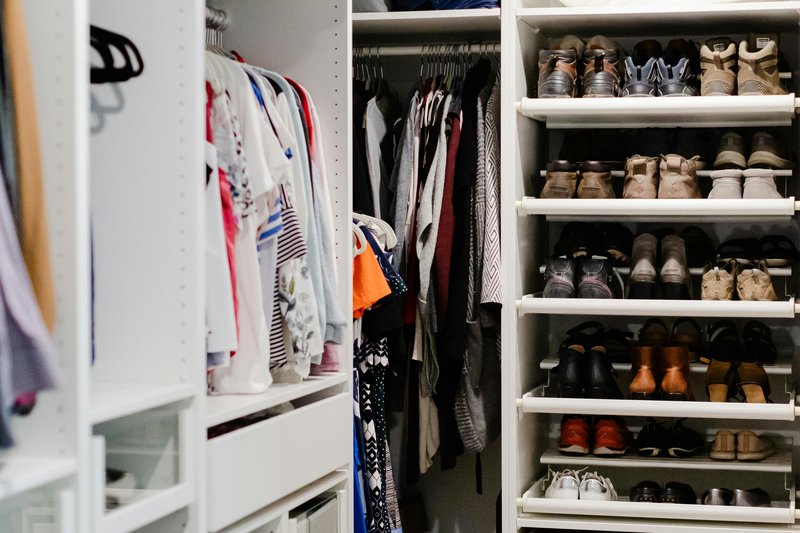
Underestimating shoe storage. This is number one. People think they own 10 pairs of shoes, then count and realize it’s 30. And their partner has 20. That is 50 pairs in a closet that was designed for 20. Plan for more shoe storage than you think you need, and leave room for growth. Shoes multiply.
. If you’re interested in related upgrades, see our guide to How to Maximize Corner Space in a Walk-In Closet.
Not planning for out-of-season rotation. Summer clothes take up different space than winter coats. If all storage is fixed height and depth, you cannot swap them seasonally. Leave some adjustable shelves or have a bin system for off-season items that goes on high shelves. Without this, your closet will overflow twice a year.
Ignoring different folding preferences. This sounds small, but it causes daily friction. One person folds everything KonMari style in shallow drawers. The other stacks in deep drawers. If you give them the same drawer sizes, someone will be frustrated. Customize drawer depth per person when possible.
Making all shelves the same height. A 10-inch shelf works for folded t-shirts but wastes space for jeans. A 14-inch shelf works for sweaters but leaves gaps for shirts. Mix shelf heights in each zone to match what each person stores. Do not fall for the uniformity trap.
Forgetting about accessories. Belts, hats, bags, and ties do not fit neatly into shared storage unless you plan for them. A small dedicated section for each person saves time hunting for these items in the morning. Add a belt rack, tie bar, or hat shelf during planning, not as an afterthought.
Design Styles That Work for Both Personalities
You do not need to agree on every design choice. The trick is to pick a neutral base and let personal items provide the color and character.
A neutral base means white, light gray, or natural wood tones for the walls, floor, and major storage components. This keeps the room feeling calm and spacious. It also means neither person feels forced into a style they dislike. From there, each partner can add their own accents through hangers, bins, and organization accessories. One person can use brushed nickel hangers and clear bins, the other can use matte black hangers with dark bins. Simple color coding makes it clear who owns what without visual chaos.
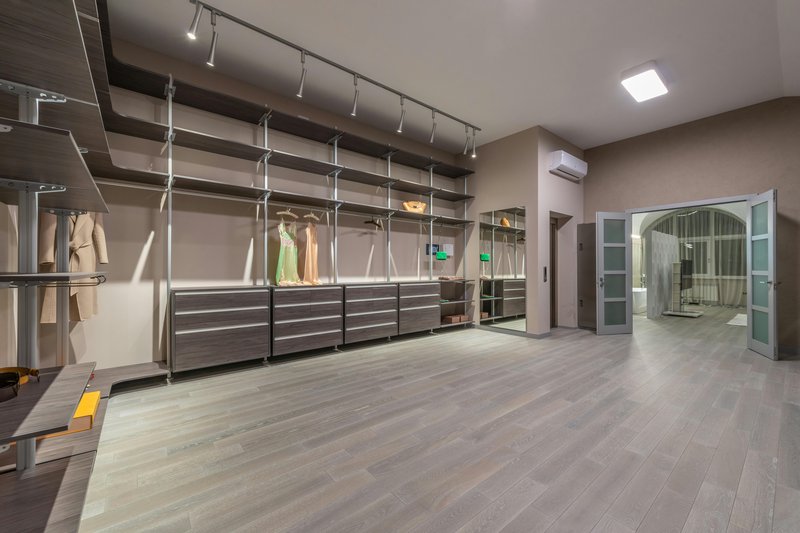
Regarding open shelving versus closed cabinets, open shelving is cheaper and makes items easy to see. But it demands neatness because everything is visible. Closed cabinets with doors hide clutter but cost more and reduce visual access. For a shared closet, a mix works well. Use closed cabinets for items that are less visually tidy, like off-season clothes or bagged sweaters. Use open shelving for everyday items that you want to grab quickly. Give each person a choice for their own zone.
If one person wants a very modern look and the other prefers traditional, the compromise is a transitional style. Think clean lines with warm wood tones. It does not date quickly and neither side feels sacrificed.
Budgeting for a His and Hers Closet: Where to Splurge and Save
Budgeting for a two-person closet means you are buying two of some things, which adds up. Being strategic about where to spend extra money and where to hold back is essential.
Splurge on good hanging rods. Heavy-duty rods that can support multiple coats without sagging are worth the extra cost. A bent rod is a daily annoyance that is hard to fix. Spend more here. Also, splurge on high-quality drawer slides, especially for pull-out racks and deep drawers. Cheap slides bind over time. Blum or Accuride are reliable brands.
Save on generic shelving. Standard melamine shelving from home improvement stores works fine for most folded items. There is no need for custom wood shelves unless you want a specific aesthetic. Similarly, you can save on paint and basic trim. A fresh coat of quality paint in a neutral color is enough.
Pre-made closet system kits from brands like ClosetMaid or Rubbermaid can work well for smaller budgets. They are modular, adjustable, and easy to install. The downside is they may not fit odd dimensions perfectly, so you might waste some space. If you have a standard rectangular closet, a kit is a good value. If your layout is irregular, a semi-custom system from a local company or a big box store’s custom design service may cost a bit more but save space.
Set a realistic total budget before you start shopping. Include rods, shelves, drawers, bins, lighting, mirror, and installation if you are not doing it yourself. A basic his-and-hers setup with a kit can run around $500 to $800. A semi-custom setup with better materials and lighting can be $1,500 to $3,000. Full custom with professional installation can go much higher. Decide what matters most to you both before you browse.
How to Maintain Organization as Your Wardrobes Change
A shared closet only stays functional if you both maintain it. Design helps, but habits matter more. Plan for seasonal rotations by setting aside a weekend twice a year to swap out heavy and light items. During that rotation, donate anything that hasn’t been worn in a year. It frees space for new purchases that inevitably appear.
Adjust shelf heights as needed. When one person’s wardrobe shifts from mostly sweaters to mostly blazers, the shelf spacing should follow. Adjustable rods and shelves make this easy. Without adjustability, you end up with wasted space or squished items. Do not assume the setup you install today will be perfect forever.
Once a year, do a joint closet audit with your partner. Go through each zone together. Identify items neither of you wear anymore. Restore order to shared zones. It is a quick process if you both commit to it. It also prevents the slow creep of clutter that undoes a good design.
Final Checklist Before You Start Building
Use this checklist to ensure you are ready to move forward.
- Measure your closet space. Note length, width, and ceiling height.
- Audit each person’s hanging items by category and measure total linear feet needed.
- Count all shoes owned and estimate future space.
- List specific items that need special storage (boots, gowns, suits, bags).
- Choose a layout that fits your room shape and preferred aisle width.
- Select storage products that match each person’s folding and hanging habits.
- Plan lighting placement before installing rods or shelves.
- Set a budget that covers rods, shelving, drawers, lighting, mirror, and installation.
- Discuss any style differences and agree on a neutral base.
- Schedule a yearly closet audit to keep things on track.
Frequently Asked Questions About Shared Closets
How much space do we need for a his and hers walk-in closet?
A functional shared walk-in typically needs at least 6 feet by 8 feet (48 square feet) for a side-by-side layout with comfortable aisle width. Smaller spaces can work with a peninsula design or single run with a facing island, but you will lose some concession. If under 40 square feet, consider a single zone with flexible storage instead.
Can we customize a pre-built closet system for two people?
Yes, most pre-built systems from home improvement stores are modular. You can buy additional components to create separate zones. what matters is ensuring the parts are compatible and that you can get enough hanging rods and drawer units for both people. Measure your space against the system’s maximum dimensions first.
How do we handle shoes if we have very different collections?
Separate shoe zones are the answer. Use adjustable or tilt-out shelves for flats and sneakers, and cubbies for boots. Avoid a shared shoe rack that forces both to use the same heights. If one person has many heels and the other has only sneakers, give each their own dedicated shelf area.
What if one person wants open shelving and the other wants closed cabinets?
Compromise by using open shelving on one side of the room and a closed cabinet section on the other. The person who prefers open shelving gets the open zones. The person who wants closed storage gets doors or drawers. This is easy to achieve with modular systems. Just keep the overall aesthetic consistent with a neutral base to avoid a clashing look.
. If you’re interested in related upgrades, see our guide to How to Measure Your Space for a Walk-In Closet: A.
Ready to Plan Your His and Hers Walk-In Closet?
Start with the checklist above. It gives you a clear path from idea to finished closet. A well-planned shared space eliminates the frustration of two people trying to use one organization system. You do not need a massive budget or a custom carpenter. You need to assess your needs honestly, choose a layout that fits your room, and pick storage products that match both habits. When you get those three things right, your closet works for both of you every morning without negotiation. Explore the products mentioned here to see what fits your specific setup, then get measuring.
Learn how to design a functional his and hers walk-in closet that balances storage, style, and personal preferences without compromising on space.
Learn how to design a functional his and hers walk-in closet that balances storage, style, and personal preferences without compromising on space.