DIY Closet Systems vs. Fully Custom Millwork: Which Is Right for You?
Introduction
Planning a closet remodel with a budget from a few hundred to ten thousand dollars usually means choosing between two approaches: DIY closet systems and fully custom millwork. The difference between closet millwork vs systems goes beyond cost—it affects your timeline, daily function, and even resale value. This article compares both options in practical terms—cost, quality, fit, installation, and long-term value. No fluff, just what you need to decide.

What Are DIY Closet Systems?
DIY closet systems are modular, ready-to-assemble storage solutions you buy in boxes. You’ve probably seen them at IKEA (Pax, Elvarli, Havsta), The Container Store (Elfa, Avera), or Closetmaid. They come as panels, shelves, rods, and bins that you put together at home. Options range from basic wire shelving to melamine-coated particleboard and a few higher-end choices like IKEA’s Havsta or Method that look more like furniture than utility shelving.
Typical price per linear foot runs from about $5 for wire shelving to $25 for something like a Pax setup with doors. The tradeoffs are straightforward. You get decent organization at a low cost, but customization is limited. Panel widths are fixed—IKEA’s Pax comes in 19 5/8-inch and 39 3/8-inch widths, for example. Hardware is often visible. Materials are generally not solid wood, so lifespan is shorter. But for many homeowners, especially those renting or on a tighter budget, the convenience and price make DIY systems a solid starting point.
What Is Fully Custom Millwork?
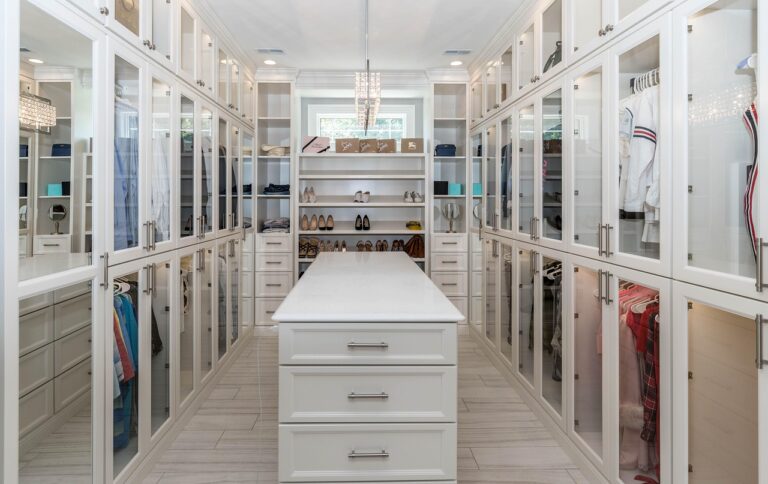
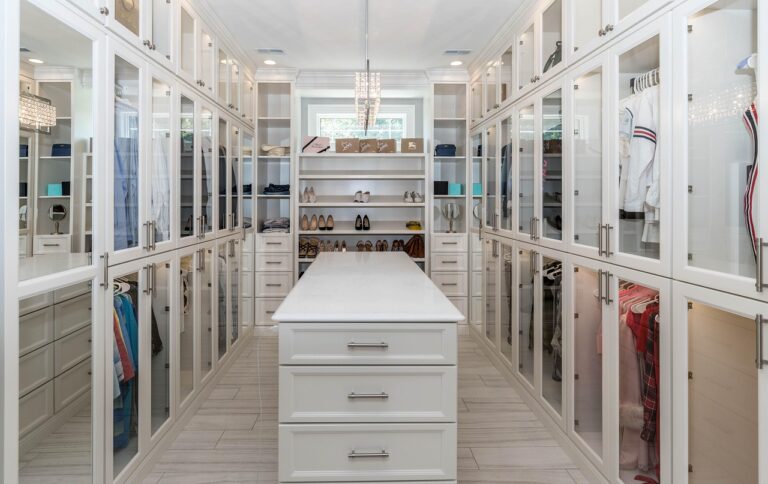
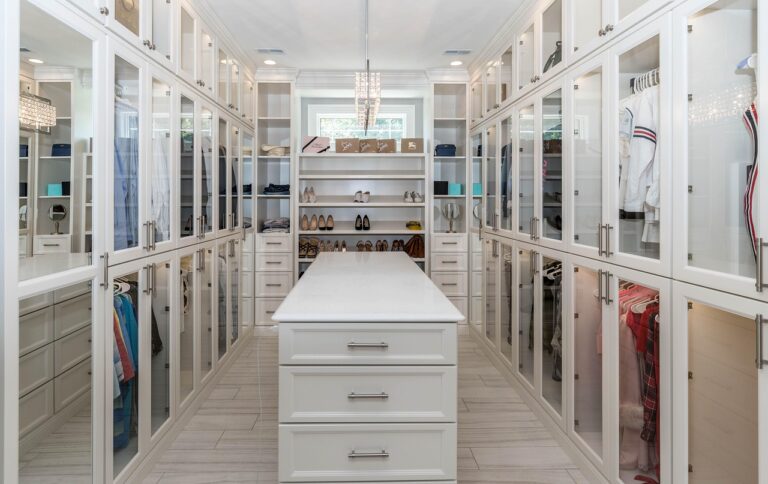
Fully custom millwork means built-in closets that are site-measured and made to measure. A cabinetmaker, custom closet company (like California Closets or Closet Factory), or skilled carpenter builds everything from plywood, MDF, or solid wood. The result fits your space exactly—no gaps at the top, sides, or around sloped ceilings. It integrates with your room’s trim and walls, often using scribe molding to cover imperfections.
Price per linear foot typically ranges from $50 to $150 or more, depending on materials, finish, and complexity. Typical lead time is four to eight weeks. Professional installation is required. You get seamless design, premium hardware like soft-close slides and dovetail drawers, and plenty of finish options. The downsides are the price and the wait. But for primary suites or large walk-ins where you want a built-in look that lasts decades, custom millwork is the standard.
Cost Breakdown: DIY vs. Custom Millwork
Let’s get specific. For a typical 8×10-foot walk-in closet with about 12 linear feet of wall space, here’s what you can expect to spend:
- DIY system (moderate quality): $500 to $2,000 on materials. Your labor is free, but expect 8–12 hours of assembly and installation.
- Custom millwork (basic to mid-range): $4,000 to $8,000. This covers materials, design, and professional installation.
- Custom millwork (premium): $10,000 to $15,000+. Think solid wood, custom finishes, soft-close everywhere, and accessories like pull-out tie racks or jewelry inserts.
For a smaller reach-in closet, the difference is still significant. A DIY Elfa system might run $300 for a 6-foot reach-in. A custom millwork version for the same space could be $1,200 to $1,800. Cost drivers are materials (particleboard vs. plywood), thickness (5/8-inch vs. 3/4-inch), finishes (laminate vs. paint or stain), and labor (factory assembly vs. site-built craftsmanship).
On long-term value, custom millwork often adds more to resale value in higher-end markets. DIY systems generally don’t add much—some buyers see them as temporary. That said, you can upgrade a DIY system over time by replacing components or painting doors. The initial investment difference is stark, so be realistic about how long you plan to stay in the home.
Quality and Durability Compared
Construction quality is where the gap widens the most. Most DIY systems, especially IKEA’s Pax and Closetmaid’s wire shelving, use particleboard with a melamine coating. Particleboard is heavy and dense, but it chips easily on edges and can sag under heavy loads if shelves aren’t reinforced. Drawer hardware is often basic—metal slides that work fine but lack smooth, soft-close action. Expect a lifespan of 5 to 10 years before things start looking worn or the hardware feels loose. For those tackling a DIY project, a reliable drill/driver combo can make assembly and installation more efficient.
Custom millwork uses plywood, MDF with hardwood edging, or solid wood. Joints are dadoed or doweled, not just cam-locked. Drawers ride on soft-close undermount slides. Cabinets are screwed together and anchored to the wall properly. A well-built custom closet can easily last 20 years or more. That said, not all custom work is equal. A cheap custom job using thin MDF with poor finishing might not outlast a well-assembled IKEA system. Be selective about your cabinetmaker.

Customization and Fit: The Real Difference
This is the biggest practical difference between closet millwork vs systems. DIY systems are made to standard widths and heights. IKEA’s Pax comes in 19 5/8-inch and 39 3/8-inch widths, and the standard height is 79 1/2 inches. That leaves gaps at the top unless you buy a filler strip, and you can’t fill every inch of wall space perfectly. If your ceiling is 96 inches, you’ll have 16 inches of dead space above the cabinets. If your wall is 100 inches long, you’ll either have a gap or need to buy an extra skinny cabinet that might not match perfectly.
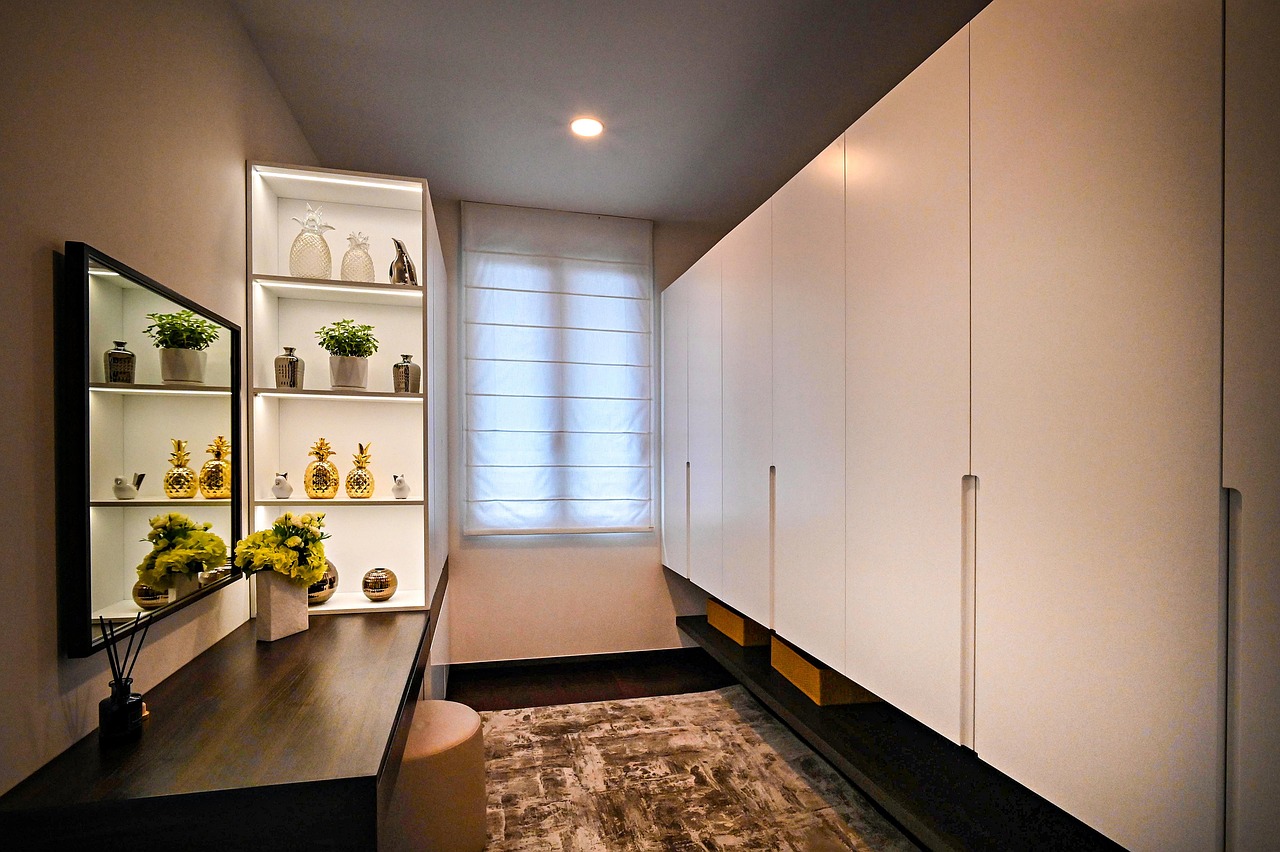
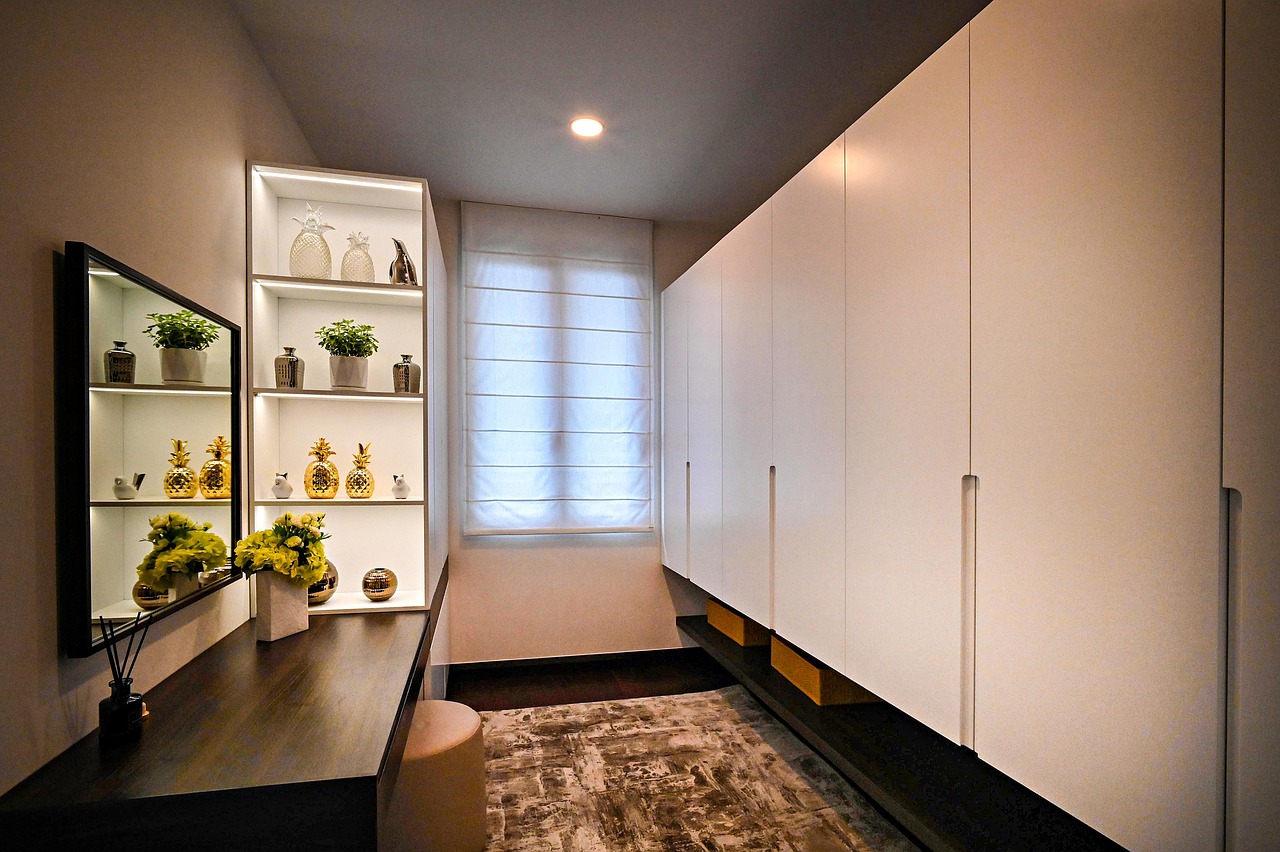
Custom millwork fills every inch. It fits around sloped ceilings, dormers, angled walls, and tight alcoves. Scribe strips cover uneven walls. Crown molding ties everything to the ceiling. For small, awkward spaces—like a 30-inch-deep closet or a room with an angled ceiling—custom is essentially the only way to get a seamless, built-in look. If you have standard dimensions and are fine with a small gap covered by a filler panel, DIY works fine. If you want a truly integrated closet, go custom.
Installation: Your Skill Level Matters
DIY installation requires basic tools: a drill, level, stud finder, and tape measure. A medium-sized IKEA Pax closet with doors will take most people 4 to 8 hours to assemble and install. The biggest pitfalls are misaligning the mounting tracks, not anchoring to studs (using drywall anchors instead, which fail under load), or assembling components upside down. These are common mistakes that can compromise stability or force you to redo sections. If you’re comfortable with a drill and can follow instructions carefully, DIY is doable. A good stud finder can help avoid installation mistakes.
Custom millwork installation is a professional skill. It involves leveling base boxes, scribing cabinets to walls, trimming, and often painting or finishing on-site. A good installer is worth every penny. A bad custom install—crooked cabinets, gaps you can see through, misaligned doors—will look worse than a well-executed DIY system. Don’t assume custom always looks better if the install is sloppy.
Design Flexibility: Materials, Finishes, and Layout
DIY systems limit you to what the manufacturer offers. IKEA gives you a few finish options (white, black-brown, high-gloss white, wood-effect). The Container Store’s Elfa comes in various colors but still within their catalog. You can upgrade with third-party accessories like custom drawer boxes or decorative molding, but that requires extra work and planning.
Custom millwork gives you near-infinite design flexibility. You can choose any paint color, wood veneer, or laminate. You can add built-in lighting, crown molding, a center island, custom drawer configurations, shoe cubbies, belt racks, and jewelry inserts. Want a chandelier in your walk-in? Custom can design the electrical around it. Want sliding doors that match your existing cabinetry? Done. The tradeoff is that more choices mean more decisions and a higher price tag. For homeowners who love design detail and have the budget, custom is the clear winner. For everyone else, a well-planned DIY system with some smart accessories can still look great.
Who Is Each Option Best For?
- DIY systems are best for: renters who want to remove the system later, budget-conscious homeowners spending under $2,000, smaller closets under 8 linear feet, weekend warriors who enjoy assembly, and anyone planning to move within 5 years.
- Custom millwork is best for: primary suite walk-ins over 10 linear feet, homeowners planning to stay 10 years or more, design-focused people who want a seamless built-in look, and anyone with non-standard spaces like sloped ceilings or odd angles.
A hybrid approach also works well. Go custom in your master closet for maximum impact, and use DIY systems for secondary closets like guest rooms or children’s rooms. This balances budget and aesthetics.

Common Mistakes to Avoid When Choosing
- Buying cheap DIY systems for a heavily used closet. Particleboard shelves sag under heavy sweaters or stacked jeans. Drawers jam. Save yourself the frustration and spend a little more on a sturdier system.
- Assuming custom is always better. Bad design or poor installation ruins the advantage. Cheap custom work with thin MDF can look and feel worse than a solid DIY setup.
- Not measuring ceiling height accurately. Standard DIY panels like IKEA’s 79 1/2-inch height may leave an awkward gap. Measure floor to ceiling and account for baseboards.
- Ignoring hardware quality. Flat-assembled hardware (where shelves rest on pegs) is less stable than cam-lock or metal bracket systems. Pay attention to how things connect.
- Underestimating installation time. A DIY closet can take a full weekend if you’re careful. Rushing leads to mistakes. Plan accordingly.
- Skipping a design plan. Both DIY and custom benefit from a detailed layout. Sketch your space, measure everything, and plan where each item goes. It prevents wasted space and costly mistakes.
Realistic Long-Term Value: Resale and Usability
Custom millwork in a master closet can recoup 50% to 70% of its cost in home value, especially in higher-end markets where buyers expect built-in storage. In a $500k–$800k home, a well-designed custom closet can be a selling point that sets your property apart. DIY systems generally don’t add much value—many buyers see them as inexpensive add-ons that might need replacing. However, in starter homes under $300k, a high-end DIY system with painted doors and proper trim can convincingly look like custom to most buyers.
One practical note: custom millwork is easier to insure as a permanent improvement. If you file a home insurance claim, built-in cabinets are covered under your dwelling policy. DIY systems are often considered personal property and may fall under different coverage limits. It’s a small but real difference for some homeowners.

Helpful Tools, Accessories, and Services
Whether you go DIY or custom, certain products solve common problems. For DIY installation, a good measuring tape, a stud finder, and a reliable drill/driver combo are essential. IKEA’s Ledberg strip lights or similar under-cabinet lighting improve visibility. Consider drawer organizers to keep small items sorted, clear jewelry boxes to prevent tangles, and shoe racks that maximize floor space. For custom closets, soft-close slides and pull-out tie racks add daily convenience. A closet dehumidifier can protect clothing in humid climates. Home design software like SketchUp or IKEA’s Home Planner helps visualize your layout before you buy or build. These are practical solutions that make any closet system work better—not sales pitches.
Final Recommendation: How to Decide
Choose DIY if your budget is under $2,000, your closet has standard dimensions, and you’re comfortable with basic tools and assembly. You’ll save money upfront and still get organized storage. Choose custom millwork if you have $5,000 or more to invest, your space is non-standard, or you want a built-in look that integrates with your home’s design. The middle path—hiring a carpenter to build a custom front frame while using modular boxes—works for some homeowners who want a custom appearance at a lower cost.
Ready to explore your options? Start here with a closet planning tool or a free design consultation. The right choice depends on your space, your budget, and your timeline—but now you know what each path really delivers.