Modern Farmhouse Walk-In Closet Ideas: Design, Storage & Style
“`html
Introduction
A modern farmhouse walk-in closet is more than just a place to store clothes. It’s where rustic warmth meets clean, contemporary lines, and the result is a room you might actually enjoy being in. If you’re planning a remodel or building from scratch, you want a space that feels curated without being fussy, and functional without looking like a catalog. This article walks through the key design principles, smart storage ideas, common pitfalls, and a few product picks to help you build a modern farmhouse closet that works for how you actually live. Whether you’re gutting a room or just refreshing an existing one, there’s enough here to get you moving in the right direction.

What Defines a Modern Farmhouse Closet
At its core, a modern farmhouse closet balances function and feel. The look leans on a neutral palette—whites, beiges, soft grays—paired with natural materials like wood, metal, and stone. Cabinetry tends to use shaker or flat-panel doors. Barn doors or sliding doors often replace traditional hinged ones to save space and add character. Hardware leans toward vintage-inspired designs in brushed brass, matte black, or aged bronze.
What sets it apart from traditional farmhouse is restraint. Traditional farmhouse can feel heavier, with more moldings and darker wood tones. Industrial farmhouse goes rawer, with exposed pipes and concrete. Modern farmhouse sits somewhere in between. It uses clean lines and minimal ornamentation while hanging onto that warm, inviting feel. The result is a closet that feels current and timeless—a backdrop for your clothes, not a competing focal point.
Key Design Elements to Sort Out First
Before you start shopping for baskets or hangers, get the bones of the room right. Layout comes first. Most walk-ins work best as an L-shape, U-shape, or a long galley. U-shapes give you the most storage per square foot, but L-shapes can feel more open. If you have a wider space, a peninsula with drawers on one side and open shelves above can break things up nicely.
Lighting is easy to overlook, but don’t. A single overhead fixture isn’t enough. You need layered light: ambient (a flush mount or semi-flush fixture), task (sconces by a mirror or LED strips inside drawers), and accent (picture lights on shelves). Recessed lights work well for general illumination. A chandelier adds a focal point. For a practical ambient solution, a semi-flush mount light fixture with a seeded glass shade blends farmhouse character with good light.
For flooring, wide-plank wood (real or engineered) is the classic choice. Tile or luxury vinyl works if humidity or wear is a concern. Keep the color scheme light: white walls, wood floors, black or brass hardware. One common mistake: ignoring dead corners. If your layout wraps around, plan for pull-out racks or angled shelving so you don’t waste space.
Storage Systems That Work With the Style
You have to decide between open shelving and closed cabinetry early on. Open shelving creates that airy, curated look. It works well for shoes, folded jeans, and accessories you want to see. But it demands organization. If you tend to toss things in, closed cabinets are more forgiving. A lot of people use a mix: closed drawers and cabinets for daily clothes, open shelves for bags and seasonal items.
For systems, the Elfa and IKEA PAX lines are worth a look. Elfa is modular, installs easily, and you can add drawer fronts or basket inserts that fit the farmhouse style. PAX gives you more customization with door options. You can buy PAX frames, then add shaker-style doors from a third-party supplier. It gives you the look of custom built-ins at a lower cost.
For storage style, woven baskets work well for bulky items like sweaters or linens. Clear bins are better for small accessories you need to see. Skip cheap plastic bins—they clash with the warm aesthetic. Stick to natural materials or frosted acrylic if you want to see inside. For seasonal items, a set of woven storage baskets with handles can keep bulky sweaters neat while adding natural texture.
Rods, Hooks, and Hangers: Small Details That Matter
Hardware is where the farmhouse character really shows. Don’t skimp here. Choose rods in brass or matte black metal. Wooden rods look good, but they can bow under heavy coats if not supported well. Decorative hooks are practical and stylish. Install a row on a wall or inside a closet door for bags, scarves, or belts. Look for wrought iron or brass hooks with a slightly aged finish.
Hangers matter more than you might think. Velvet hangers keep clothes from slipping and take up less space. Wooden hangers add warmth and structure to suits or coats. Plastic hangers look cheap and don’t help maintain shape. A set of uniform hangers instantly upgrades the look of your closet, and it’s a low-effort change you can make in an afternoon. For consistency, uniform velvet hangers are a simple upgrade that keeps things tidy.

The Role of Natural Materials: Wood, Metal, and Stone
A modern farmhouse closet relies on texture to feel complete. Start with wood. Reclaimed wood adds character, but it can be heavy for small spaces. Oak or pine with a clear finish keeps things light. If you’re painting, use a matte or satin white—skip high gloss. For accent pieces like an open shelf or a bench, a walnut or dark stain can anchor the room without overwhelming it.
Metal shows up in hardware, lighting, and occasional shelving. Wrought iron and matte black are the safest bets. Brass adds warmth if you’re leaning slightly more traditional. Match your metal tones across the room. Mixing polished chrome with oil-rubbed bronze is risky unless you’re confident in the contrast.
Stone appears in countertops for a vanity area or as small accents. Quartz is durable and easy to clean. Skip marble unless you’re okay with sealing it regularly. One note: trendy barn wood can feel forced in small spaces. If you have a large closet, a barn wood accent wall can work. In a tight room, stick to a single piece of furniture or a shelf to get the effect without the visual weight.
Maintenance-wise, wood needs humidity control. If your closet is near a bathroom or laundry room, consider a dehumidifier. Stone counters need sealing every few years. Nothing overly demanding, but worth planning for upfront.
Seating and Vanity Areas: Function Meets Comfort
If you have the floor space, add seating. A window seat with storage underneath is both practical and charming. In a narrower room, an upholstered bench at the foot of the closet works. For a small corner, an accent chair with a mid-century or French country silhouette fits the farmhouse look. Look for pieces in linen, cotton, or a subtle woven fabric.
For a vanity, keep it simple. A wooden console table with a few drawers gives you a spot for makeup or checking outfits. Add a mirror with a simple frame—black or wood—and task lighting on either side. If space is tight, use a wall-mounted fold-down table. You get the function without sacrificing floor area. Plan for electrical outlets if you’re adding a vanity. It’s easier to add rough-in during construction than to run new wires later.
Lighting: Setting the Mood and Maximizing Visibility
Lighting in a closet has two jobs: help you see clearly and set the tone. Start with ambient light. A flush or semi-flush fixture in wrought iron or seeded glass works with the farmhouse look. If you have vaulted ceilings, a mini chandelier with exposed bulbs can be a statement. Just make sure it’s not so large it feels crowded.
Task lighting is where you gain real functionality. Install LED strip lights under open shelves or inside drawers. Motion-activated strips are convenient—no fumbling for switches. Sconces on either side of a mirror give even light for grooming. For hanging areas, a simple track light or spotlights on a rail can highlight your clothes without casting shadows. For a quick lighting fix, motion-activated LED strip lights can illuminate dark corners conveniently.
Accent lighting adds depth. Picture lights on shelves or above artwork create visual interest. Dimmer switches are worth the extra cost. They let you brighten the room for choosing outfits and dim it for a more relaxed feel. A well-lit closet never feels small.
Common Mistakes to Avoid When Designing a Modern Farmhouse Closet
Even with good intentions, mistakes happen. Here are the ones most people run into.
1. Choosing trendy materials that don’t hold up. Overly distressed wood looks great in photos, but it can snag delicate fabrics. Rough edges on shelves or hooks ruin clothes. Choose smooth or sealed finishes for anything that touches your clothing.
2. Poor lighting placement. A single central fixture casts shadows on your face when you’re looking in a mirror. Always add task lighting near mirrors and dressing areas. Without it, you’ll constantly adjust your position to see properly.
3. Ignoring vertical space. Most closets have unused wall space above the hanging rods. Add a high shelf for seasonal storage. Use bins or baskets up there so you can rotate items without climbing.
4. Forgetting seasonal storage. You need room for bulky winter coats, suitcases, or holiday decor. Plan for at least one deep cabinet or a high shelf that can handle this. Otherwise you’ll end up storing things in another room.
5. Over-architecting small spaces. In a tiny walk-in, too many design elements (shiplap walls, a barn door, crown molding, a chandelier) make the room feel chaotic. Pick two or three features and let them stand out. In a small closet, simplicity wins.
Fixes: test lighting before you commit. Use smooth-sanded wood for shelves. Always measure your tallest pairs of boots before setting rod heights. And when in doubt, add more hooks—they’re cheap and solve most organization problems.
Modern Farmhouse vs. Rustic Farmhouse: What’s the Difference?
If you’re unsure which direction to go, think about your existing decor. Modern farmhouse uses cleaner lines, less ornamentation, and more neutral colors. You’ll see white shaker cabinets, black hardware, and light wood floors. Rustic farmhouse leans heavier. Expect darker woods, more wrought iron, barn doors with heavy hardware, and decorative touches like corbels or rosettes.
Here’s a quick breakdown. Modern farmhouse: flat-panel or simple shaker doors, matte black or brass fixtures, light or gray-wash wood, minimal trim. Rustic farmhouse: raised-panel doors, oil-rubbed bronze hardware, dark oak or knotty pine, beadboard walls.
You can blend both. Use rustic touches like a sliding barn door on the closet entrance but keep the interior modern with clean cabinetry and soft lighting. That hybrid approach gives you character without the space feeling heavy. Decide based on your home’s architecture. If you have open, contemporary rooms, go modern. If your home has more traditional bones, rustic might fit better.
Budget-Friendly Ideas for Achieving the Look
You don’t need to spend a lot. Some of the best results come from small upgrades. Paint is your easiest tool. Take existing cabinets and paint them a warm farmhouse white (like Benjamin Moore Dove Wing or Sherwin-Williams Alabaster). Swap out the handles for matte black or brass pulls. That alone can change the room.
Open shelving is cheap and effective. Use IKEA brackets and solid pine boards. Sand and stain them a light oak. This costs under $100 and gives you that curated, airy look. For the door, install a barn door track and mount a sliding mirror. This serves as both a full-length mirror and space-saving entry. You can get a mirror barn door kit online for around $200.
For storage, use woven baskets from a home goods store. They’re durable and look intentional. Stay away from cheap wood veneer items that peel within months. IKEA’s KALLAX unit with basket inserts is a budget-friendly alternative to custom cabinetry. It’s simple, clean, and fits the modern farmhouse look easily. Just anchor it to the wall if you have kids or pets.

Real-World Examples: How Others Designed Their Closets
These are composite examples based on common real-world setups. They help illustrate what works.
Small reach-in closet. A narrow closet with a single rod was transformed by removing the rod and adding open shelving on both sides. A simple barn door was installed on a track to replace the standard door. The result: a compact but functional space with room for shoes on floating shelves, folded clothes in baskets, and a hook rail for coats. The lesson: in a small space, open shelving and a sliding door maximize every inch.
Medium walk-in using IKEA PAX. This homeowner used PAX frames with custom shaker-style doors from a local supplier. Inside, they mixed hanging rods with pull-out drawers on the bottom. Woven baskets held scarves and belts on high shelves. A simple bench sat against one wall. The lesson: modular systems work when you invest in the right doors. Don’t settle for standard PAX doors if they don’t match your style.
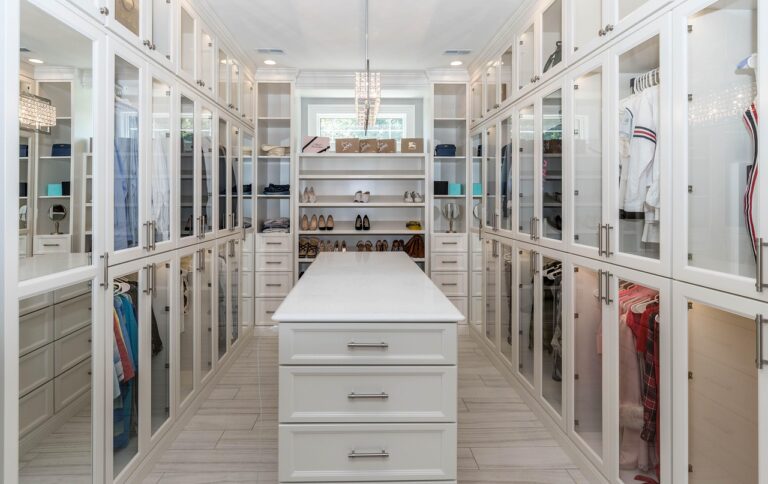
Large custom walk-in with island. This space had room for a central island with six deep drawers. A chandelier hung above. The perimeter used floor-to-ceiling cabinets with glass-front doors for handbags and shoes. A dressing area with a counter and mirror filled one end. The tradeoff: custom work meant a higher budget, but the layout was perfectly tailored. The lesson: if you have the budget, prioritize drawer dividers and task lighting. They make daily use smoother.
Final Considerations Before You Start Your Project
Measure everything twice. You can’t fix a layout after the rods are installed. Think about how you move in the room. Leave at least 36 inches of clearance in the main walking path. Choose materials that hold up to humidity if your closet shares a wall with a bathroom. Plan for future needs—you might add more clothes, bags, or shoes over time. Leave some flexible space like empty shelves or adjustable rods.
If you’re making structural changes—moving walls, adding electrical, or removing a window—hire a professional. The cost is worth the peace of mind. Start with a mood board. Pin images of closets you like. Identify the top three features that appeal to you most. Maybe it’s the lighting, the hardware, or the layout. Prioritize those. You don’t need to do everything at once. A well-designed modern farmhouse closet grows with you. Start designing your dream setup today with these practical steps.
“`