How to Design a Zen Walk-In Closet for Calming Organization
Introduction
Most walk-in closets are designed for one thing: maximum storage. That often means a visual assault of hanging clothes, stacked bins, and shoes piled on the floor the moment you open the door. I’ve been there. My first walk-in was a Standard builder-grade setup with wire shelving and a single overhead light. It held everything, but it never felt good to walk into. After years of tweaking layouts and experimenting with different organizing systems, I landed on a different approach—one that prioritizes calm just as much as capacity. A zen walk-in closet isn’t about having less stuff. It’s about creating a space that starts your day with clarity rather than chaos.

This article covers the design principles, material choices, layout strategies, and organization systems that turn a closet into a peaceful, functional space. If you’re planning a closet redesign and want something that feels intentional rather than just efficient, this is the approach I’ve found works best.
Why a Zen Closet Works Better Than Traditional Designs
A traditional walk-in closet is built around a simple equation: more shelves plus more rods equals more storage. But that equation ignores how you actually interact with the space. When every surface is full, your morning routine becomes a visual negotiation. You scan, you hunt, you pull. The clutter creates cognitive load before you’ve even had coffee.
A zen closet flips that. It reduces visual noise by limiting what’s on display. You still store everything you need, but you store it in a way that doesn’t demand your attention until you need it. I noticed the difference immediately after switching. My mornings went from a five-minute search for matching socks to a two-minute grab-and-go process.
Here’s how the two approaches compare directly:
- Traditional Closet: High visibility of all items, open shelving, mixed hangers, bright white light. Daily stress: moderate to high. Maintenance: constant tidying to keep it looking organized.
- Zen Closet: Controlled visibility, uniform storage, negative space, warm lighting. Daily stress: low. Maintenance: weekly resets, but less daily friction.
The tradeoff is real: you lose some display space. If you love seeing every pair of shoes or every handbag, a zen closet will feel restrictive. But if what you want is a space that helps you feel grounded before you walk out the door, the tradeoff is worth it.
Core Principles of a Zen Walk-In Closet
These aren’t abstract concepts. They’re practical decisions that affect how the space functions and feels.
Simplicity
Every shelf, rod, and drawer should serve a clear purpose. If you’re storing things you rarely use, they don’t belong in prime real estate. I keep off-season items in labeled bins on a high shelf. My daily-use items get the easy-access spots. Simplicity here means fewer decisions when you’re in the closet.
Natural Materials
Wood, stone, and soft fabrics ground the space. They don’t reflect light harshly, they don’t feel cold to the touch, and they age gracefully. I replaced wire shelving with bamboo and immediately noticed the difference in how the room felt—warmer, quieter, more intentional.
Negative Space
This is the hardest principle for most people to accept. Empty shelf space isn’t wasted. It’s breathing room. When I reduced the number of items on my main shelf by 30 percent, I stopped knocking things over. My brain could actually process what I was looking at. Negative space prevents the morning frustration of visual overload.
Intentional Lighting
Lighting isn’t just for seeing. It sets the mood. I’ll cover specifics in a later section, but the principle is simple: light should feel warm and diffused, not clinical or harsh. Travelers who need to see clearly in low-light situations may want to consider a dimmable LED closet light fixture for a gentle glow that can be adjusted throughout the day.
Flow
Flow is about movement. Can you walk in without bumping into things? Can you reach your most-used items without stretching or bending? Good flow means the closet works with your body, not against it. I measured my zone of movement—about a 3-foot radius from the center of the room—and designed around that.
Choosing the Right Layout for Zen Flow
Layout is the foundation. Get it wrong, and no amount of beautiful materials will fix the frustration.
Here are the most common layouts and how they affect zen:
- Single Row: Works for narrow spaces. Everything on one wall. Simple, but limits capacity. Best for small closets where you want a linear, uncluttered look.
- L-Shape: Uses two adjoining walls. Good for medium-sized closets. Creates a natural corner that can hold a seating area or dressing table. Keeps the center open.
- U-Shape: Wraps around three walls. Maximum storage, but can feel closed in if the room is small. I use this in my main closet, but I kept the center clear—no island—to preserve floor space.
- Island: Adds storage and surface area, but it eats up floor space. Only worth it if you have enough room to walk around it comfortably (at least 3 feet on all sides). I skipped the island. I don’t miss it.
Pro tip: Measure your zone of movement before committing to a layout. Stand in the center of your closet space and stretch your arms out. Can you touch both walls? That’s too tight. You need at least 4 feet of clear walking space in front of your primary hanging areas.

For small closets, the L-shape is usually the best compromise. For larger spaces, a U-shape with an open center floor creates a spacious, airy feel.
Materials That Promote Calm: Wood, Stone, and Fabric
Materials matter more than you think. A closet that feels calm isn’t just about what’s inside—it’s about what the surfaces themselves communicate.
Shelving: Bamboo and oak are excellent choices. They’re warm, sustainable, and age well. Bamboo is affordable and moisture-resistant, making it a good option for closets near bathrooms. Oak is more durable and has a richer grain. Both beat painted MDF, which chips and looks tired within a few years.
Flooring: Hardwood, cork, or natural stone tiles work best. Carpet collects dust and feels soft but can trap odors. I prefer cork—it’s warm underfoot, quiet, and naturally antimicrobial. It also has a soft, organic look that fits a zen aesthetic.
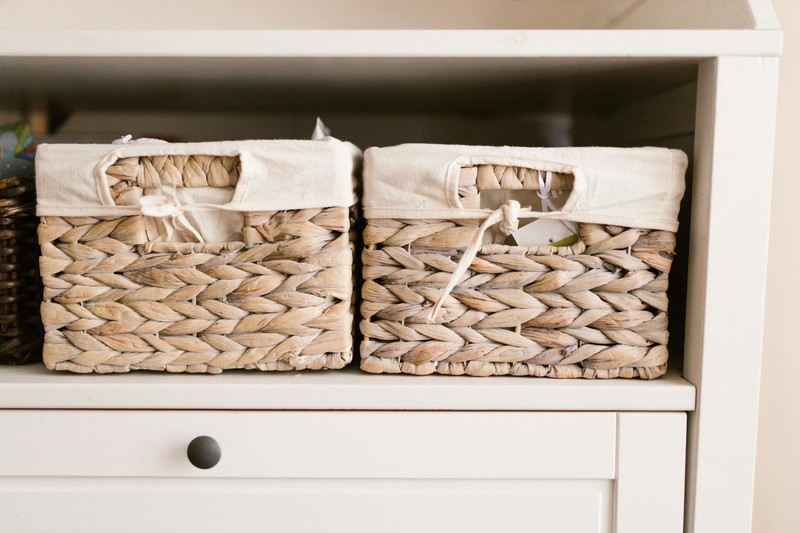
Storage bins: Linen and cotton are your friends. They breathe, they fold flat when not in use, and they look intentional. Avoid plastic bins with lids—they stack well but create a visual wall of clutter. For a tidy look, consider using bamboo storage baskets for closet for larger items and cotton drawstring bags for accessories.
Budget comparison: If you can’t afford solid wood, consider bamboo veneer over plywood. It looks similar but costs about 40 percent less. I did bamboo veneer for my upper shelves and solid oak for the main hanging rods. The difference is noticeable up close, but from three feet away, it’s identical.
Lighting: The Overlooked Element in a Calm Closet
I made this mistake with my first closet. I installed bright white LED strips (5000K) because I wanted to see every detail. And I could. But the space felt sterile, like a hospital room. It killed any sense of calm.
Lighting for a zen closet should be warm and layered. Here’s what I recommend:
- Color temperature: 2700K to 3000K. That’s the same warm glow you’d use in a living room. Anything above 3500K starts to feel harsh.
- Dimmable fixtures: Worth the investment. I use dimmable recessed lights on a switch. In the morning, I keep it low (around 60 percent). In the evening, I turn it up to see clearly when I’m putting things away.
- LED strip lighting: Great for under-shelf or behind-rod accent lighting. It adds depth without glare. I have a strip behind my main hanging rod that softly highlights the clothes.
The tradeoff is cost. Dimmable fixtures and quality LED strips cost more upfront. But they transform the space. If you only splurge on one thing for your closet, make it lighting.
Organizing for Clarity: Storage Systems That Reduce Visual Noise
Once the layout and materials are set, organization is where the zen actually happens. Here’s what works from my experience:
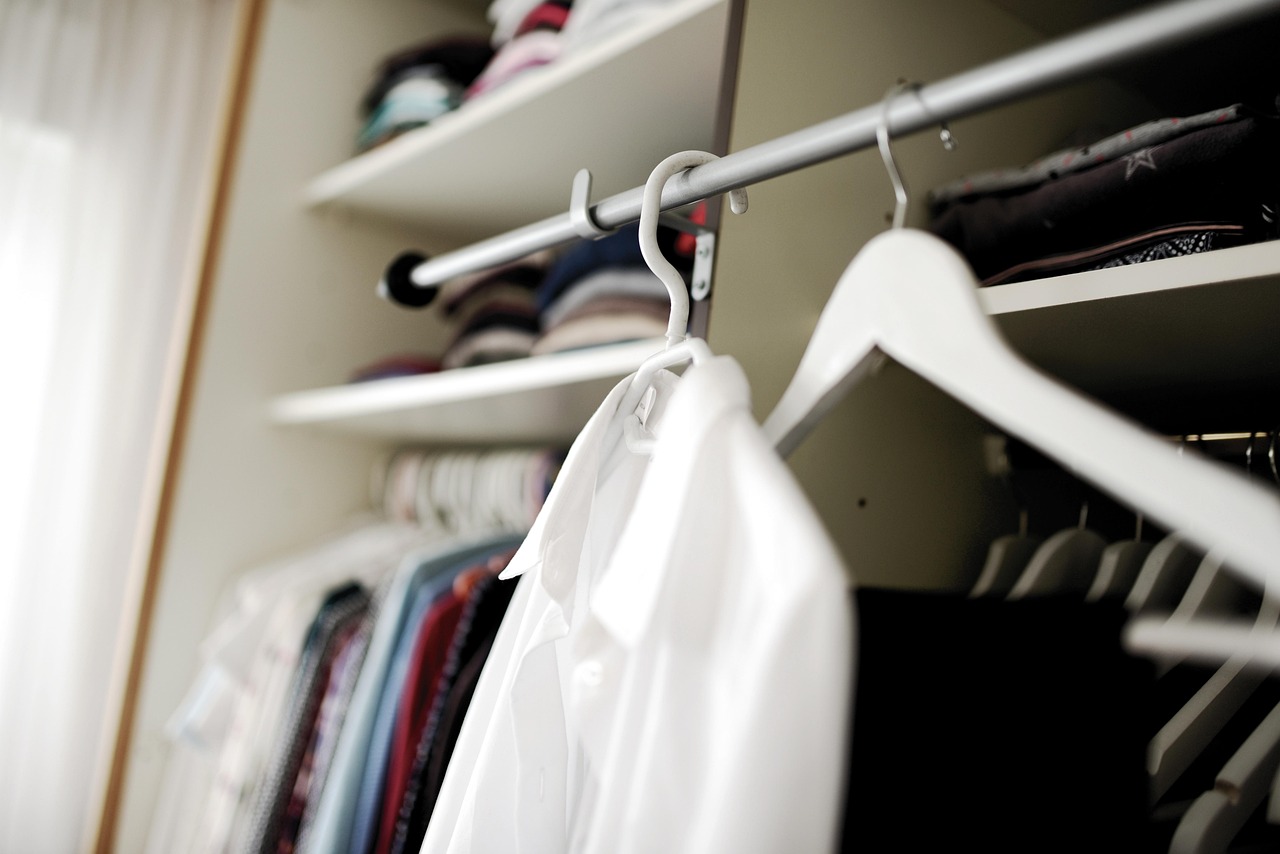
Uniform hangers: Nothing screams clutter like mixed plastic, wire, and wooden hangers. I use velvet hangers for everything—they grip clothes, prevent slipping, and are thin enough to save space. One style, one color. It instantly looks cleaner.
Drawer dividers: A drawer full of underwear or socks is chaos by default. Dividers fix it. I use adjustable bamboo dividers that fit standard drawer depths. They keep everything separated without needing custom inserts.
Vertical folding: For t-shirts, jeans, and sweaters, vertical folding (like the KonMari method) creates a drawer you can actually see into. It takes a few extra seconds to fold, but it saves time every time you open the drawer.
Open shelving vs. closed cabinets: Open shelving is more zen—you see fewer doors and lines. But it requires discipline. Everything has to be folded and stacked neatly. If you’re not ready for that commitment, use closed cabinets below open shelves. That way, the messy stuff stays hidden.
Mistake to avoid: I once bought a set of 20 storage bins from a big-box store without measuring the shelf depth. Half of them stuck out by two inches. Returned them the same day. Measure your shelves before you buy anything. Beginners may want to start with adjustable closet drawer dividers to keep accessories in order without a big investment.
Common Mistakes When Designing a Zen Walk-In Closet
Not everything goes perfectly. Here are the errors I made so you don’t have to.
- Too much open shelving: I thought open shelves would look clean. They don’t. They show every crease in a folded sweater and every item that’s slightly askew. Reserve open shelving for items you’re willing to fold perfectly.
- Ignoring the drop zone: The space just inside the closet door is where keys, wallets, and jackets pile up. I didn’t plan for it. Now I have a small tray for pocket items and a hook for a jacket. It stops the clutter from spreading.
- Using black or dark colors: A dark accent wall sounds dramatic, but in a closet, it creates shadows and makes the space feel smaller. Light neutrals (white, beige, soft gray) reflect light and keep the room open.
- Forgetting maintenance access: I installed a high shelf that’s a pain to reach. Now I keep a small step stool nearby, but I should have designed for easier access from the start.
- Over-accessorizing: Too many baskets, trays, and organizers create visual noise. Less is more. I removed half the accessories from my first design and the closet looked better immediately.
Budget vs. Splurge: Making Smart Tradeoffs
You don’t need a full custom build to get a zen closet. But you do need to know where to spend and where to save.
| Category | Splurge Worthy | Save Here |
|---|---|---|
| Lighting | Dimmable fixtures, warm LED strips | Basic switch, non-dimmable bulbs |
| Shelving | Solid wood or quality bamboo | Painted MDF (short-term budget option) |
| Rods | Hardwood or metal with proper support | Basic chrome rod (works fine for light loads) |
| Storage bins | Bamboo baskets (durable, look great) | Cotton drawstring bags (affordable, fold flat) |
| Hangers | Velvet hangers (uniform, save space) | Basic wood hangers (look fine, cost less) |
| Drawer dividers | Adjustable bamboo dividers | Plastic mesh dividers (budget option) |
My approach: I splurged on lighting and shelving because those are structural and affect daily use. I saved on bins and hangers because those are easy to swap later. A mid-tier bamboo shelf unit for closet can cost around $150 and hold up well for years—a good investment for a calm space.
How to Maintain a Zen Closet Over Time
A zen closet isn’t a set-it-and-forget-it project. It requires habits.
- Seasonal purge: Every three months, go through everything and remove what you haven’t worn. Donate or sell. This keeps the volume manageable.
- One-in-one-out rule: It’s simple. Buy a new pair of shoes? Let an old pair go. It stops the closet from slowly filling up.
- Daily 5-minute tidy: Before bed, spend five minutes putting things back where they belong. It’s a small habit, but it keeps the space from unraveling.

Realistic expectation: your closet will never look like a magazine page every day. And that’s fine. The goal is to have a space that feels calm to walk into, not a museum display. I keep a small steamer in my closet for quick touch-ups and a lint roller for last-minute polish. Those little tools help maintain the look without adding stress.
Final Thoughts: Is a Zen Walk-In Closet Right for You?
A zen walk-in closet works best if you value calm over display capacity. If you love seeing every item you own and want maximum visual access, this approach might feel restrictive. But if you’re tired of starting your day in a cluttered space, if you want a closet that helps you feel focused and grounded, then yes—this design is worth pursuing.
Start with your lighting and material choices, then build from there. Focus on the principles that matter most to you: negative space, warm light, natural materials. The rest will follow. If you’re ready to begin, start with one change—swap your hangers, add a warm light strip, or clear off one shelf. Even small steps make a difference.