Coastal Walk-In Closet: Light and Airy Design Ideas & Tips
Introduction
Imagine stepping into a closet that doesn’t feel like a dark, cramped afterthought. A coastal walk-in closet brings the outdoors in, using light colors, natural materials, and smart layouts to create a space that’s both functional and calming. It’s a design philosophy rooted in the breezy, relaxed aesthetic of beach homes, but it works just as well in a suburban master suite or a city apartment. This guide is for homeowners who want that light-and-airy feel without sacrificing storage or practicality. We’ll cover materials, layouts, lighting, and product recommendations, so you can build a space that feels like a personal retreat—not a Pinterest fantasy.

Why Choose a Coastal Walk-In Closet?
The biggest advantage of a coastal walk-in closet is how it turns a purely functional room into a daily mood booster. Light colors and open layouts amplify natural light, making even a small closet feel more spacious. That sense of airiness has a real psychological payoff: it reduces visual clutter and creates a calm start to your day. Contrast that with a dark, heavy walk-in—think mahogany cabinets and deep navy walls—which can feel oppressive and make a room feel smaller than it is.
Another practical benefit is maintenance. Coastal design favors materials like bamboo, sealed wood, and tile, which are easier to clean and resist wear better than dark, high-gloss finishes. If you live in a humid climate or near the ocean, those moisture-resistant choices are non-negotiable. This style also has timeless appeal. While trends like all-white or industrial lofts come and go, the coastal look—pale blues, soft whites, natural textures—stays fresh.
This approach works well in awkward or smaller secondary rooms. I’ve seen it transform a narrow bedroom-adjacent alcove into a functional dressing area. It’s not just for beach houses. The principles translate directly to any home that could benefit from more light and less clutter.
Key Design Elements for a Light and Airy Space
To get that coastal vibe right, focus on a few core design choices. The foundation is pale wood tones—think white oak, maple, or bamboo—paired with white or off-white cabinetry. Avoid dark stains or heavy grain patterns, which break the visual flow.
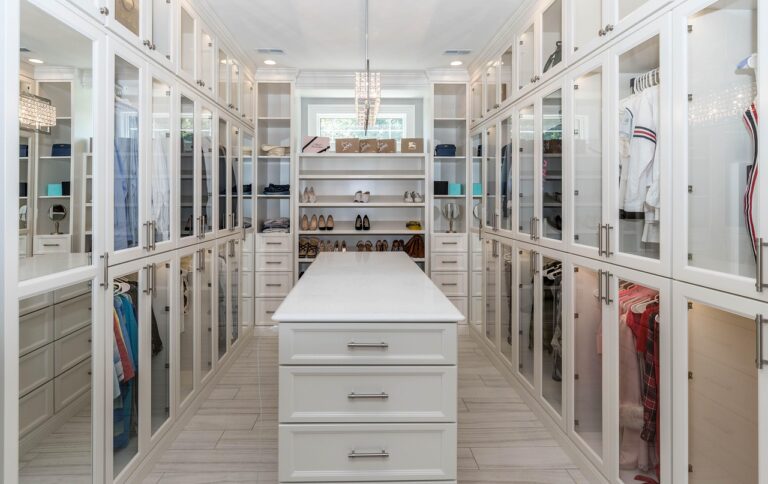
Open shelving is a staple here, but it’s not for everything. It’s best for items you access daily: folded sweaters, jeans, sneakers. For dress shirts or delicate fabrics, glass-front cabinets offer storage without blocking sight lines. The glass keeps things light while protecting your clothes from dust.
A common mistake is adding too many dark accents—black hardware, dark wood shelves, or a dark area rug. One or two small touches of dark bronze or walnut can anchor the space, but too much kills the airy feel. Stick with brushed nickel, chrome, or matte white hardware. Use natural fiber rugs—like sisal or seagrass—to bring in texture without weight.
Lighting needs to be soft but not dim. We’ll cover that in detail, but the key is layering: general overhead light, task lighting for mirrors, and accent lights inside shelves. Avoid harsh fluorescent or bright white LEDs that feel like a retail store.
Color Palette: Choosing Whites, Blues, and Neutrals
Your color palette is the backbone of the coastal walk-in closet. Start with a soft, warm white for walls and cabinetry. A dead flat white feels cold and sterile. I recommend Benjamin Moore’s “White Dove” (OC-17) or Sherwin-Williams’ “Alabaster” (SW 7008). Both have warm undertones that keep the room inviting. For a hint of coolness, try Sherwin-Williams “Sea Salt” (SW 6204) on an accent wall or the backs of open shelving. It’s a pale green-blue that works like a neutral.
The tradeoff with cool blues and greens is they can feel cold without balance. Pair them with warm wood tones—like white oak or bamboo—and natural textures like rattan or jute. Avoid pairing cool blue with gray wood floors; that combination reads as stark, not airy.
For accent colors, think sand, driftwood, and soft coral. These add depth without being aggressive. Use them in rugs, baskets, or a single upholstered ottoman. A good rule: keep 70% of the room white or off-white, 20% pale blue or green, and 10% accent color.
Flooring Options: Bamboo, Light Wood, or Tile
Flooring sets the entire tone of a walk-in closet. In a coastal design, you want something that feels natural and light. Here are your three best options.
Bamboo is sustainable, moisture-resistant, and has a beautiful light-straw color. It’s a great choice for high-traffic closets because it’s harder than many hardwoods. The downside: it can dent if you drop heavy furniture on it. Use a chair mat under rolling carts or benches.
Light oak is the classic. Species like white oak with a clear or lightly whitewashed finish look clean and last for decades. It’s durable, but it can be expensive. If budget is tight, look for engineered oak with a thick wear layer. Avoid red oak—its pinkish tones clash with coastal palettes.
Large-format porcelain tile is ideal if you live in a humid coastal area. It’s cool to the touch, easy to clean, and doesn’t warp. The downside: it can be cold underfoot in winter, so consider adding a lightweight natural fiber rug on top. Tile is harder to install in a multi-purpose room, but in a dedicated closet, it works well.
For most people, bamboo or light oak offers the best balance of looks and practicality. Tile is worth it if you’re worried about moisture or have pets that track sand in.
Storage Solutions: Open Shelving vs. Closed Cabinets
This is where many people get stuck. Open shelving looks gorgeous in photos, but in practice, it demands constant organization. If you don’t have a system, your closet will look like a messy store display. Closed cabinets hide clutter and give a more formal feel, but they can make a small space feel tight.
The smart solution is to mix both. Use open shelving for everyday items: shoes, folded clothes, handbags you want to display. These are things you reach for regularly and can keep neat. Closed cabinets work best for linens, off-season clothes, and items that don’t need daily visibility. I also use closed cabinets for board games or household overflow if the closet is near a hallway.
A common mistake is using too many open shelves. In a standard 6×8 closet, people install shelves floor-to-ceiling on every wall. That’s visual chaos. Instead, dedicate one wall or section to open shelving, and use doors on the rest. A good rule: two-thirds closed storage, one-third open. That ratio maintains the airy look without overwhelming the eye.

Lighting That Enhances the Coastal Vibe
Lighting is arguably the most important element in a coastal walk-in closet. Bad lighting ruins even the best design. You need layered lighting: ambient, task, and accent.
For ambient light, recessed LED cans are the cleanest choice. Go with dimmable options and a color temperature around 3000K—warm enough to feel cozy, cool enough to illuminate colors accurately. Avoid anything above 3500K; it starts to look clinical. Pendant lights made of natural materials—rattan, rope, woven bamboo—add immediate coastal character but can be dimmer. Use a higher-wattage bulb or supplement with task lights. Those looking for a quick upgrade might consider a rattan pendant light to bring in natural texture overhead.
Task lighting is critical for mirrors. Install sconces on either side of a full-length mirror rather than one light above it. That eliminates shadows on your face. For shelving, integrated LED strip lights make a big difference. They light up each shelf and make the room feel larger. Look for dimmable, warm-white strips. The downside: they can be pricey and require some wiring. But a simpler version uses battery-powered puck lights that stick under shelves. They work well for a quick, affordable upgrade.
Don’t forget natural light. If your closet has a window, don’t block it with a dark blind or heavy shelving. Use sheer white linen curtains or a simple roller shade in a natural color. Let that sunlight flow through.
Materials That Withstand Humidity and Salt Air
If you live in a coastal region—within a mile or two of the ocean—you can’t use standard materials. Humidity and salt air will ruin raw wood, standard particleboard, and regular paint. I’ve seen beautiful closets turn into peeling, warped messes within two years.
For cabinetry, use marine-grade plywood or sealed MDF. Both are moisture-resistant. Avoid MDF with a paper laminate; it expands when wet. For wood accents and shelves, teak is the gold standard. It’s naturally resistant to water and rot. It’s also heavy and expensive, so use it sparingly—maybe for a single shelf or a small bench. Powder-coated metal is a great choice for drawer pulls, hanging rods, and closet system frames. It won’t rust. Homeowners dealing with humid conditions may want to look into a dehumidifier for closet to protect their investment.
For paint, use a water-resistant formula like Sherwin-Williams “Duration” or Benjamin Moore “Aura.” These have built-in mildew resistance. Apply a high-quality primer first. Another tip: install a small dehumidifier in the closet if you notice dampness. It’s a cheap fix that protects your investment.
A common mistake: using raw cedar or pine. They smell nice but will warp and crack. Skip them.
Incorporating Natural Elements: Rugs, Baskets, and Decor
Natural textures make a coastal closet feel finished. Start with a rug. Sisal and seagrass are excellent choices—they’re durable, neutral, and add warm, organic texture. But there’s a practical catch: they need to be low-pile. Your closet doors won’t glide over a high-pile rug. If you use sliding doors, cut the rug to fit between the door tracks. For a fixed door setup, a 2×3 foot rug in front of the main dressing area works fine.
Woven storage baskets are a must. They hide smaller items securely while adding texture. Use poufs for seating or bins for accessories. Label them with fabric tags for easy retrieval. Brands like Serena & Lily and Threshold at Target carry good options. One note: avoid tightly woven baskets that trap dust; choose ones with an open weave that lets air circulate. For a practical option, check out natural storage baskets that complement the coastal aesthetic.
For decor, keep it minimal. A driftwood hook for hanging robes, a small seashell-motif dish for rings, a linen-covered bench. Don’t overcrowd. A few thoughtful pieces do more for the aesthetic than a shelf full of tchotchkes. I like to add a single piece of framed coastal art—a muted print of beach grass or a shell—above a bench. That’s enough.
Mirrors and Glass: Expanding the Sense of Space
Strategic placement of mirrors and glass can make a small closet feel twice its size. A full-length mirror on the back of the door is the most obvious trick, but there’s more you can do. Place a mirror opposite a window if you have one; it’ll reflect natural light deep into the room. If your closet is windowless, a mirror near a light source creates the same effect.
Glass shelving is another tool. Clear glass shelves weigh less visually than solid wood, so they keep the room feeling open. The downside: they show every speck of dust and fingerprints. You’ll need to wipe them down regularly. For a middle ground, use frosted glass. It’s less transparent but still light. Frosted glass doors on cabinets are a great choice for items like folded towels or seasonal clothes that don’t need to be on display.
For mirrors, beveled edges add a subtle elegance that fits the coastal look. Avoid over-sized, ornate frames; they add visual weight. A frameless mirror or one with a thin white frame works better.
Common Mistakes to Avoid in a Coastal Closet
Even with the best intentions, people make costly errors. Here are the most common ones I see.
- Using too many dark wood accents. One driftwood shelf is fine; a set of dark walnut cabinets kills the airy vibe.
- Ignoring natural light blockage. That window is an asset. Don’t block it with tall shelving or dark curtains.
- Overcrowding with excessive decor. Three baskets and a small plant are enough. A shelf full of shells and knick-knacks looks cluttered, not coastal.
- Choosing cheap materials that warp. That budget particleboard from a big-box store will swell in humidity. Spend a little more on sealed MDF or marine plywood.
- Forgetting ventilation. Walk-in closets can trap moisture and odors. Install a small vent or use a dehumidifier. Without it, you’ll get musty smells and mold.
Budgeting for Your Coastal Walk-In Closet: DIY vs. Pro
Your budget depends entirely on whether you go DIY, hire a pro, or choose a hybrid approach. Here’s what to expect.
DIY with IKEA PAX systems: This is the most affordable route. A small 6×8 closet can be outfitted for $800 to $3,000. The downside is the time investment—assembly takes hours, and customizing the look (painting frames, adding wood fronts) is extra work. The result can look great if you’re handy, but it won’t have the built-in finish of custom work.
Custom built-ins: For a professional finish, expect to pay $5,000 to $15,000 for a medium-sized closet. This includes design, materials, and installation. The quality is higher, and the fit is perfect. You can choose premium materials like white oak or bamboo and get exact storage solutions for your needs. The tradeoff is cost and lead time—often 6 to 12 weeks.
My recommendation is a hybrid: do the basic assembly yourself (like PAX frames and shelves) and hire a pro for the complex parts—any custom woodwork, electrical for lighting, or tile installation. This saves money where it matters and ensures the quality where it counts.
Whichever route you choose, invest in a few high-quality, moisture-resistant pieces. That’s not the place to cut corners.

Final Thoughts: Creating Your Light and Airy Retreat
A coastal walk-in closet isn’t just about looks. It’s about creating a space that feels more spacious, more organized, and more calming every single day. The key steps: start with a light color palette, choose moisture-resistant materials, layer your lighting, and balance open shelving with closed storage.
If you’re not sure where to start, pick one element—maybe paint a wall “Sea Salt” or swap out your old wire shelves for white bamboo. That single change will shift the entire feel. From there, it’s easier to make other decisions.
Ready to plan your project? Start designing your dream coastal walk-in closet today—explore our product picks to find the right shelves, lighting, and storage solutions for your space.
Quick checklist to keep you on track:
- Paint walls a warm white (Benjamin Moore “White Dove” or Sherwin-Williams “Alabaster”).
- Choose bamboo, light oak, or large-format tile for flooring.
- Mix open shelving with closed cabinets (two-thirds closed, one-third open).
- Use dimmable LED recessed lights and natural-material pendants.
- Add a natural fiber rug (sisal or seagrass, low-pile).
- Incorporate mirrors and glass to expand space.
- Select moisture-resistant materials for coastal homes.
- Avoid dark woods and excessive decor.
- Budget: $800–$3,000 for DIY, $5,000–$15,000 for custom.