Mid-Century Modern Walk-In Closet Inspiration: Design Ideas & Tips
Introduction
Your walk-in closet can be more than just a place to store clothes. With some thought, it becomes a space that starts your day with intention and calm. A mid-century modern closet does exactly that—warm wood tones, clean lines, and practical storage come together in a room that feels curated and functional. Whether you’re planning a full renovation or just refreshing an existing space, this guide breaks down what actually works. We’ll cover the key design elements, materials that hold up in real use, layout strategies that make sense, and common mistakes that can throw off the whole look. All of it comes from curating actual designs and researching products that last. If you’ve been searching for mid-century modern closet inspiration, you’re in the right place.

What Defines a Mid-Century Modern Closet?
Mid-century modern design emerged from the post-war era, focused on functionality, simplicity, and a connection to nature. Applied to a closet, that means clean, uncluttered lines, organic shapes in hardware or furniture silhouettes, tapered legs on islands or benches, and warm wood tones like teak, walnut, and oak. Ornamentation stays minimal—nothing fussy or overly decorative.
This style differs from Scandinavian design, which tends to be lighter and cooler, or industrial styles that rely on raw metal and exposed structure. A mid-century modern closet feels warmer and more intentional. The simplicity isn’t just about looks—it actually helps with organization. Fewer visual distractions make it easier to find what you need. Open shelving keeps items visible. Natural materials add warmth without clutter. Understanding these core traits is the first step to building a closet that feels authentic rather than just retro.
Key Design Elements for a Mid-Century Modern Look
Once you have the philosophy down, it’s time to translate it into actual design choices. Here are the elements that define the look and how to apply them practically in a closet.
Open Shelving vs. Closed Cabinetry
Open shelving is a hallmark of mid-century interiors, and it works well in a closet. It keeps your folded items, shoes, and accessories visible and accessible. But it does require some discipline—if you’re not naturally tidy, it can look messy fast. For a more forgiving approach, consider a mix: open shelving for everyday items and closed drawers for undergarments or workout gear. For quality wood shelving, explore a range of walnut floating shelves that capture the mid-century look.
Sliding Doors
Sliding doors, especially those with wood frames and cane webbing panels or simple geometric patterns, are another iconic element. They save space in tighter layouts and add an instant mid-century feel. Pocket doors can work too, but sliding doors are easier to install in existing closets.
Hardware Choices
Hardware is where you can really dial in the look. Think brass pulls, teak knobs, or black metal handles. Avoid anything too ornate or shiny chrome. The hardware should feel substantial and slightly sculptural. It’s a small detail that makes a big difference in pulling the room together. For those updating their closet, finding mid-century modern brass cabinet pulls can be an easy first step.
The Role of Natural Light and Mirrors
Lighting and mirrors do more than just help you get dressed. A large, simple arch or round mirror with a warm wood frame captures the mid-century spirit better than a sleek modern rectangle. If you have a window, encourage natural light. If not, we’ll talk about artificial lighting in a later section. The goal is to create a space that feels open and airy, not a dark cave.
Best Materials and Finishes for Durability and Style
Choosing the right materials is important for both the look and the longevity of your closet. Mid-century modern is synonymous with quality wood, but not every wood works the same way in a closet environment.
Teak and walnut are the gold standards. Teak is naturally moisture-resistant and durable, making it a safe bet for any closet. Walnut offers a rich, dark chocolate tone that adds warmth. Oak is a more budget-friendly alternative that still takes stain well and can look convincingly mid-century. If solid wood is out of your budget, a high-quality laminate or veneer can work—just make sure the grain pattern looks natural and the finish is matte or satin. Glossy finishes aren’t period-appropriate.
For hardware, brass is the traditional choice. It patinas over time, which adds character. You can also use blackened steel for a slightly more industrial look. Avoid polished nickel or chrome unless you’re going for a specific, silver-accented version of the style.
For shelving, consider whether you need the strength of solid wood for heavy items like shoes or bags, or if veneer over MDF will work for lighter clothing. IKEA’s SEKTION cabinets give you a great foundation, and you can replace their standard doors and drawer fronts with custom walnut or teak options. Amazon has surprisingly good options for brass rods and hooks that mimic mid-century forms without the high price tag.

Layout Strategies: Open Concept vs. Sectioned Storage
How you lay out your closet is just as important as the materials you choose. There are two main paths, and the right one depends on your space and how you use it.
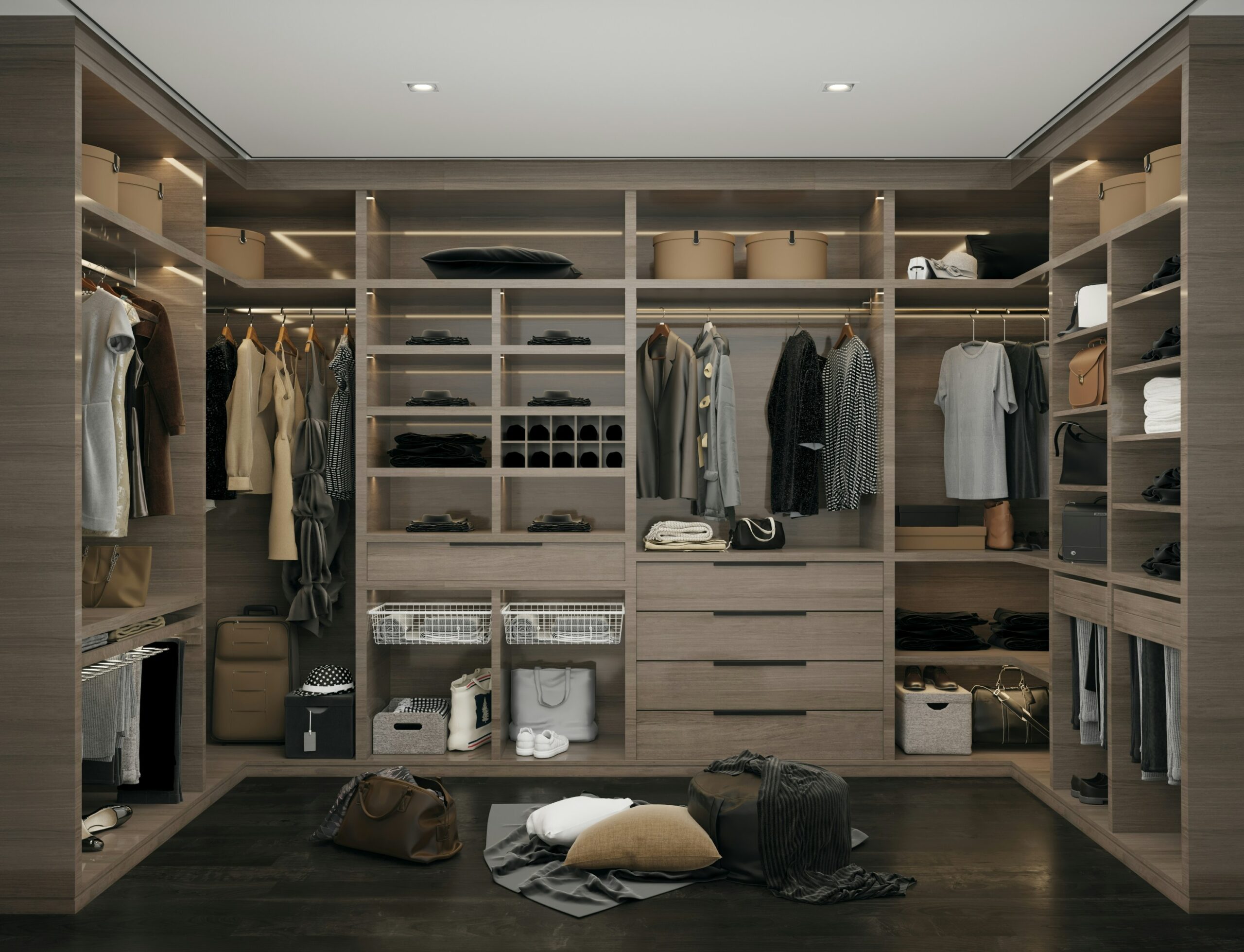
An open, airy design with fewer partitions works best in larger closets. It lets you see everything at a glance and creates a more serene, showroom-like feel. The downside is that it requires constant neatness, and dust accumulates on open shelving. If you choose this route, invest in a few statement pieces, like a central island with tapered legs or a good valet rod.
Maximizing Vertical Space with Mid-Century Ladders
In smaller closets, or for those who prefer more structure, a sectioned layout with drawers, cubbies, and dedicated compartments is more practical. This approach hides clutter and makes organization easier. The key is to design the sections to feel intentional, not boxy. Use open shelving for folded jeans, deep drawers for sweaters, and narrow cubbies for shoes. A mid-century rolling ladder can be both a functional tool for reaching high shelves and a striking design feature. It adds that retro-library vibe that fits perfectly with the style.
Lighting Choices That Enhance the Retro Feel
Lighting sets the mood of a closet. In mid-century modern design, the fixture itself is often a statement. Look for pendant lights with globe shades in opal glass or brass. Sconces with black or brass finishes, especially those with a slight angled arm, add character. For more task-oriented lighting, integrated LED strips behind shelves or under hanging rods provide even illumination for choosing outfits without casting shadows.
Dimmers are a smart addition. They let you switch from bright, functional light when you’re getting dressed to a softer, ambient glow in the evening. Consider a sleek brass dimmer switch to reinforce the aesthetic. For budget-friendly options, a well-chosen mid-century modern pendant light can be easily installed in most closets with a single ceiling junction box.
Color Palettes: From Earthy to Bold
Color is where you can inject personality. Mid-century modern palettes typically rely on warm neutrals—think beige, olive, warm gray, and brown. These form the backdrop. The real fun comes with accent colors: mustard yellow, burnt orange, teal, or a muted forest green.
In a closet, follow the 60-30-10 rule. 60% of the space (walls, built-ins, flooring) should be a warm neutral. 30% can be a secondary color, like olive or a deep teal, perhaps on an accent wall or on the inside of an open cabinet. The final 10% is for bold pops—a mustard ottoman, a teal velvet stool, or orange bins for accessories.
For small closets, stick to lighter neutrals to keep the space feeling open. Use the bold colors in small doses. For larger walk-ins, you have more freedom to go deeper with color on walls or cabinetry. Paint brands like Sherwin-Williams (try ‘Light French Gray’ or ‘Artemis’) and Benjamin Moore (consider ‘Deep Ocean’ or ‘Golden Orchid’) offer good mid-century tones. Wallpaper with a geometric or atomic pattern can also work on a single feature wall.
Must-Have Accessories and Hardware
Accessories complete the space and make it functional. Here’s what to focus on and where you can economize.
- Brass Valet Rods: Perfect for suits or tomorrow’s outfit. They add a hotel-level touch. Splurge on solid brass for longevity.
- Leather Pulls: Replace basic hardware with leather pulls for drawers or cabinet doors. They soften the look and add texture. Save by buying a set from Amazon rather than custom shops.
- Woven Baskets: Use seagrass or cane baskets on open shelves for storage that looks good. They hide clutter while adding warmth. Great for smaller items like belts, scarves, or workout gear.
- Tiered Hangers: Keep pants or scarves organized without taking up too much rod space. Look for wood or velvet versions to maintain the warm feel.
- Hat and Tie Racks: A simple brass or wood rack mounted on a wall or shelf keeps accessories visible and adds character.
Where to Splurge vs. Save
Invest in items that get heavy use: your main hanging rods, good hinges for cabinet doors, and a comfortable seat (like an ottoman or a small cane chair). Save on decorative bins, basic shelving, and non-structural hardware like hooks or knobs where cheaper options still look good.
Common Mistakes When Designing a Mid-Century Modern Closet
Even with good intentions, it’s easy to slip up. Here are the most common errors and how to avoid them.
- Over-accessorizing. Too many baskets, bins, and decorative objects quickly leads to visual clutter. Stick to a curated collection of functional accessories. Every item should serve a purpose.
- Clashing materials. Mixing chrome, brass, and black hardware in the same space creates a disjointed look. Pick one, maybe two, metal finishes and stick to them.
- Ignoring practicality. Aesthetic choices shouldn’t compromise storage. Don’t choose open shelving if you know you’re messy. Don’t install a beautiful but tiny drawer if you need space for large sweaters.
- Chasing trends. Mid-century modern is a specific look, not a grab bag of retro elements. Avoid adding random mid-century curiosities that don’t tie back to the clean, functional core of the style. Stick to a curated palette and invest in good hinges and slides that will last.
Budget-Friendly Ways to Achieve the Look
You don’t need a designer or a huge budget to get the look. Here are some actionable steps.
- Use IKEA SEKTION cabinets. They are a solid, affordable base. Then, purchase custom walnut or teak doors from a third-party supplier. This gives you the look of custom cabinetry for a fraction of the cost.
- Buy vintage hardware. Etsy, flea markets, and estate sales are goldmines for brass pulls, teak knobs, and other small items. You can often find authentic pieces for less than modern reproductions.
- DIY a cane panel. If you have a cabinet door with a recessed panel, you can cut and insert a piece of cane webbing yourself. It’s cheap, easy, and adds instant mid-century texture.
- Use peel-and-stick wallpaper. There are surprisingly good mid-century geometric and atomic prints available. Use it on a single wall or the back of a bookshelf for a bold, removable accent.
- Add a shag rug. A small, low-pile shag rug in a warm earth tone can anchor a seating area and add that retro texture without a major investment.

Real-Life Inspiration: Closet Layouts That Work
Let’s look at a couple of real-world examples to see how these principles come together.
Example 1: The Small Reach-In Turned Functional Walk-In
A 4′ x 6′ room that originally held a reach-in closet was given new life. The owner removed the standard wire shelving and installed a single run of walnut open shelving along the longest wall, with a brass hanging rod beneath. A small, vintage teak chest of drawers was placed against the opposite wall for folded items. The result felt spacious, with low-profile furniture that emphasized the room’s height. A single globe pendant light completed the look. The key takeaway is to keep the furniture low and the storage minimal in small spaces.
Example 2: The Master Suite Closet with Island
A larger 10′ x 12′ closet featured full-height teak cabinetry along two walls with sliding doors concealing hanging storage. The center island, with tapered legs and a walnut top, provided drawers for accessories and a surface for folding. Cane webbing was used on the drawer fronts for a lightweight, breathable look. The lighting came from a combination of recessed cans and a brass and opal glass pendant over the island. This layout prioritized calm and openness, using the island as both a functional and visual anchor.
Where to Find Authentic Mid-Century Furniture and Decor
If you want authentic pieces, start with vintage shops. Sites like Chairish and 1stDibs offer curated collections of original mid-century furniture. The tradeoff is cost—authentic pieces are expensive. For newer, well-made reproductions, retailers like West Elm, Room & Board, and even some lines from Crate & Barrel offer solid options that capture the spirit without the vintage price. When buying used furniture, look for solid wood construction, dovetail joints on drawers, and original finishes that can be restored. Avoid pieces with excessive glue or laminate damage. Quality craftsmanship is what makes mid-century pieces last.
Maintenance Tips for Long-Lasting Beauty
Keeping your mid-century modern closet looking good requires some care, but it’s straightforward. Dust teak and walnut surfaces regularly with a soft, dry cloth. For brass hardware, a brass cleaner or a simple mixture of lemon juice and salt can remove tarnish and restore shine. Cane webbing should be dusted gently and kept away from direct moisture. If it gets wet, dry it quickly to prevent mildew. Wood finishes can fade in direct sunlight, so consider UV-filtering window film if you have windows in your closet. For routine care, teak oil can be applied annually to nourish the wood without changing its color. Avoid using harsh chemical cleaners on any wood or metal finishes.
Final Thoughts: Start Designing Your Dream Setup Today
A mid-century modern walk-in closet is achievable with careful planning. The foundation is always clean lines, warm natural materials, and smart, practical storage. Focus on those three pillars, and the look will fall into place. You don’t need to do everything at once. Start with one element that inspires you—maybe a brass valet rod, a walnut pull, or a new pendant light. Build from there. The beauty of this style is its timelessness. A well-executed mid-century closet won’t just look good today; it will look good for decades. Start with one piece that speaks to you, and let your dream closet take shape naturally.