Scandinavian Minimalist Closet: White and Wood Design Guide
Why White and Wood Defines the Scandinavian Closet Look
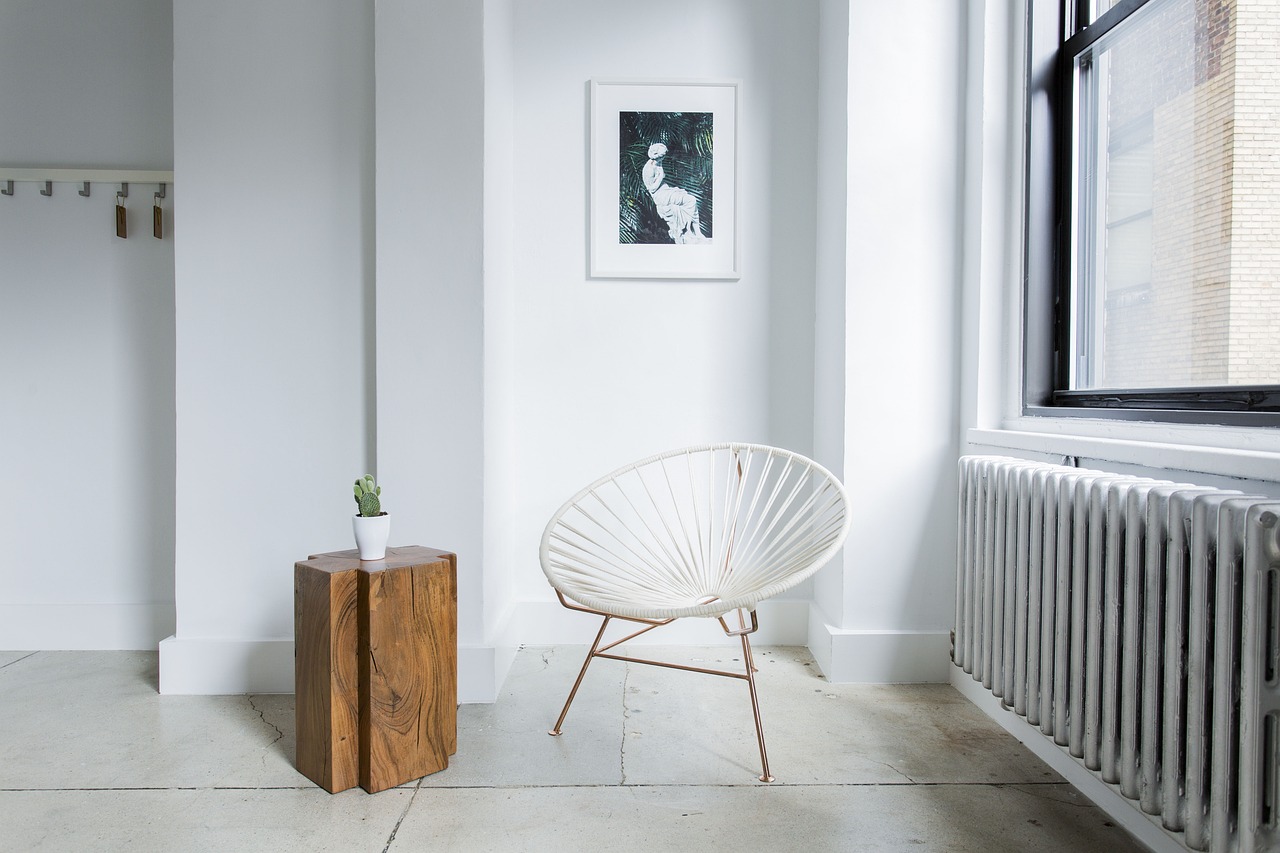
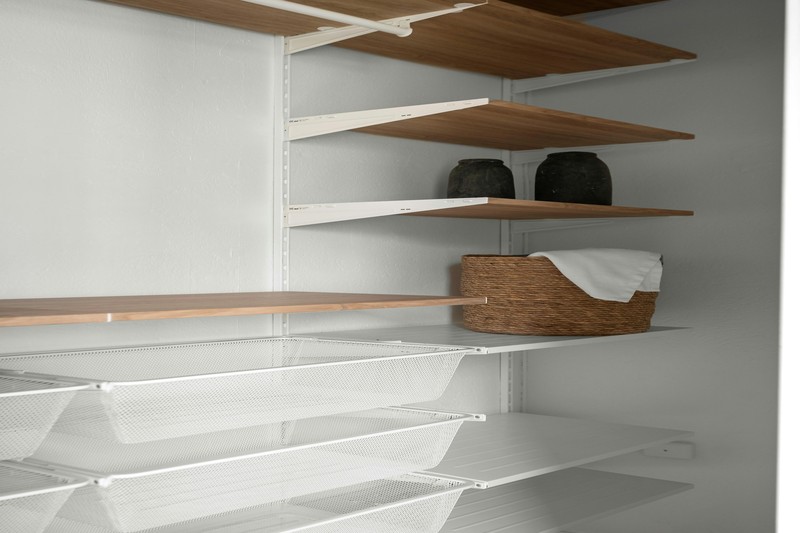
When you picture a minimalist Scandinavian closet, the image is almost always crisp white surfaces balanced by warm, natural wood. This pairing isn’t a passing trend—it’s the core of a design philosophy built on simplicity, function, and calm. White opens up the space, making even a small closet feel larger and more airy. The wood, whether pale birch or richer oak, adds the warmth and texture that keeps the room from feeling sterile. I’ve found this combination works in most spaces, from a narrow reach-in to a decent walk-in. The trick is the ratio: enough white to feel clean and bright, enough wood to feel grounded and inviting. It’s a look that ages well because it’s based on the idea that a closet should feel like a sanctuary, not just a storage area.

Key Design Principles for a Minimalist Scandinavian Closet
Before buying anything, it helps to understand the rules that make this style work. A minimalist Scandinavian closet isn’t about copying photos—it’s about embracing a few principles that guide every choice.
Clean lines rule. Skip ornate trim, curved edges, or complicated crown molding. Straight, simple profiles keep the eye moving and make the space feel orderly.
Open shelving is intentional. Closed cabinets hide clutter but they also hide your clothes. A minimalist Scandinavian closet relies on visual organization—you should see what you own so you’re less likely to buy duplicates or let things pile up. That said, a few closed drawers for undergarments and accessories are practical.
Limited color palette. White and wood are the stars. If you add another color, keep it small—a grey felt bin, a black handle, a natural linen basket. Don’t let your closet become a color wheel.
Everything has a home. Each category of item—shoes, folded sweaters, hanging shirts—has a designated spot. When everything has a place, it’s easier to maintain the look.
Compared to other minimalist styles like industrial or Japanese, the Scandinavian approach is warmer and more livable. It doesn’t require perfect emptiness; it asks for thoughtful curation.
Choosing the Right Wood Tones and Materials
The wood you choose sets the entire mood. There’s no single right answer, but each choice comes with tradeoffs that affect the look, durability, and budget.
Birch is a popular choice for Scandinavian closets because of its pale, even color and subtle grain. It feels modern and fresh, and it doesn’t compete with white surfaces. Birch is also relatively affordable and widely available in plywood or veneer forms. If you’re building shelves yourself, birch plywood is easy to cut and finish.
Oak is more prominent and richer. With a stronger, more pronounced grain, oak adds depth and a slightly more traditional feel. It’s also more durable—great for heavier shelving or long-term use. white oak in particular works well because of its greyish undertones. The cost is higher than birch, but the investment pays off if you want a closet that feels heirloom-quality.
Pine is the budget-friendly choice. It’s soft, so it dents and scratches more easily, and the yellow-orange tint can look dated if not handled carefully. That said, if you paint the majority of the closet white and use pine only for visible accent shelves, you can achieve the look for much less. I’ve done this in a guest closet and it held up fine for light use.
If you’re using wood veneers, look for raw or lightly oiled finishes rather than high-gloss polyurethane. Matte finishes are more forgiving with scratches and look more natural. Avoid staining wood dark—it kills the airy feel that defines the style.
For a practical first step, start with a small section like a shoe shelf or a few drawers in birch or white oak. See how it feels before committing to an entire closet. You can compare available wood finish panels here to see what texture and tone works for your space.
White vs. Wood: How to Balance the Two in Your Closet
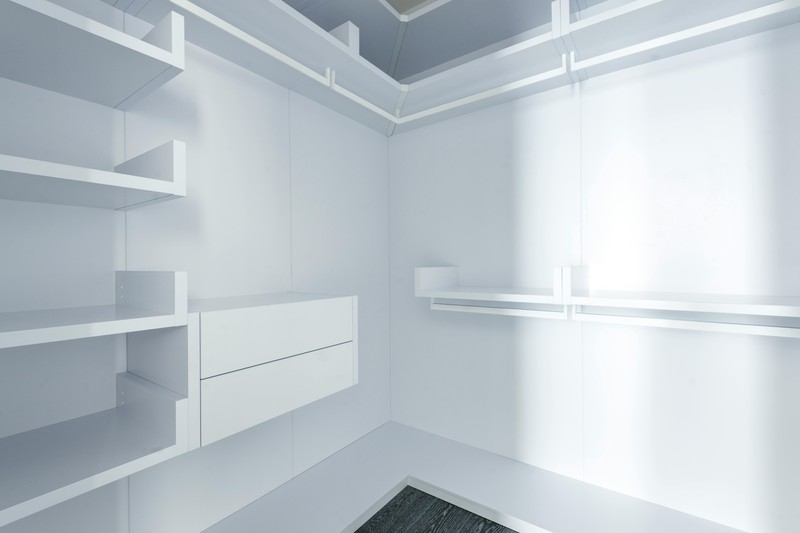
The most common question I get is how much white versus how much wood. My rule of thumb is the 80/20 principle: roughly 80% white for the main structure and 20% wood for warmth and texture. This gives you the openness without making the space feel cold.
Use white for: walls, the main cabinet frame, drawer fronts, and any tall vertical surfaces. White reflects light and makes the closet feel larger. Use a matte or eggshell finish—they hide fingerprints better than semi-gloss.
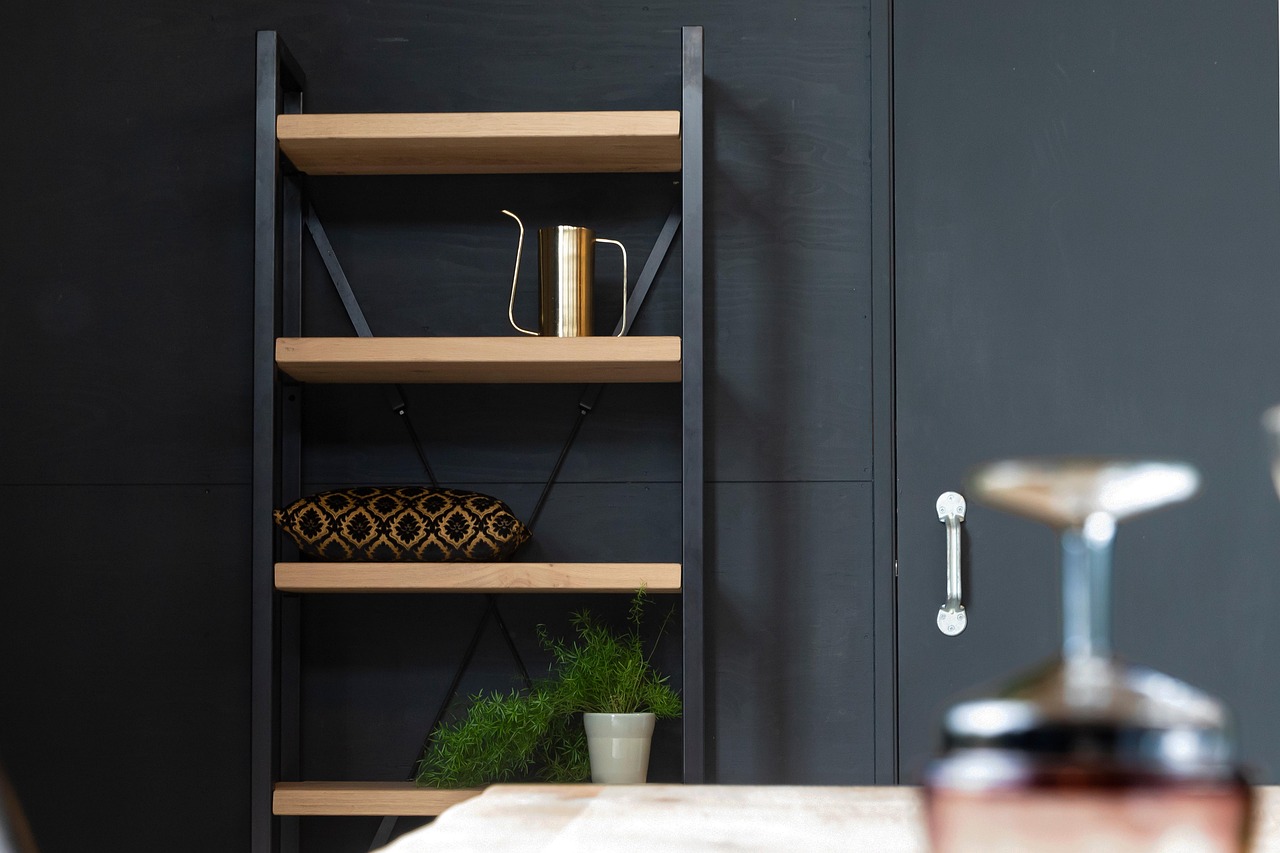
Use wood for: shelves, drawer interiors, hanging rods (if you want a warm accent), and a feature wall if you have space. Wood brings the visual interest and anchors the room. If you have a small or dark closet, keep the wood to just shelves and maybe one accent drawer front so it doesn’t overwhelm.
When to go all-white with wood accents: If your closet is under 40 square feet, has limited natural light, or if you rent and can’t make permanent changes, an all-white base with wood bins, baskets, and maybe a wooden hanger set is a smart move. You get the look without major construction.
A specific scenario: I helped a friend design a 6×5 reach-in closet with no window. We painted everything white, used a single solid oak rod for the hanging section, and added birch cubbies on one wall. It went from feeling like a dark box to the most organized part of the apartment.
Essential Storage Components for a Minimalist Layout
Now we get into the concrete parts. A minimalist Scandinavian closet needs these components to be functional without looking cluttered.
- Open hanging rods. Extend them wall-to-wall if possible. Use the full width of your space. Double rods are efficient for shorter items like shirts and pants.
- Modular drawer systems. Look for simple, boxy drawer units that fit under hanging sections. Prefer soft-close mechanisms and integrated handles. For daily use, a set of modular drawer organizers like these can keep your wardrobe accessible.
- Shelf cubbies. Adjustable shelving is key. Fixed shelves are limiting. Use cubbies for folded sweaters, jeans, and bags. Keep the depth around 14–16 inches for easy reach.
- Shoe racks. Avoid high-gloss or complicated tiered racks. Simple horizontal shelves at a slight angle work best. If space is tight, consider a slim tilted shelf or wall-mounted shoe cubbies.
- A dedicated spot for accessories. Use a shallow drawer or divided bin for belts, ties, and jewelry. If you don’t, they’ll end up on the floor or on your shelves.
Maximize vertical space by stacking drawer units and using rods that go to the ceiling. The space between the top shelf and ceiling is prime real estate for seasonal items in uniform boxes.
One thing to avoid: wire shelving. It’s cheap and adjustable but it looks temporary and doesn’t support the clean, calm look you’re after.
Lighting and Hardware: Small Details That Matter
Lighting is the unsung hero of a great closet. The wrong lighting washes out your wood tones and makes even the best white paint look drab.
Use warm LED lighting, ideally with a color temperature around 2700–3000K. This complements the natural warmth of wood and stops the white from turning blue or grey. If you use cool white LEDs (like 4000K or higher), the wood will look dull and the whole space will feel transactional rather than inviting.
Integrated lighting built into shelving or behind rods gives the most seamless look, but it’s an investment. Clip-on or stick-on LED strips are a more affordable alternative, and they’re easier to adjust later. I’ve used inexpensive LED strips under upper shelves to illuminate hanging clothes, and it works well enough that I don’t miss the integrated version. For a simpler setup, warm LED strip lights designed for closets are a straightforward way to improve the atmosphere.
Common mistake: installing lights that cast shadows directly under shelves. Keep the light source at the front edge of the shelf so it shines onto the items below, not the shelf itself.
Hardware should be minimal. Matte black, brushed nickel, or unlacquered brass are all good choices. Avoid polished chrome—it feels too shiny and out of place. Use the same hardware throughout the closet for consistency. For a Scandinavian look, a simple round or knob-style pull is more appropriate than a long bar handle.
Common Mistakes When Designing a Minimalist Scandinavian Closet
I’ve seen enough closets in person and online to know what trips people up. Here’s what to avoid.
Crowding the shelves. A minimalist closet only works if you have less stuff. Fill your shelves to about 80% capacity. When they’re packed to the brim, the eye registers chaos, not calm. Edit your wardrobe first.
Choosing the wrong wood finish. Dark stained wood or overly shiny polyurethane will ruin the airy effect. Stick to matte or satin finishes in natural or lightly oiled wood.
Ignoring lighting color. As mentioned, cool light is the enemy of this design. Spend the small amount of extra money on warm LEDs—it makes a massive difference.
Over-decorating. This isn’t a living room. The closet doesn’t need art, vases, or decorative objects. If you want visual interest, choose functional items that also look good—a uniform set of wooden hangers, a natural wool blanket folded on a shelf, a leather valet tray on a dresser.
Using too many different materials. Stick with wood and white. Adding chrome, glass, and black lacquer draws the eye in too many directions. Consistency is what makes the Scandinavian look feel intentional.
Real-Life Example: My Own White and Wood Closet Setup
Last year, I redesigned my own primary closet using the white and wood approach. The space is about 8×6 feet—a decent rectangle but nothing grand.
I painted the walls and the main MDF cabinet frame in a warm white (Benjamin Moore White Dove). The 3/4-inch shelves are birch plywood with a clear matte oil finish. I used two full-width hanging rods, one at 42 inches high for shirts and jackets, and another at 18 inches high for pants folded over hangers.
For drawers, I installed a pair of modular birch drawer units on the opposite wall, each with three soft-close drawers. The hardware is small matte black knobs. If you’re looking for a similar configuration, browse soft-close birch drawer units here.
What worked: the open shelving forced me to keep only what I actually wear. I cut my wardrobe by about 40% before building, and I haven’t missed a thing. The birch is easy to wipe clean and hasn’t shown wear.
What I’d change: I initially used cool white LED strip lights, and it took me three weeks to realize the error. I swapped them for 2700K warm strips and everything instantly looked better. I also should have added a narrow shelf for watches and cufflinks—they ended up in a drawer and get less use now.
Budget-Friendly Alternatives to Achieve the Look
Not everyone can commission a custom white oak closet. That’s fine. The look is achievable at multiple price points.
- Use IKEA components. The PAX system in white with white doors is a starting point. Replace the doors with open shelving, or remove the doors entirely. Add stick-on wood veneer to the visible shelves.
- Paint your existing cabinets white. If you have dark or outdated cabinets, a coat of high-quality white paint (apply a primer first) transforms them. Then add wooden bins or baskets for texture.
- Use peel-and-stick wood finishes. These adhesive panels come in birch, oak, and maple finishes. They’re perfect for the back of open shelves or the fronts of drawer inserts. They’re not meant for heavy contact areas, but for accent use they hold up well. For someone on a tight budget, peel-and-stick wood veneer options like these can add warmth without a big expense.
- Shop secondhand. Solid wood dressers and shelves show up on marketplace sites constantly. Paint the body white, leave the drawer fronts natural, and you’re 80% of the way there.
The key is to prioritize the ratios over the materials. A closet built from budget IKEA pieces with thoughtful wood accents will look better than an expensive closet that uses six different materials and finishes.
Maintenance and Longevity of White and Wood Finishes
A white closet stays clean the same way a white shirt does—it shows dirt, but it’s also easy to clean. Wipe down shelves with a damp microfiber cloth once a month. For the white painted surfaces, a gentle degreaser works well for smudges by the handles.
Protect wood from moisture with a light coat of natural oil every six months. If you live in a humid climate, avoid using solid pine for shelves—it can warp. Birch and oak handle moisture much better.
For minor scratches on white paint, a small touch-up bottle of paint goes a long way. Keep one handy. For scratches on wood, a walnut or milk oil stick covers most marks in seconds.
Don’t use harsh chemical cleaners. Vinegar or mild soap with water is all you need. The finishes will last decades with simple care.
Final Thoughts: Is This Style Right for Your Home?
The minimalist Scandinavian closet with white and wood is best suited for anyone who values calm, order, and a space that feels like a retreat rather than a stress point. It’s a compelling choice if your closet sees daily use and you want to start each morning with a sense of clarity.
It’s not for you if you prefer a maximalist look, have a large collection of colorful accessories you want to showcase, or if you just want the cheapest possible solution without design consideration. And that’s fine—there’s no one right closet for everyone.
If the idea of a calmer, more intentional closet appeals to you, start small. Paint one shelf white, find a natural wood bin, and take it from there. You might find that the look changes not just your closet but how you think about what you keep. For a starting point, minimalist wooden hangers and closet organizers like these can help get things going.