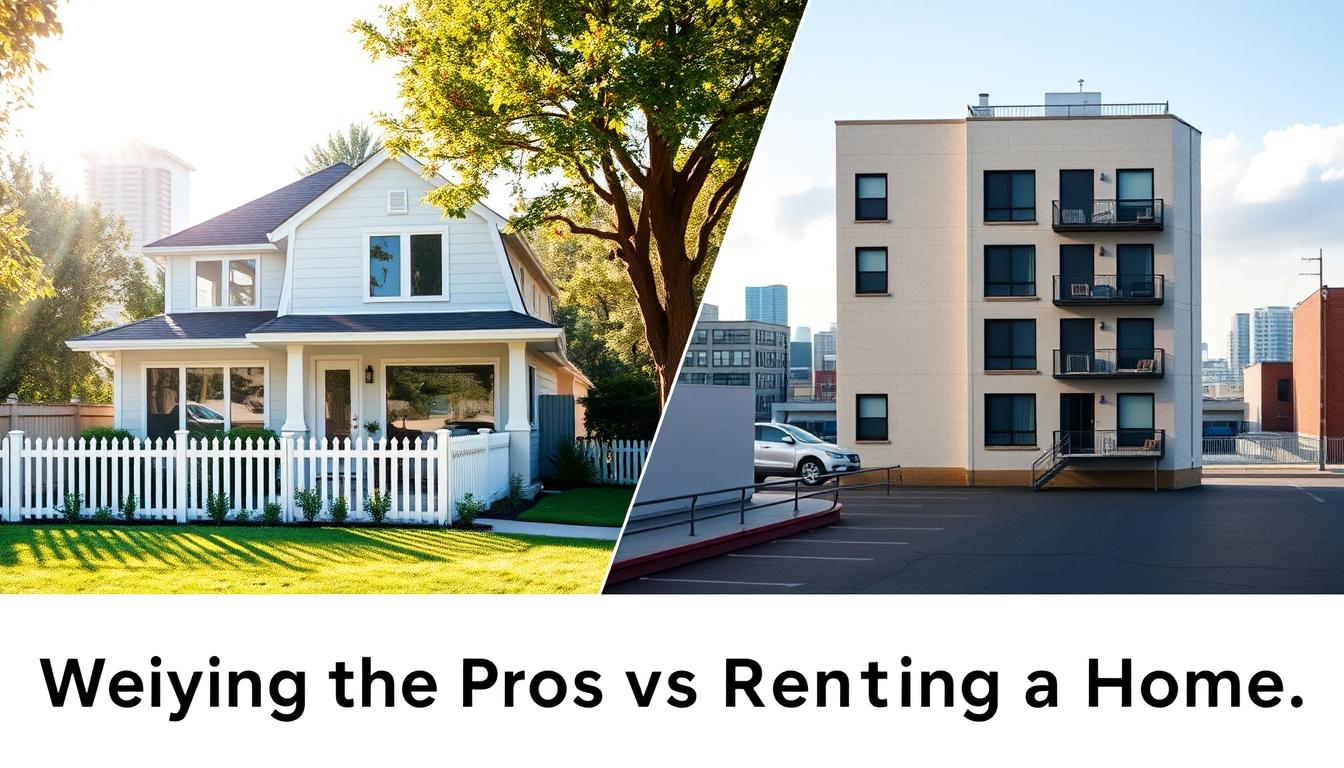
Weighing the Pros and Cons of Buying vs Renting a Home
-
- 1

Introduction
Choosing to buy or rent a home is a big decision for many people in America. Each choice has good and bad points, shaped by personal situations and the market. Knowing the pros and cons of each can help you make a choice that fits your goals and life.
This article explores the important differences between buying and renting. It looks at money matters, lifestyle choices, and what each means for the future.
Key Takeaways
- Buying a home can build equity and offers potential for property appreciation.
- Renting provides greater flexibility and typically involves a lesser financial commitment.
- Understanding mortgage rates and housing prices is crucial for prospective homebuyers.
- Rent control and potential rent increases are important considerations for renters.
- Homeownership entails significant upfront and ongoing costs, including maintenance and repairs.
Introduction
The choice between buying a house vs renting is now harder than before. Home prices and rents change a lot. So, deciding if you should rent or buy depends on many things.
Knowing the pros and cons of both helps you understand your money and life goals better. For some, it’s not just about costs. It’s about what fits their future goals.
When thinking about should I rent or buy a house, consider a few main points. These include how steady your job is, how long you’ll stay in one place, and if you can handle sudden house costs. Renting and buying both have good and bad sides. The choice shows what you value more and if you’re ready financially.
Understanding the Cost Gap Between Buying and Renting
Choosing between renting and buying is a big step. It’s important to know about the costs of both. This section goes over what makes one more affordable than the other.
Mortgage Rates and Housing Prices
Mortgage rates affect how much you pay for a home. Low rates mean cheaper monthly payments. This can make buying look better than renting. But when rates go up, buying gets expensive, and renting may be better.
How much homes cost is also key. In places with expensive homes, buying is hard if you can’t pay a big down payment. Renting can then be a better choice. But, if homes are cheaper, the difference between buying and renting gets small. Owning a home becomes easier.
- Low mortgage rates: Good for buying
- High mortgage rates: Make buying more expensive
- High housing prices: Buying becomes hard
- Low housing prices: Makes owning and renting similar in cost
Rent Control and Rent Increases
Rent control stops big rent increases. It keeps renting costs stable. Places like New York and San Francisco use it to help renters. But not everywhere has rent control. Without it, renters might face big rent jumps. This can make renting feel unsure and sometimes expensive as time goes on.
Apart from rent control, the rental market itself influences prices. When lots of people want to rent, prices can go up. This is tough for renters, especially since they’re not building equity like homeowners. Knowing about the rental market is crucial when choosing between renting and buying.
| Aspect | Buying a House | Renal a Property |
|---|---|---|
| Initial Investment | High (down payment, closing costs) | Low (first month rent, security deposit) |
| Monthly Costs | Variable (dependent on mortgage rates) | Relatively stable, can increase with market |
| Long-term Financial Gain | Potential for equity and appreciation | None (payments do not contribute to ownership) |
| Flexibility | Limited (commitment to stay and sell) | High (ease of relocation) |
Financial Advantages of Buying a Home
Buying a home brings long-term money benefits. It helps you build equity and your home’s value might increase.
Building Equity Over Time
Owning a house lets you build equity. This is different from renting. Here, your mortgage payments help you own more of your home. Every payment towards the principal grows your equity. This turns into a big asset later.
Potential for Property Appreciation
A big plus of buying a home is its value might go up. Over time, real estate usually gets more valuable. This means homeowners can make a good amount of money. Buying a home is more than just having a place to live. It’s also a chance to grow your wealth as property values increase.
| Advantage | Description |
|---|---|
| Building Equity | Payments contribute to home ownership, increasing personal equity over time. |
| Property Appreciation | Real estate value tends to rise over time, providing potential financial gains. |
Financial Burdens of Homeownership
Buying a home means paying more money than renting. Prospective buyers must think about these costs carefully. These financial burdens are important to consider.
Upfront and Ongoing Costs
The first challenge is the big upfront costs. For example, Brenna Castaño and her partner are saving $35,000. This is for a down payment and closing costs on a $400,000 house. Then, there are ongoing costs like property taxes and insurance.
Maintenance and Repairs
Owning a home means you must fix any problems yourself. This is different from renting, where the landlord fixes things. Costs for repairs can be high. A leaky roof or a broken furnace can be very expensive.
Also, a study found that 26% of Canadians delay life plans because of these costs. This shows how global the issue of homeownership burdens is. Recent studies highlight this issue.
Flexibility and Mobility: Renting’s Key Advantages
Renting lets you easily change where you live. It’s great for those who like to keep options open. You can move without much trouble or money needed.
Ease of Relocation
Moving is simpler when you rent. You don’t have to deal with selling a house. Renters can leave for new jobs, schools, or other reasons fast. Short leases make it easy to move more often without big commitments.
Lesser Financial Commitment
Renting means not spending a lot upfront on things like down payments. No mortgage hanging over your head. You also don’t pay for fixing up the place. That’s the landlord’s job. This saves money, so you can spend it on what you like or save it.
Buying vs Renting a Home: Making the Right Choice
Choosing between buying or renting a home depends on personal, financial, and economic situations. A key question is, should I rent or buy a house? Your answer depends on things like how much money you have, your future plans, and the housing market.
Buying a home means you can have a stable place to live and the home’s value might go up. But, it also means big financial duties like paying for the home, upkeeping it, and taxes. On the other hand, renting can be easier to start and less to worry about fixing things. But, rent can go up, and you don’t get to own part of your home.
To decide wisely, think about:
- Looking at your money situation: Are you ready for the upfront and ongoing costs of owning a home?
- Thinking about your future: Are you going to stay put for a long time, or might you move around?
- Understanding the market: Is buying a home getting more expensive in the place you want to live, or is renting a better idea right now?
In the end, deciding should I rent or buy a house means weighing these points with your goals. You want to make sure your choice matches how you live and your money situation.
Stable Living Situations with Homeownership
Homeownership offers a stability renters don’t have. Your place is yours for as long as you want it. This means you won’t have to deal with leases changing or ending suddenly.
Customization and Personalization
Stability of owning a home means you can make it truly yours. Renters face limits on how they can change their space. But homeowners can remodel, decorate, and change their homes as they like. makes your living space better. It also lets you show off your style and how you like to live.
Long-term Financial Planning
Owning a home helps with planning your finances for the future. If you have a fixed-rate mortgage, you know what your costs will be for years. This helps you budget better than dealing with rising rents.
The stability of owning a home also means having a valuable asset. Over time, your home can grow in value. This growth helps with your financial health and retirement planning. By investing in your home, you’re building a strong financial base.
The Risks and Uncertainties of the Real Estate Market
It’s super important to know the real estate market risks if you’re thinking about buying a home. The market can go up and down, affecting house prices. Big changes, called market volatility, can make the value of homes go down. This makes it tough for homeowners to keep their investment’s value.
Interest rates changing is another big thing to watch. If they go up, so do mortgage payments. This can make it hard to pay the bills. The value of homes also depends a lot on where they are. Some places get more popular, and prices go up. But others might not do so well because of local job issues or people wanting to live elsewhere.
Don’t forget about the long-term worries of owning a home. Things like fixing broken stuff and keeping the house up can cost a lot. Knowing all these real estate market risks helps people decide if they should buy a home or rent one instead.
Lifestyle Considerations and Personal Goals
Understanding your lifestyle and goals is key in deciding to buy or rent. For many, it’s about family plans. Wanting to start or grow your family? Owning a home can give stability and a sense of belonging, important for kids.
Career goals matter too. Chasing quick career growth might mean moving a lot. Renting lets you move easily. But, if you’re set in your career locally, buying a home fits your long-term plans.

What you value also impacts your choice. Some see owning a home as key to success and being independent. They aim for it. Others enjoy the freedom of renting, liking the flexibility and less hassle. Your personal goals and lifestyle should lead your choice in getting a home.
Job Opportunities and Career Flexibility
Choosing to buy or rent can depend on job flexibility versus the steady life of owning a home. For many, job changes or moves are common, making the option to rent more appealing.
Impact on Career Choices
Career chances and where you live are closely linked. In fast-changing job sectors, renting means you can quickly move for new jobs in different places. This ease of moving is crucial for those wanting to jump at career growth opportunities.
| Aspect | Buying a Home | Renting a Home |
|---|---|---|
| Relocation Flexibility | Low | High |
| Initial Financial Investment | High | Low |
| Long-term Stability | High | Medium |
Commute and Neighborhood Factors
The effect of commute on where to live is big. Living close to work matters more in busy areas. The time spent traveling to work affects your daily life and work balance. Thus, many choose to rent near cities to cut down on travel, boosting their happiness and work performance.
Also, moving for work can make owning a home hard. For those often changing jobs or in shifting industries, renting meets their need for job flexibility when it matters.
Conclusion
When deciding to buy or rent a home, it’s key to think about your own situation and the economy. Owning a home can be great for those who want to stay in one place for a while. They can build equity and possibly gain from their property’s value going up. However, don’t forget about the costs of upkeep and fixing things.
Renting offers the chance to move easily and requires less money upfront. It’s especially good for people unsure about their job future or who like moving around. The article talked about how rent control can help keep rent costs in check, even though rents can still go up.
Deciding to rent or buy depends on what you need in life, if you’re ready financially, and your plans for the future. Think about work chances, if you want to change careers, your daily travel, and the area you want to live in. Everyone is different, so what works for one person might not for another. Looking at all these points closely will help you decide the best path for you between renting and buying.
FAQ
What are the main factors to consider when choosing between buying and renting a home?
How do mortgage rates and housing prices impact the decision to buy a home?
What role does rent control play in making renting a feasible option?
How does building equity through homeownership contribute to financial security?
What is the potential for property appreciation in homeownership?
What are some of the upfront and ongoing costs associated with homeownership?
How do maintenance and repair costs impact homeownership?
Why might renting be a better option for individuals who value flexibility?
How does homeownership provide a stable living situation?
What risks come with the real estate market when deciding to buy a home?
How do personal lifestyle choices influence the decision to buy or rent?
How can housing decisions impact job opportunities and career flexibility?
Introduction Choosing to buy or rent a home is a big decision for many people in America. Each choice has good and bad points, shaped by personal situations and the market. Knowing the pros and cons of each can help you make a choice that fits your goals and life. This article explores the important…
Introduction Choosing to buy or rent a home is a big decision for many people in America. Each choice has good and bad points, shaped by personal situations and the market. Knowing the pros and cons of each can help you make a choice that fits your goals and life. This article explores the important…