The Meaning of Flowers: A Comprehensive Guide
-
- 1

Flowers have a special way of saying what words cannot. They are full of deep meaning and symbolism. The secret messages they carry can be about love or sadness. This guide takes you into the magical world of flower language. It looks at their meanings in history and today.
Key Takeaways
- The language of flowers has roots in ancient cultures and traditions.
- Flowers have been used to express emotions and convey messages for centuries.
- Understanding the significance of flowers can enhance the meaning of bouquets and floral gifts.
- The hidden messages in flowers can vary based on context and color.
- Different cultures attribute different meanings to various flowers.
- Floral symbolism is still relevant in modern times and used in various occasions.
The History of Flower Meanings
Flower meanings have a rich history around the world. Different flowers have held special messages in ancient times. These messages have been part of stories and beliefs across many cultures.
Flower Symbolism in Ancient Cultures
In old Greek and Roman times, flowers were part of many myths. The laurel stood for victory, and roses meant love and beauty. In Egypt, the lotus was very important, symbolizing rebirth and purity.
In China, peonies represented wealth and honor. This shows how flowers had deep meanings in different places. William Shakespeare also used flowers in his stories to show feelings and ideas. His use of flowers helped bring their meanings into Western culture. For more about flowers and their meanings, check this guide.
The Victorian Era and the Language of Flowers
In the 1800s, Victorians used flowers to secretly share feelings. Because they were not free to talk about emotions, flowers helped them communicate. Each flower, its color, and how it was arranged had special meanings.
Flowers could say things people couldn’t. How you gave the flowers also changed their meaning. For example, flowers in the right hand meant “yes,” while in the left meant “no.” A red chrysanthemum meant “I love you,” showing how detailed this language was.
| Flower | Symbolism |
|---|---|
| Bluebells | Kindness |
| Peonies | Bashfulness |
| Rosemary | Remembrance |
| Tulips | Passion |
This era made flowers a big part of how people connect. Their meanings and how we understand them still matter today.
Understanding Floral Symbolism
Floral symbolism is widely known as the flower language. It helps us share feelings and messages without words. Flowers can mean different things depending on culture, situation, and personal experiences. Let’s explore the meanings of common flowers and see how they can change in different settings.
Common Flowers and Their Meanings
Roses, chrysanthemums, and lilies have their own unique meanings. Here’s a quick look at what some popular flowers mean:
| Flower | Symbolism |
|---|---|
| Rose | Love, passion, and sometimes even mourning |
| Chrysanthemum | Joy, optimism, and in certain Asian cultures, they represent lamentation |
| Lily | Purity, renewal, and occasionally passion |
How Context Changes Flower Meanings
The symbolism of flowers can change depending on the situation. Let’s see how:
- Cultural Context: White lilies mean purity in Western weddings. But, they can mean mourning in Asian cultures.
- Situational Context: A red rose shows love in romantic settings. But it can mean respect or sorrow at funerals.
- Personal Context: Personal memories with flowers can change their meanings. Daisies might remind someone of childhood and symbolize innocence.
Knowing the context helps us understand flower language better. It’s important to think about this when picking flowers for others.
The Meaning of Flowers: A Detailed Look
Flowers are like a secret language. They tell stories of love, history, and tradition. Every flower has its own special meaning. Let’s explore roses, chrysanthemums, and lilies, and their unique symbols.
Roses: From Love to Mourning
Roses speak a universal language of love. But their meanings are not all about romance. A red rose is all about deep love and strong passion. A white one talks of innocence and purity. Yet, a dark crimson rose can express loss and sorrow. This shows how complex flower meanings are.
Chrysanthemums: Varied Interpretations by Color
Chrysanthemums tell different stories through their colors. Red ones whisper of love and strong feelings. Yellow ones might signify forgotten love or sadness. White ones speak of truth and loyalty. Color really matters when it comes to understanding flowers.
Lilies: Purity, Passion, and Beyond
Lilies stand tall with their beauty, hinting at purity and elegance. White lilies especially talk about purity and goodness. But lilies also symbolize strong feelings like passion. An orange lily for instance, shows confidence and a zest for life. Lilies show us the wide range of what flowers can mean.
Flower Colors and Their Significance
Flower colors make their meanings stronger. This makes us feel more deeply. We will explore how color changes the symbolism of flowers.
The Impact of Color on Symbolism
Color is key in what flowers mean. A single flower can say different things with its color.
For example, red flowers show love and passion. White flowers mean purity or a fresh start. But, yellow flowers can stand for jealousy or friendship, it all depends.
“Color is a power which directly influences the soul.” — Wassily Kandinsky
Examples of Color-Driven Symbolism
Here’s a list of how colors give flowers special meanings:
| Flower Color | Symbolism | Common Emotions |
|---|---|---|
| Red | Love, Passion | Desire, Devotion |
| White | Purity, New Beginnings | Innocence, Peace |
| Yellow | Friendship, Jealousy | Joy, Cheerfulness |
| Pink | Affection, Grace | Happiness, Gentleness |
| Blue | Serenity, Trust | Calm, Freedom |
Colors really do change what flowers mean. They add to the emotional effect. This is true whether it’s love, friendship, or purity being expressed.
Special Occasions and Symbolic Flowers
Flowers are key in ceremonies and daily moments. They carry a deep meaning and importance. For weddings, funerals, or simple acts, the right flowers show feelings and respect traditions.
Weddings: Flower Choices and Meanings
At weddings, flowers stand for love, purity, and fresh starts. Wedding flowers like roses, lilies, and hydrangeas are chosen for their beauty and meanings. Roses show deep love, while lilies represent purity and promise. Couples pick symbolic flowers that tell their unique love story, making their day even more special.
Funerals and Memorials: Appropriate Floral Selections
For funerals and memorials, flowers are important symbols of memory and comfort. Funeral flowers like lilies, chrysanthemums, and carnations express mourning and support. Lilies symbolize the soul’s innocence, and chrysanthemums mourn in many cultures. Choosing the right flowers offers solace, sharing a message of sympathy and everlasting peace.
Everyday Gestures: Choosing the Right Flower
Flowers are a strong yet simple way to share feelings in everyday life. Picking the right symbolic flowers depends on the emotions you want to express. Daisies, for joy and purity, are perfect for sending a happy message. Sunflowers show adoration and loyalty, making any space cheerful. Choosing flowers thoughtfully turns ordinary moments into lasting memories of love and care.
Knowing flower meanings ensures your choices match the feelings you want to share. This makes every event, happy or sad, truly unique.
Regional Variations in Flower Meanings
Flowers mean different things in different places. Regional flower meanings show us how rich traditions are. They tell us about the powerful stories flowers hold worldwide. Knowing this makes us see how flowers link to cultural stories.
Differences Between Eastern and Western Symbolism
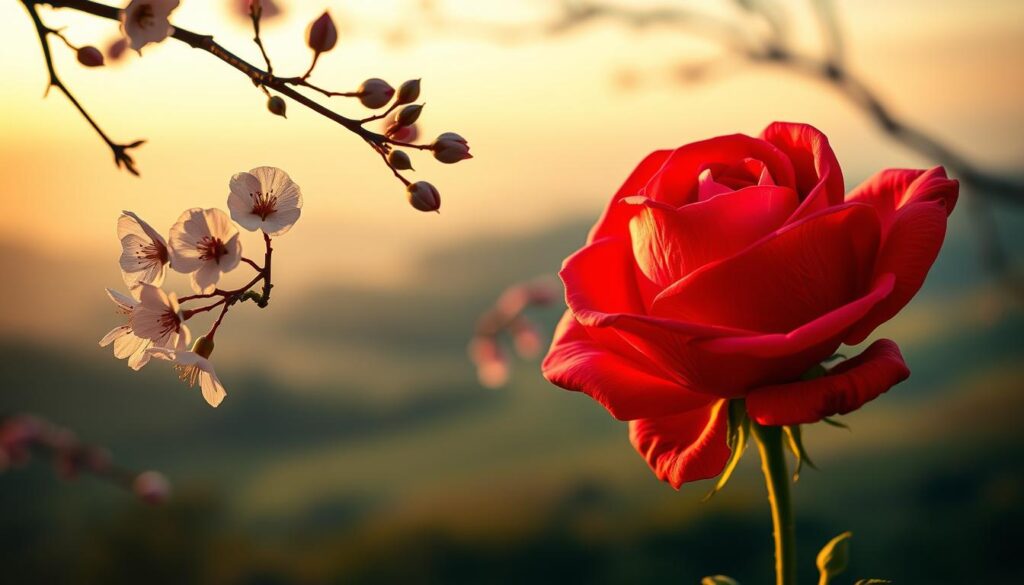
Eastern vs. Western flower symbolism shows deep cultural differences. In the West, roses mean love and passion. But in the East, they stand for secrecy or privacy. Chrysanthemums mean sympathy in the West and are used at funerals. However, in places like Japan and China, they mean immortality and new beginnings.
Here’s a table for a clearer view of the differences:
| Flower | Western Symbolism | Eastern Symbolism |
|---|---|---|
| Rose | Love, Passion | Secrecy, Privacy |
| Lotus | Purity, Enlightenment | Rebirth, Spiritual Awakening |
| Chrysanthemum | Sympathy, Mourning | Longevity, Rejuvenation |
| Lily | Purity, Transformation | Motherhood, Transition |
This table helps us understand regional meanings. It shows how different cultures see the same flowers. The contrasts between Eastern vs. Western flower symbolism highlight how flexible flower meanings are. Flowers can express many feelings and ideas because of this.
Crafting a Meaningful Bouquet
Making bouquets is more than picking colorful flowers. It means choosing blooms that share feelings. Knowing what each flower means helps make a bouquet full of meaning.
For love, you might pick roses for their passion and white lilies for purity. To say thanks, you could choose sunflowers for adoration and blue irises for hope.
| Emotion/Occasion | Flower Choices |
|---|---|
| Love | Roses, Tulips, Lilacs |
| Gratitude | Sunflowers, Daisies, Irises |
| Sympathy | White Lilies, Chrysanthemums, Gladiolus |
| Celebration | Gerberas, Daffodils, Marigolds |
The color of the flowers is also key in making bouquets. Red and white show unity, while yellow with purple stands for happiness and success.
Making a bouquet with meaning is an art that says a lot without words. By choosing the right flowers and colors, you give a special message that fits the feeling and event.
Modern Uses of Flower Symbolism
Today, giving flowers still holds special meaning but has grown into new areas. Flowers now brighten homes, celebrate weddings, and help brands share their stories.
In home decor, choosing the right flowers matters. Daisies show purity and loyal love in a living room. This makes the room feel welcoming.
Sunflowers add happiness and positivity to any space. They make a place feel light and joyful.
Weddings show the power of flowers beautifully. The right choices make the day unforgettable. Red roses mean deep love, perfect for weddings. Peonies, bringing hope for joy, match the day’s happiness.
In branding, flowers help share a company’s values. Lavender suggests serenity and grace, building a calm image. Black-eyed Susans stand for justice and strength, ideal for some brands. By using flowers wisely, businesses tell their stories well.
Flower symbolism is always changing, yet it stays important. It’s a way to share love, friendship, or a brand’s spirit. Flowers still speak a language of the heart in so many ways.
Conclusion
Throughout history, flowers have been very special. They show feelings, traditions, and values without words. The meaning of flowers started long ago with ancient civilizations. They symbolized gods and spirits. Later, in the Victorian era, using flowers to express feelings became an art.
Today, the meaning of flowers is still important. We pick them for weddings, funerals, and everyday moments based on their colors and types. Flowers mean different things in different cultures. This makes our love for flowers even more special. They show how flowers still fascinate us all over the world.
When we make a bouquet, it’s more than just picking pretty flowers. It’s a way to share feelings like love, sorrow, or respect without speaking. Flowers help us share deep feelings. They make our lives more beautiful with their colors and meanings. They remind us how we connect with each other.
FAQ
What is the historical significance of flower meanings?
How do common flowers and their meanings vary?
What role does color play in floral symbolism?
How do symbolic flowers change in meaning based on context?
What are some appropriate flowers for weddings?
What flowers are suitable for funerals and memorials?
How does one choose the right flower for everyday gestures?
How do flower meanings vary between Eastern and Western cultures?
How can I craft a meaningful bouquet?
What are modern uses of flower symbolism?
Flowers have a special way of saying what words cannot. They are full of deep meaning and symbolism. The secret messages they carry can be about love or sadness. This guide takes you into the magical world of flower language. It looks at their meanings in history and today. Key Takeaways The language of flowers…
Flowers have a special way of saying what words cannot. They are full of deep meaning and symbolism. The secret messages they carry can be about love or sadness. This guide takes you into the magical world of flower language. It looks at their meanings in history and today. Key Takeaways The language of flowers…