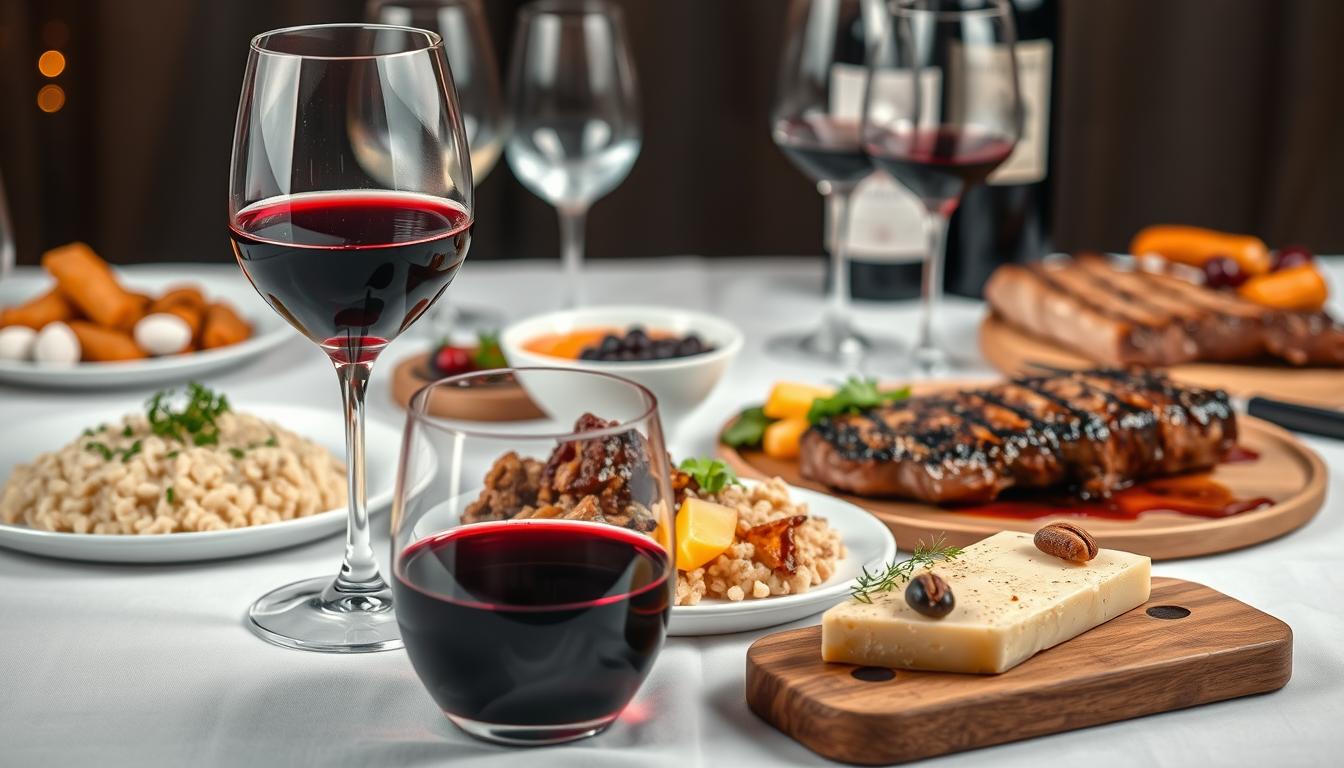
Mastering the Art of Wine and Food Pairing
-
- 3

Pairing wine with food is both art and science. It’s loved by many who enjoy good food. By matching wine and food, you can make your meals even better.
It’s more than just picking red wine for meat or white for fish. It’s about making the flavors of the food and wine work well together. This can make your food taste even better. You can try this at home too, not just in fancy places. It’s fun to find out which wine and food matches are the best.
Key Takeaways
- Mastering wine and food pairing enhances dining experiences.
- Understanding how to pair wine with food involves more than just basic rules.
- Wine and food pairings are about creating harmonious flavors.
- This practice is accessible and can be experimented with at home.
- Successful pairings elevate both the wine and the dish.
The Importance of Wine and Food Pairing
When you learn about wine and food together, your meals get better. Picking the right wines and foods makes every bite and sip better. This turns each meal into an unforgettable experience.
It’s not just tradition to choose the right wine. It’s about making the meal and wine taste better. The right wine can uncover flavors in food. But the wrong wine might make the meal taste less exciting.
Experts like sommeliers and chefs use special guides to pick wine and food. They match crispy white wines with seafood and bold reds with steak. It’s all about knowing the wine and food well. This makes the meal and wine support each other perfectly.
Here’s a easy guide for matching wine and food:
| Food | Wine |
|---|---|
| Seafood (e.g., Shrimp, Oysters) | Chardonnay, Sauvignon Blanc |
| Red Meat (e.g., Beef Steak) | Cabernet Sauvignon, Merlot |
| Pasta with Cream Sauce | Pinot Grigio, Chardonnay |
| Spicy Dishes (e.g., Thai Curry) | Riesling, Gewürztraminer |
| Dark Chocolate Dessert | Port, Zinfandel |
A wine guide can make your dinners special. Paying attention to wine and food together pleases your taste. It also shows your guests how thoughtful and skilled you are. This is what it means to be great at pairing wine and food.
Pairing Wine and Food by Region
Pairing wine with food includes considering regional traits. The best matches respect a region’s heritage. They blend flavors that have grown together over time.
Old World Pairings
In Europe, the idea of terroir is key for pairing. For instance, French meals match well with local wines like Bordeaux. In Italy, Chianti is great with Tuscan dishes like Bistecca alla Fiorentina. And in Spain, Tempranillo goes well with tapas, making the flavors stand out more.
New World Pairings
New World wine pairings are bold and lively. In Argentina, Malbec is great with grilled meats. In California, Zinfandel matches well with barbecue, enhancing the smoky taste. And Australian Shiraz is perfect with lamb chops, fitting the country’s taste for strong flavors.
Understanding Wine’s Body and Weight
Getting to know wine’s body and weight is key for top wine and food pairings. The body of a wine is how it feels in your mouth, light or heavy. This comes from alcohol, sweetness, and tannins.
For a good wine and food match, pair the food’s weight with the wine’s body. Light wines like Pinot Grigio or Sauvignon Blanc are great with salads or seafood. Full-bodied wines like Cabernet Sauvignon work well with steaks.
Here are some handy tips:
| Wine Type | Body | Recommended Food Pairings |
|---|---|---|
| Pinot Grigio | Light | Salads, Light Fish |
| Chardonnay | Medium | Chicken, Mushroom Dishes |
| Syrah | Full | Steak, Lamb |
By following these tips, you’ll boost your food adventures. It makes sure your wine and food boost each other, creating memorable meals.
Complementary Wine and Food Pairings
Exploring food and wine matching means understanding the idea of complementary pairings. These combinations unite wines and meals that share flavors, creating perfect harmony on the palate.
Examples of Complementary Pairings
Imagine pairing a buttery Chardonnay with lobster in a creamy sauce. The buttery tastes in both elevate the meal, offering a rich dining experience. Another great match is zesty Sauvignon Blanc with a citrus seafood salad. The sharp taste of the wine and the salad’s citrus flavor work well together.
| Wine | Food | Key Flavor Profile |
|---|---|---|
| Chardonnay | Lobster in creamy sauce | Buttery |
| Sauvignon Blanc | Citrus seafood salad | Zesty |
| Pinot Noir | Mushroom risotto | Earthy |
Tips for Tweaking Recipes
Sometimes, perfect food and wine matches require slight recipe changes. Let’s explore some tips.
- Enhance flavors: Add a bit of lemon juice to dishes when your wine tastes like citrus. This echoes the wine’s flavor.
- Modify seasoning: Cut down on salt in your meal to pair better with wines that are high in acidity.
- Adjust the cooking method: Try grilling or roasting to bring smoky flavors into your food. This pairs well with wines that have similar tastes.
Contrasting Wine and Food Pairings
Exploring wine and food pairing is both fun and complex. It’s about contrasting pairings. This means matching wines and foods that are opposites. Doing so creates harmony on the palate.
Think about pairing a sharp chardonnay with a cheesy cracker. This wine can be from places like Chablis or California. It contrasts nicely with the cheese’s creamy taste.
Try a fried fish sandwich with trousseau wine. This wine comes from France and California. Its acidity cuts the fish’s fattiness. This makes a great mix.
Fried chicken and Champagne are perfect together. The bubbles and acidity balance the chicken’s crispiness. This shows how opposite elements work well together.
- Steak au Poivre with an aged dry riesling: It’s aged over ten years. It’s not too sweet.
- Potato chips and Champagne (optional: and caviar)
- Dry sparkling wine with mac and cheese: Best with soft, creamy cheese.
- Full-bodied chardonnay and bacon: The wine matches the bacon’s salty and smoky taste.
If you want to learn more about wine pairing tips, check out more insights here.
Here’s a table with some fun contrasting pairings:
| Food | Wine | Reason for Pairing |
|---|---|---|
| Cheesy Cracker | Sharp Chardonnay | Balances creamy richness |
| Fried Fish Sandwich | Trousseau | Cuts through fats |
| Fried Chicken | Champagne | Acidity and bubbles complement crispiness |
| Mac and Cheese | Dry Sparkling Wine | Balances creamy texture |
| Bacon | Full-bodied Chardonnay | Complements saltiness and smokiness |
How to Balance Flavors with Wine and Food
Learning how food and wine flavors work together can make your meals amazing. It’s important to mix these tastes the right way. Knowing about wine and food pairing is key.
Sweetness and Acidity
Sweet wines, like Riesling, are great with spicy food. They make hot foods taste better. Acidic wines, like Pinot Grigio, are good with fatty foods. They make your mouth feel fresh again. Pairing food and wine right makes everything taste better.
Bitterness and Richness
Bitter and rich tastes should balance each other out. Tannic wines, like Cabernet, are good with fatty food. They make the food seem less greasy. But don’t mix bitter wine with bitter food. That’s too much bitterness.
Here’s a quick guide to help you:
| Wine Characteristics | Food Characteristics | Example Pairings |
|---|---|---|
| Sweet Wines (e.g., Moscato, Riesling) | Spicy Dishes | Spicy Thai Curry with Riesling |
| Acidic Wines (e.g., Sauvignon Blanc, Pinot Grigio) | Rich, Fatty Dishes | Grilled Salmon with Sauvignon Blanc |
| Tannic Wines (e.g., Cabernet Sauvignon) | Rich, Fatty Dishes | Ribeye Steak with Cabernet Sauvignon |
With these tips on pairing wine with food, you can try new mixes. This will help you enjoy your meals more.
Classic Red Wine Pairings
Pairing wine with food makes dining more enjoyable. It also lifts both the wine and dish flavors. Below, we explore top pairings for three red wines: Cabernet Sauvignon, Merlot, and Pinot Noir.
Cabernet Sauvignon
Cabernet Sauvignon’s bold flavors match well with hearty foods. It’s perfect with grilled steak, lamb chops, and juicy burgers. Spicy dishes like pepper-crusted tuna also go great, balancing the wine’s fruitiness.
Merlot
Merlot is soft and smooth, making it great for many foods. It pairs nicely with roasted chicken, mushrooms, and tomato-based pasta. Its fruitiness also enhances duck or pork tenderloin dishes.
Pinot Noir
Pinot Noir, light and complex, pairs with many foods. Bright acidity and red fruit notes make it ideal with salmon, mushroom risotto, and herbed chicken. It also matches well with vegetarian meals, like beet salad or vegetable stew.
Classic White Wine Pairings
White wines are perfect for wine and food pairing. They are light and can be a bit acidic. This makes them go well with many meals, from seafood to some cheeses.
A crisp Chardonnay is great with buttery seafood like lobster. Or try shrimp scampi. A Sauvignon Blanc is nice with light meals, such as goat cheese salads. Riesling’s vibrant acidity is a match for spicy food from Thailand or India.
- Chardonnay: Lobster, Shrimp Scampi, Creamy Sauces
- Sauvignon Blanc: Goat Cheese Salads, Grilled Chicken
- Riesling: Spicy Thai, Indian Cuisine, Rich Cheeses
Looking for more wine pairing tips? Below is a table. It shows favorite white wine and food pairings:
| White Wine | Food Pairing | Characteristics |
|---|---|---|
| Chardonnay | Seafood, Poultry, Creamy Dishes | Buttery, Oaky, Rich |
| Sauvignon Blanc | Fresh Salads, Light Poultry, Goat Cheese | Herbaceous, Crisp, Mineral |
| Riesling | Spicy Dishes, Rich Cheeses, Fruits | Sweet to Dry, High Acidity, Floral |
Follow these wine pairing tips to make your meals special. Enjoy every bite of your culinary journey.
Considerations for Vegan Pairings
Pairing wine with food is fun, especially with vegan options. Vegan pairings don’t use animal products. This makes them different.
Challenges with Tannic Wines
Tannins in wine pose a challenge for vegan food. Tannic wines, like Cabernet Sauvignon, can overpower vegan dishes. Since vegan meals are not rich and fatty like meat, the tannins can be too much.
Best Choices for Vegan Dishes
It is good to choose wines that go well with vegan meals. Vegetables, grains, and plant proteins have special flavors. Here are some pairings:
- Melon goes well with aged Semillon, adding to the freshness.
- Courgette marinated in lemon and olive oil matches with Sauvignon Blanc.
- Orange and fennel salad tastes great with a natural Sauvignon Blanc Semillon blend.
- Tomato, basil, and garlic are good with a spicy Merlot or Sangiovese.
- Pea and lemon risotto is perfect with Sauvignon Blanc.
Also, mushroom risotto is great with aged Merlot, and dhal lentils go well with Semillon. A chickpea salad matches with spicy Cabernet Sauvignon or Malbec.
Château Feely offers vegan-friendly and organic wines. For great pairing ideas, check their advice on vegan food and wine. It will make your meal unforgettable.
Wine Pairing Tips for Special Occasions
Choosing the right wine can make any special event better and wow your guests. For events like weddings, anniversaries, or holiday parties, knowing a bit about wine can help a lot. Our wine pairing guide aims to help you pick wines that go well with your food and make the party better.
“Good wine is a necessity of life for me.” – Thomas Jefferson
First, think about what food you’ll serve. For a steak dinner, try a bold wine like Cabernet Sauvignon or Merlot. These red wines balance with the strong flavors of steak, enhancing your meal.
For seafood, go with a Sauvignon Blanc or a Chardonnay. They’re light and fresh, matching well with fish. Their acidity and tastes blend well with lighter meals.
Don’t skip dessert wines. A sweet Riesling or a rich Port are great ends to any meal. They pair well with many desserts, such as cheesecakes or chocolates, bringing a luxurious touch to your event.
To pair wine well for special occasions:
- Match the wine to the food’s weight.
- Think about the sauce or seasoning, as it can influence your wine choice.
- Offer different wines to suit everyone’s taste.
Following these suggestions will help make your event memorable for your guests. Use this wine pairing guide to impress at every special occasion with the perfect wine.
How to Serve Wine Properly
Serving wine right can make your meal even better. It shows the true nature of the wine. Knowing how to match wine with food is key for wine lovers.
Temperature Matters
Wine’s taste and smell change with different temperatures. Whites are best cold, between 45°F to 50°F. Reds are great just below room temp, about 60°F to 65°F. Sparkling wines and Champagne need to be cooler, from 38°F to 45°F. Use a wine thermometer to get it just right.
Choosing the Right Glassware
The glass you use is important. Reds do well in big, round glasses for more air. Whites stay cool in smaller, U-shaped glasses. Sparkling wines are best in flutes to keep the bubbles. The right glass makes learning food pairing more fun.
Proper Pouring Techniques
How you pour wine matters for its look and taste. Tilt the glass and pour in the middle. Fill reds one-third, to let them breathe. Whites can be half full. Sparkling wines need less, around one-third. This shows you care about your wine.
Pairing Wine with Your Guests in Mind
When choosing wines, think about what your guests like. Not everyone enjoys the same tastes. Being thoughtful means picking wines that make their meal better.
Knowing your guests’ wine likes is key. Some may love bold reds, others might pick light whites. It’s important to have options for everyone.
Also, match the wine with your meal. A strong red might not suit a light seafood dish. Instead, a light white may be perfect. Richer wines go well with meats and stews.
Below is a table to help you choose wisely:
| Guest Preference | Wine Category | Suggested Pairings |
|---|---|---|
| Bold Red Wine Lovers | Full-bodied Reds | Cabernet Sauvignon with steak, Syrah with lamb |
| White Wine Enthusiasts | Light Whites | Sauvignon Blanc with fresh salads, Riesling with spicy dishes |
| Sweet Wine Fans | Dessert Wines | Moscato with light desserts, Port with chocolate |
The aim is to make the meal special. Understanding and meeting your guests’ likes shows care. It will definitely make the meal more enjoyable.
Conclusion
We’ve learned a lot about matching wine and food to make eating even better. We saw how important it is to match wines and dishes from the same area. We also learned how wine’s weight matters and how to create good pairings.
We talked about classic combos like Cabernet Sauvignon and steak. We also discussed vegan food with wines that aren’t too tannic. Remembering what your guests like is key to a great meal.
Trying new pairings is fun and can lead to amazing discoveries. Don’t be afraid to experiment with your wine and food choices. Have fun and let your favorites show in your pairings. Here’s to finding joy in new tastes!
FAQ
Why is wine and food pairing important?
How do regional characteristics influence wine and food pairing?
What does the body and weight of wine mean?
What are complementary wine and food pairings?
What is a contrasting wine and food pairing?
How do you balance flavors with wine and food?
What foods pair well with Cabernet Sauvignon?
What dishes go best with Merlot?
What are ideal pairings for Pinot Noir?
Which foods are commonly paired with white wines?
What should I consider when pairing wine with vegan dishes?
What are the best wine choices for vegan dishes?
How should I choose wines for special occasions?
What are essential tips for properly serving wine?
How do I choose the right wine based on guests’ preferences?
Pairing wine with food is both art and science. It’s loved by many who enjoy good food. By matching wine and food, you can make your meals even better. It’s more than just picking red wine for meat or white for fish. It’s about making the flavors of the food and wine work well together.…
Pairing wine with food is both art and science. It’s loved by many who enjoy good food. By matching wine and food, you can make your meals even better. It’s more than just picking red wine for meat or white for fish. It’s about making the flavors of the food and wine work well together.…