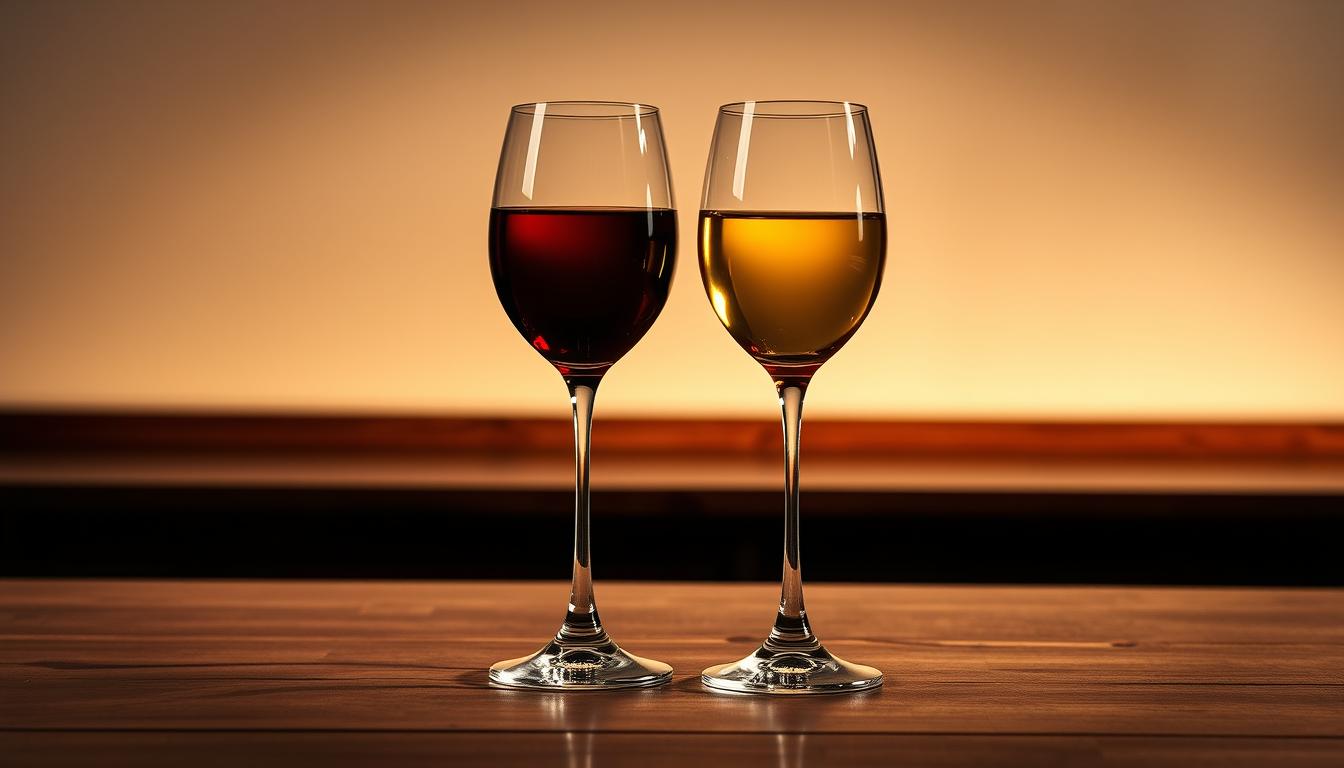
Red vs White Wine: Which One Suits Your Taste?
-
- 2

Choosing between red and white wine needs you to know some basics. They are made from different grapes and have unique tastes. Do you like the deep taste of red or the light touch of white? This guide will show you how to pick your perfect wine for any moment.
Key Takeaways
- Red and white wines differ significantly in grape varieties, fermentation processes, and flavor profiles.
- Popular red wine varieties include Cabernet Sauvignon, Merlot, and Pinot Noir.
- Popular white wine varieties include Chardonnay, Sauvignon Blanc, and Riesling.
- Both red and white wines offer distinct health benefits worth considering.
- Understanding tannins and acidity in wines can enhance your selection process.
- Proper storage methods differ for red and white wines to maintain their quality.
Key Differences Between Red and White Wine
Understanding red wine vs white wine makes us enjoy them more. The grapes used make the biggest difference. This varies from the type of grape to the tastes each wine has.
Grapes Used
Dark grapes like Cabernet Sauvignon and Merlot are used for red wines. These grapes’ skins give red wine its deep color and rich tastes. White wines come from green or yellow grapes. Examples are Chardonnay and Sauvignon Blanc. They are fermented without skins, giving them a light, crisp taste.
Fermentation Process
How red and white wines are fermented also sets them apart. Red wines ferment with skins at warm temps, making them sturdy and bold. They also have tannins, good for our health and flavor. White wines, however, are made cool without skins. This keeps their taste fresh and zesty.
Flavor Profiles
Red wines have strong, earthy flavors with hints of berries and oak. They are rich and complex. On the other hand, white wines are light and fresh. They often have a citrusy, floral taste. This makes them crisp and enjoyable.
Popular Red Wine Varieties
Knowing about red wine types makes wine tasting more fun. Each kind has its own taste and feel. This is because of the grapes used and where they grow. The way red wine is made also makes it different from white wine. Let’s look at some popular red wines and what makes them special.
Cabernet Sauvignon
Cabernet Sauvignon is famous for its bold tannins and rich blackcurrant flavors. It gets deeper flavors like vanilla and spice from oak barrels. People love it for the healthy antioxidants it has. Remember, it’s best when you don’t have too much. This wine goes great with strong foods like steak, lamb, and tasty cheeses.
Merlot
Merlot is easier to enjoy and has soft cherry, plum, and chocolate tastes. It’s good for many tastes because it’s not too tannic. Compared to white wine, Merlot feels smoother. It’s yummy with chicken, veggies on the grill, and foods with tomato sauce.
Pinot Noir
Pinot Noir is known for its light, fruity touches and lower tannins. It tastes of red fruits like strawberry and raspberry and can be a bit earthy. This shows even light red wines can be high in antioxidants. Pinot Noir is wonderful with salmon, duck, and dishes with mushrooms.
| Variety | Main Flavors | Food Pairing |
|---|---|---|
| Cabernet Sauvignon | Blackcurrant, vanilla, spice | Steak, lamb, rich cheeses |
| Merlot | Cherry, plum, chocolate | Poultry, grilled vegetables, tomato-based dishes |
| Pinot Noir | Strawberry, raspberry, earthy notes | Salmon, duck, mushroom-based meals |
Popular White Wine Varieties
White wine comes in many tastes, from sweet and fruity to crisp and dry. Knowing about white wine varieties helps you pick the right one. This matches your taste and goes well with different foods. Let’s look at three popular kinds: Chardonnay, Sauvignon Blanc, and Riesling.
Chardonnay
Chardonnay is very flexible in taste, with lots of flavors. It can taste buttery and oaky or fresh and crisp. This depends on how it’s made and where it’s from. Its range of flavors makes Chardonnay special when talking about white wine vs red wine taste.
Sauvignon Blanc
Sauvignon Blanc is known for being sour and having a taste like herbs. It might remind you of green apple, lime, and sometimes bell pepper. It’s a fresh choice for wine beginners. It’s great with salads, seafood, and white meats.
Riesling
Riesling is famous for its sweet smell and can be either dry or sweet. Its flavors include green apple, apricot, and jasmine. Riesling is good with many foods. These include spicy dishes and desserts.
Red Wine vs White Wine: Health Benefits
People have loved wine for a long time. But, does red or white wine offer more health benefits? Each wine type has its own perks for a healthy life. Knowing the differences can help you choose wisely.
Red Wine Health Benefits
Red wine is full of antioxidants, especially resveratrol. This helps your heart by making cholesterol levels better and lowering inflammation. Drinking red wine in a moderate way can also guard against heart disease. This disease can lead to heart attacks.
Plus, red wine’s tannins help lower bad cholesterol. This gives your heart an extra layer of safety.
Studies suggest that drinking red wine in moderation could potentially lower the risk of certain cancers and neurodegenerative diseases.
White Wine Health Benefits
White wine is lower in calories. This makes it a good choice for those watching their calorie intake. In terms of red vs white wine calories, white wine often wins because it has fewer calories. It’s also good for those on diabetic or keto diets because it usually has less sugar than red wine. While white wine may not have as many antioxidants as red wine, it still offers health benefits. These include better lung function and a lower risk of heart disease.
| Health Aspect | Red Wine | White Wine |
|---|---|---|
| Antioxidants | High | Moderate |
| Calories | Higher | Lower |
| Heart Health | Improves cholesterol, reduces inflammation | Reduces heart disease risk |
| Suitable Diets | General | Diabetic, Keto |
Liking red or white wine more, knowing their health perks can make you enjoy them even more. Both wines can fit into a health-focused diet if you drink them carefully.
Food Pairing Tips
Pairing wine with food makes both better, for a great eating time. Knowing how to match red and white wine with food helps you choose better.
Red Wine Pairings
For red wine food pairing, think about the wine’s body, acidity, and tannins. Full-bodied reds like Cabernet Sauvignon go great with big meats. Think steaks, lamb, and venison.
Lighter reds like Pinot Noir are perfect with things like roasted poultry and mushrooms. The tannins and acidity in Pinot Noir lift up these flavors.
“The right pairing can elevate both the meal and the wine, creating an unforgettable dining experience.” – Sommelier Jane Smith
White Wine Pairings
With white wine, it’s about the acidity, sweetness, and body. Light whites like Sauvignon Blanc are amazing with seafood and salads. The acidity in Sauvignon Blanc matches the richness of seafood well.
Rich white wines like Chardonnay match with creamy foods and fatty fish. The creamy and oaky tastes of Chardonnay go well with these foods.
| Wine Type | Recommended Foods |
|---|---|
| Cabernet Sauvignon | Steak, Lamb, Venison |
| Pinot Noir | Roasted Poultry, Duck, Mushrooms |
| Sauvignon Blanc | Seafood, Salads, Citrus Dishes |
| Chardonnay | Creamy Dishes, Salmon |
Knowing these tips, you can pick the right red or white wine for food. This makes all your meals special and fun to eat.
Understanding Tannins in Wine
While drinking your favorite wine, you might feel your mouth dry up. This often happens with red wines. It’s mostly because of red wine tannins. Tannins are found in the skins, seeds, and stems of grapes.
In red wines, tannins are very important. They add to the wine’s structure and make it complex. This affects how the wine drinking experience feels. Tannins give that dry and sometimes bitter taste, which balances the wine’s sweetness.
White wines, though, usually have fewer tannins. This is because making white wine usually doesn’t involve much contact with the grape parts. So, the wine feels smoother and not as dry. This difference in tannins changes how each wine type feels and pairs with food.
Here’s how the tannin levels compare between red and white wines:
| Factor | Red Wine | White Wine |
|---|---|---|
| Tannin Level | High | Low |
| Mouth Feel | Astringent | Smooth |
| Food Pairing | Red Meats, Rich Dishes | Seafood, Light Salads |
The Role of Acidity in Wine
Acidity is key in making red and white wines taste good and last longer. It makes a big difference in how wine feels in your mouth. Knowing how red and white wines differ in acidity can help you pick and enjoy different kinds.
Acidity in Red Wine
Red wines usually have less acidity than white wines. Because of this, they taste smoother and fuller. This makes them great with big, hearty meals. The acidity also lets red wines age, developing complex flavors over time.
Acidity in White Wine
White wines, on the other hand, have more acidity. This gives them a crisp and fresh taste. The high acidity makes white wines perfect with light meals like salads and seafood. It also makes sipping white wine a sharp, refreshing experience. This adds a fun twist to choosing between red and white wine.
Here’s a comparison to highlight the key differences:
| Aspect | Red Wine | White Wine |
|---|---|---|
| Typical Acidity | Lower | Higher |
| Taste Profile | Smoother, fuller | Crisp, refreshing |
| Food Pairings | Robust and hearty dishes | Lighter fare, salads, seafood |
| Aging Potential | High | Moderate |
Best Occasions for Red Wine vs White Wine
Selecting the right wine can make any event better. It can enhance the setting and the food served. Knowing when to choose red or white wine brings elegance to your parties.
Events Suited for Red Wine
Red wine is perfect for fancy events like weddings and holiday dinners. Its strong tastes go great with big meals like steak and rich pasta. Guys enjoy red wine varieties like Cabernet Sauvignon, Merlot, and Pinot Noir at these events for red wine. Serving red wine adds elegance to your meals.
Events Suited for White Wine
White wine is great for laid-back parties, like summer get-togethers and picnics. Its fresh taste is perfect with light dishes such as salads and seafood. Everyone loves white wine types like Chardonnay and Pinot Grigio at these gatherings. Offering white wine helps to create a nice, easy atmosphere, good for enjoying simple foods.
Experimenting with Different Wines
Exploring wine can be very fun. It doesn’t matter if you’re new or have loved wine for years. The best way to enjoy wine is to keep trying new kinds.

When you try different wines, you discover new tastes and smells. Going to wine tastings is great because you can compare many wines. Try wines from places you don’t know and rare types too. This makes you understand and love wine even more.
- Enroll in local wine tasting events to get firsthand knowledge.
- Join wine clubs that offer curated selections from around the globe.
- Experiment with wine pairings to see how food changes a wine’s taste.
Taking notes when you try wines makes the journey better. Write down what you think about the smell, taste, and aftertaste of each wine. This way, you can see how your choice in wine changes. Remember, every time you try a new wine, you learn and have fun.
Red Wine vs White Wine: Storage Tips
Keeping wine properly stored is key to its taste and aging. It doesn’t matter if you like red or white wines. Using the right storage methods will help a lot.
Storing Red Wine
The temperature is crucial for storing red wine. Aim to keep reds at about 55°F always. Avoid temperature changes as they can harm the wine’s taste. Humidity should be between 60-70% to stop the cork from drying out.
Red wine bottles should lay on their sides. This keeps the cork wet, which stops air from getting in and ruining the wine. Keep red wine out of the sun to prevent it from aging too fast.
Storing White Wine
White wine needs to be stored a bit colder, around 45°F. This keeps their light and fruity taste. Like red wine, keeping the temperature steady is essential.
Even though humidity is less of an issue for white wines, aim for 60-70% humidity. This helps the cork stay right. White wines should also lay on their sides to protect the cork.
Keep white wine in the dark to protect its taste and smell. Sunlight can harm the wine, so find a dark place for storage.
Conclusion
As we finish our look at red versus white wine, we see it’s about what you like. It depends on the moment and what you’re eating. You might like red wine’s deep tastes or white wine’s light, fresh flavors. Each adds something special to your meal.
Learning about how they’re made, their health perks, and matching them with food can make you like them more. As you try different kinds and find ones you love, remember, wine is for exploring and having fun with.
There’s no single best wine—it’s all about what you enjoy and fits your life. Celebrating with red or relaxing with white, enjoy the wine adventure. Wine is for enjoying and making moments special.
FAQ
What are the main types of grapes used in making red and white wines?
How does the fermentation process differ between red and white wines?
What are the common flavor profiles for red and white wines?
What are the characteristics of Cabernet Sauvignon?
What flavor profile does Merlot typically have?
What makes Pinot Noir unique?
What are the typical characteristics of Chardonnay?
How is Sauvignon Blanc typically described?
What makes Riesling versatile?
What are the health benefits of red wine?
Are there health benefits to drinking white wine?
What are good pairings for red wine?
What foods pair well with white wine?
How do tannins affect red wine?
How does acidity impact the taste of white wine?
What types of events are best suited for red wine?
When is white wine more appropriate than red wine?
How can I start experimenting with different wines?
What are best practices for storing red wine?
How should white wine be stored?
Choosing between red and white wine needs you to know some basics. They are made from different grapes and have unique tastes. Do you like the deep taste of red or the light touch of white? This guide will show you how to pick your perfect wine for any moment. Key Takeaways Red and white…
Choosing between red and white wine needs you to know some basics. They are made from different grapes and have unique tastes. Do you like the deep taste of red or the light touch of white? This guide will show you how to pick your perfect wine for any moment. Key Takeaways Red and white…