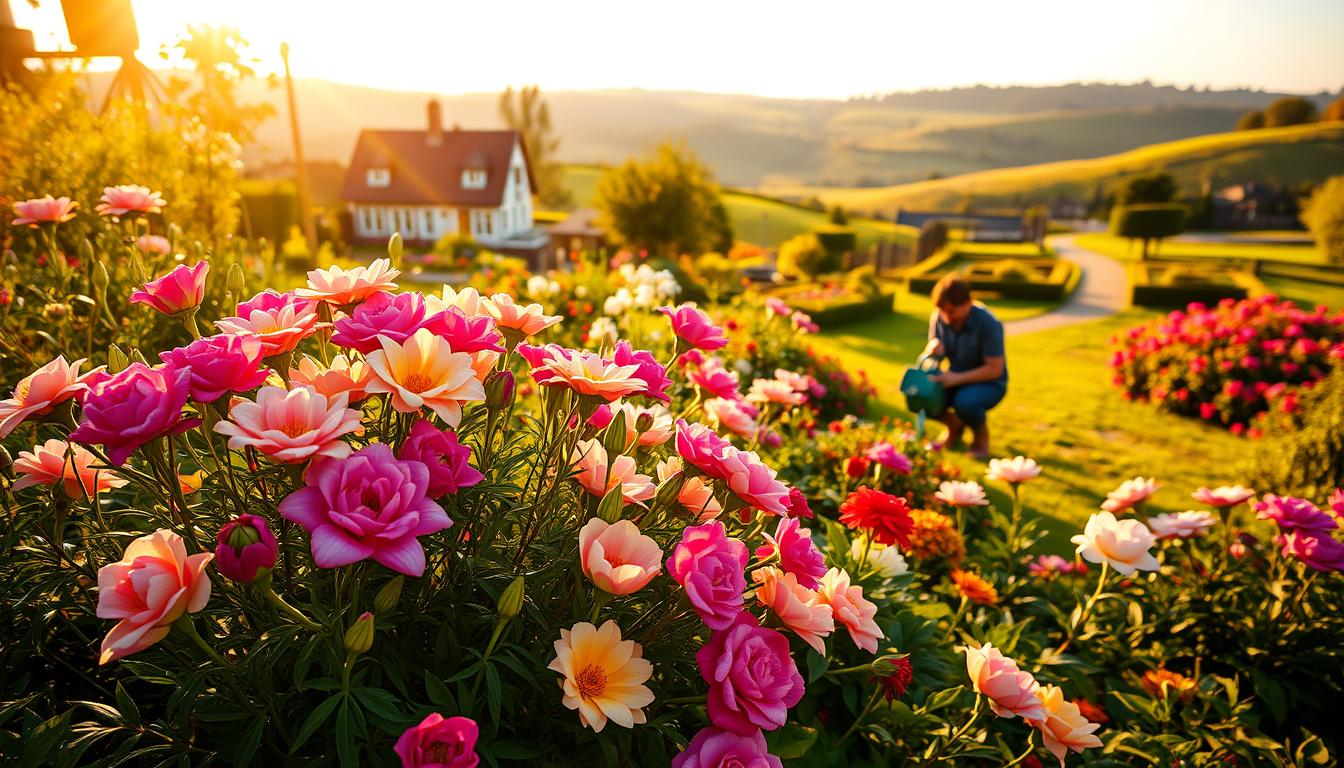
Bloom Brilliantly: Flower Care Tips for Lush Blooms
-
- 2

Flowers add joy, color, and beauty everywhere. They brighten up outdoor gardens and indoor spaces. Knowing how to care for them is key for beautiful, healthy blooms. This guide gives useful advice for flower care. It will help you keep your flowers looking great in all seasons.
Key Takeaways
- The significance of proper flower care for lasting beauty.
- Suggestions for selecting the best flowers for your garden.
- Effective watering techniques to sustain healthy flowers.
- Tips for fostering healthy blooms year-round.
- Importance of soil preparation and fertilization.
- Strategies to maximize bloom time and longevity.
- Best practices for caring for cut flowers.
- Common mistakes to avoid in flower care.
Understanding the Importance of Proper Flower Care
Taking care of your flowers means more than just watering them now and then. Using the best practices for flower care can make your garden and house plants look better and live longer. Doing things the right way makes your flowers more colorful and last longer, making your space nicer.
Good flower care helps all plants and the whole nature around them. When you take care of flowers the right way, you help bees and butterflies too. These tiny creatures are very important for making many plants grow, helping nature stay in balance.
The benefits of flower care are plenty. Flowers that are well taken care of fight off sickness and bugs better. This means you won’t have to use harmful chemicals as much. This makes gardening better for the earth. Also, seeing healthy flowers can make you feel more peaceful and happy.
Knowing how to care for flowers makes your garden a better place. Just making sure to check on your flowers and taking care of them right is very important. This helps them grow strong and beautiful.
| Practice | Benefit |
|---|---|
| Regular Watering | Enhances bloom vitality and longevity |
| Proper Pruning | Prevents diseases and promotes healthy growth |
| Supporting Pollinators | Maintains ecosystem balance |
Choosing the Best Flowers for Your Garden
Knowing the difference between annuals vs. perennials is key for a beautiful garden. Annuals like marigolds finish their life in one season. They bring color and let you try new flowers yearly. Perennials, such as peonies, come back every year. They add lasting structure to your garden.
It’s also vital to consider your garden’s light. Sun-loving plants need six hours of sunlight. Roses and daylilies are great for sunny spots. Shade-loving plants, like impatiens, are perfect for less sunny areas. They help light up shadowy spots in your garden.
The table below helps you choose between annual and perennial flowers:
| Criteria | Annuals | Perennials |
|---|---|---|
| Bloom Duration | Season-long blooms, but need replanting each year | Bloom annually, though often shorter bloom periods |
| Maintenance | Higher initial maintenance | Lower maintenance after establishment |
| Cost-effectiveness | Costlier over time due to annual replanting | More cost-effective over the long term |
Understanding annuals vs. perennials and sun vs. shade is key to your garden. This choice will affect your garden’s success. It can lead to a colorful display or a sustainable beauty that lasts for years.
Watering Techniques for Healthy Flowers
To get bright blooms, start with the right way to water, indoors or outdoors. Deep watering means soaking the soil 8 inches deep. It makes plants grow deep roots for better stability and nutrient use. Water deeply but not too often, to keep soil moist longer.
For flowers outside, try a slow water stream for an hour or drip systems. These ways help water soak in well. It’s important to change how much you water with the seasons:
- Spring and Autumn: Every 2 weeks.
- Summer: Up to twice a week.
- Winter: Once a month.
Good watering habits mean checking the soil’s wetness 4 inches down. If it feels a bit dry, it’s time to water. Using mulch helps keep the soil moist and stops weeds.
When caring for flowers, inside or outside, match watering to each plant’s needs. This prevents too much or too little water, which can hurt plants.
Flower Care Tips for Healthy Blooms
To make your flowers flourish, you need a daily care routine. A good guide on flower care underlines regular actions. These help with both the health and look of your garden’s flowers. Below are key tips for daily flower care.
First off, sunlight is key. Most flowers crave six hours of sun each day. So, place sun-loving plants where they can soak up lots of sunlight. For plants that like less sun, find a shady spot.
Soil health is super important for flower health. Always check if the soil feels wet enough but not too soggy. Using mulch helps keep the soil moist and cool, which is great for the flowers.
Changing your care with the seasons is crucial for keeping flowers bright. In warmer times, you need to water them more because of the heat and quick drying. But in cooler months, cut back on watering. The soil stays wet longer then.
Feeding your flowers right also boosts their health a lot. Pick a slow-release fertilizer that feeds them over time. Always use the amount the fertilizer pack says to avoid giving them too much.
Doing these things every day can really help your flowers stay healthy. It means your garden will look amazing throughout the years.
Soil Preparation and Fertilization
Before you start, know your garden soil’s type and needs. Test it for pH and nutrient levels. This tells you what it needs to thrive.
Adding organic stuff is key. Use compost, aged manure, and leaf mold. They make soil drain better and roots happier. Plus, they add important food for your soil.
Picking the right food for your flowers matters a lot. Use organic foods like bone meal, blood meal, and fish sauce. They feed your plants slowly. Synthetic foods work fast but can mess up if you’re not careful.
Good flower soil needs care and the right food. Keep adding organic stuff. And pick the right fertilizer based on soil tests. This makes a perfect home for your flowers.
Let’s talk about organic foods for your flowers:
- Bone Meal: It’s packed with phosphorus for strong roots and big blooms.
- Blood Meal: It’s all about nitrogen for leafy greens.
- Fish Emulsion: It gives a gentle boost of nutrients good for flowers.
Following these steps helps you prepare your garden soil well. This means your flowers will look great and healthy for a long time.
Maximizing Bloom Time and Longevity
To make your flowers last longer, learning about pinching and pruning is key. These steps help your flowers grow more blooms and stay vibrant. They focus energy on making and keeping flowers beautiful.
Deadheading is another important step. It means taking off old flowers. This helps new ones to grow and stops plants from making seeds. Doing this often keeps your garden full of color all season.
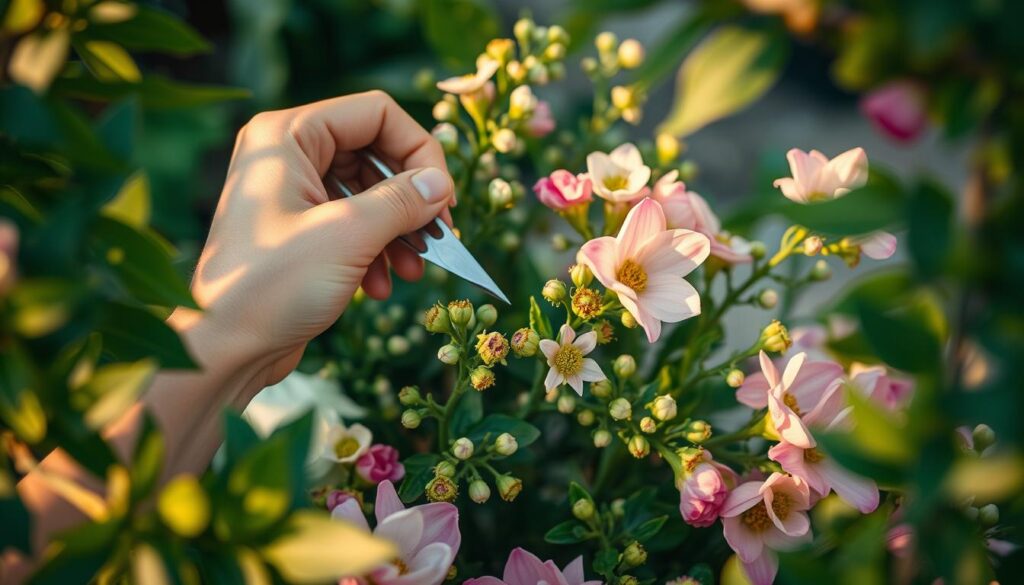
Protecting flowers from pests is also very important. Bugs like aphids and spider mites can hurt your flowers. Checking your plants often and using safe bug sprays helps keep pests away.
Using pinching and pruning and keeping an eye on pests will make your garden beautiful. Your flowers will grow better and last longer, making your garden a colorful place.
Caring for Cut Flowers
To make fresh cut flowers last longer, first use clean, sharp scissors. Cut the stems at a slant. This lets flowers drink more water.
Water and food are key for fresh cut flowers. Change the water every few days. Also, use flower food to fight off germs. This food gives your flowers what they need to stay alive longer.
- Cutting and Preparing Stems: Always trim stems under running water to stop air blocks.
- Managing Water and Nutrients: Keep the water fresh and clear away bad leaves.
To keep your flowers fresh for a long time, pick the right spot. Don’t put them in too much sun or by vents. A cool, shaded spot is best.
| Action | Reason |
|---|---|
| Cut stems at a diagonal | Increases surface area for water absorption |
| Add floral preservatives | Provides essential nutrients and prevents bacterial growth |
| Change water every 2-3 days | Keeps flowers hydrated and extends vase life |
| Keep away from direct sunlight | Prevents premature wilting |
Common Mistakes to Avoid
Caring for flowers might look easy, but even pros can make mistakes. Not thinking about the climate your flowers need is a big mistake. If you don’t consider your USDA hardiness zone, your flowers might not survive.
Watering the wrong way is also common. Too much water can harm roots. Not enough water stresses plants. It’s important to find a middle ground. Avoiding these mistakes keeps your garden looking great.
Not getting the soil ready is another error. Knowing about your soil helps flowers grow well. Not weeding or removing dead flowers can also slow down your plants.
Putting your flowers too close can cause problems too. They might not get enough sun, food, or air. Make sure to give each plant enough space.
| Common Mistake | Impact | Solution |
|---|---|---|
| Ignoring Climate Needs | Flowers may not thrive or survive | Consult the USDA hardiness zone |
| Improper Watering | Root rot or dehydration | Water consistently and appropriately |
| Not Preparing Soil | Hinders flower growth | Amend soil type and pH |
| Overcrowding | Limiting resources for each plant | Space plants correctly |
Not knowing about the flowers you plant can be upsetting too. Knowing when each flower blooms keeps your garden beautiful. Learn about each flower’s needs to avoid these mistakes.
Conclusion
Keeping flowers healthy needs your steady and careful attention. Knowing how to care for flowers well is key for nice blooms. Picking the right flowers for your garden is a good start.
It’s also important to water them just right and prepare the soil with care. These steps are basic but very important for your flowers.
Getting your flowers to bloom for longer takes a close eye. Taking good care of cut flowers and avoiding mistakes helps a lot. Every step you take helps your garden stay beautiful and healthy.
This reminder shows how key it is to be watchful and ready to meet your flowers’ needs. It helps them be strong and bloom well.
The happiness from a beautiful garden comes from your hard work and love. Keeping flowers healthy is an ongoing effort, not just a one-time thing.
By following these care tips and staying devoted to giving the right care, you’ll see beautiful flowers all year. Always remember, your careful care is what makes a garden truly sparkle.
FAQ
What is the difference between annuals and perennials?
How often should I water my outdoor flowers?
What are some tips to extend the life of cut flowers?
What kind of soil is best for planting flowers?
How can I identify and manage common pests on my flowers?
How do I determine if my garden is suitable for sun-loving or shade-loving flowers?
What are deadheading and pinching, and why should I do them?
Are there specific fertilizers recommended for flowers?
How can I prevent overwatering my indoor flowers?
How do I prepare the soil before planting flowers?
Flowers add joy, color, and beauty everywhere. They brighten up outdoor gardens and indoor spaces. Knowing how to care for them is key for beautiful, healthy blooms. This guide gives useful advice for flower care. It will help you keep your flowers looking great in all seasons. Key Takeaways The significance of proper flower care…
Flowers add joy, color, and beauty everywhere. They brighten up outdoor gardens and indoor spaces. Knowing how to care for them is key for beautiful, healthy blooms. This guide gives useful advice for flower care. It will help you keep your flowers looking great in all seasons. Key Takeaways The significance of proper flower care…